Nepeta ciliaris
Nepeta ciliaris · Accepted scientific name
Scientific literature: Very Sparse (7 studies) · ★☆☆☆☆
Nepeta ciliaris, scientifically known as Nepeta ciliaris, is a remarkable medicinal herb celebrated for its therapeutic properties. Belonging to the Lamiaceae family, this plant is rich in bioactive compounds. Traditionally used to treat various ailments, it offers significant potential in modern herbal medicine for its calming and restorative effects.
- Family
- Lamiaceae
- Native range
- Asia-Tropical
- Parts used
- Leaf
- Common names
- Not available
- Scientific synonyms
- Glechoma Leucophylla · Glechoma Ciliaris · 1 more
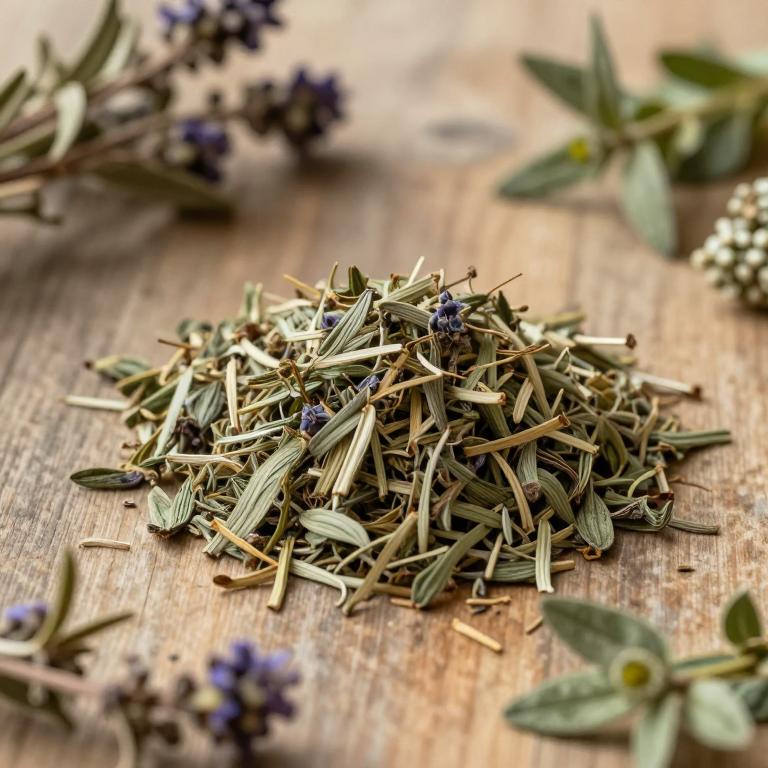
Names and Synonyms
Scientific Names
Accepted name
Nepeta ciliarisSynonyms
- Glechoma leucophylla
- Glechoma ciliaris
- Nepeta leucophylla
Sources: Wikidata, Catalogue of Life
Taxonomical Classification
This plant belongs to the kingdom Plantae and is classified under the phylum Streptophyta and the class Equisetopsida. Within the subclass Magnoliidae, it is organized under the order Lamiales and the family Lamiaceae. Finally, it is categorized under the genus Nepeta.
| Rank | Classification |
|---|---|
| Kingdom | Plantae |
| Phylum | Streptophyta |
| Class | Equisetopsida |
| Subclass | Magnoliidae |
| Order | Lamiales |
| Family | Lamiaceae |
| Genus | Nepeta |
Sources: The World Checklist of Vascular Plants (WCVP)
Distribution
This plant is primarily distributed across the diverse landscapes of the Indian Subcontinent. Within this vast region, it can be found growing in various parts of India. Its presence is also well-documented throughout the mountainous terrain of Nepal. Furthermore, the species is specifically noted for inhabiting the West Himalaya region. These distinct areas represent the key geographical ranges where the plant thrives.
| Region | Area |
|---|---|
| Indian Subcontinent | India |
| Indian Subcontinent | Nepal |
| Indian Subcontinent | West Himalaya |
Sources: The World Checklist of Vascular Plants (WCVP)
Botanical Identification
Ecology
The ecology of Nepeta ciliaris is defined by its preference for montane and subalpine environments, where it occupies specific altitudinal niches within its habitat. This species is typically found thriving within an elevational range that begins at 1200 m AMSL and extends up to a maximum of 2500 m AMSL. Within this vertical distribution, the plant adapts to the varying climatic conditions, soil compositions, and moisture levels characteristic of high-altitude ecosystems. Its presence across this specific range of 1300 meters in elevation suggests a specialized physiological capacity to withstand the temperature fluctuations and environmental pressures associated with mid-to-high mountain terrains.
- Elevational range max:
- 2500 m AMSL
- Elevational range min:
- 1200 m AMSL
Life history
The life history of Nepeta ciliaris is characterized by a perennial lifecycle, allowing the plant to persist through multiple growing seasons. Structurally, it functions as a hemicryptophyte, a life form where the perennating buds are located at the soil surface, protected by leaf litter or organic debris during unfavorable conditions. This classification as a hemicryptophyte ensures its survival and ability to regenerate annually from these protected ground-level buds.
- Life form :
- hemicryptophyte
- Lifecycle :
- perennial
Morphology
The morphology of Nepeta ciliaris is characterized by a growth form classified as a herb, exhibiting a non-woody structure throughout its vegetative parts. Although it displays certain climbing tendencies, it functions as a self-supporting organism, acting as a self-supporting liana or vine rather than an obligatory or facultative climber that relies on external hosts for structural lift. As an independent plant, it does not exhibit parasitic behavior, functioning as a fully autonomous organism. Furthermore, its ecological positioning is strictly terrestrial, as it lacks any epiphytic characteristics, establishing its root system and growth habit within the soil substrate.
- Climber :
- self-supporting
- Epiphyte :
- terrestrial
- Growth form :
- herb
- Parasite :
- independent
- Woodiness :
- non-woody
Reproduction
The reproduction of Nepeta ciliaris is characterized by a distinct seasonal flowering cycle that facilitates its reproductive success. The flowering period typically commences in August and continues through October, though the specific timing can be variable depending on environmental conditions. This seasonal window ensures that the plant undergoes its reproductive phase during late summer and early autumn, providing a concentrated period for pollination and subsequent seed development.
- Flowering time :
- Aug
- Flowering time :
- Oct
Sources: Global Inventory of Floras and Traits (GIFT)
Plant Parts
Nepeta ciliaris has 1 reported plant parts identified across 1 scientific publications and several other databases that are studied for medicinal purposes. The most consistently reported plant part include leaf.
| Plant part | Supporting sources | Consensus |
|---|---|---|
| Leaf | 1 supporting sources | ★☆☆☆☆ |
Leaf
- Heliyon
Chemicals
Nepeta ciliaris has 4 reported phytochemicals identified across 1 scientific publications and several other databases. The most consistently reported chemicals include 3-acetyl oleanolic acid, OLEANOLIC ACID, squalene, triterpenoids.
| Chemical | Supporting sources | Consensus |
|---|---|---|
| 3-acetyl oleanolic acid | 1 supporting sources | ★☆☆☆☆ |
| OLEANOLIC ACID | 1 supporting sources | ★☆☆☆☆ |
| squalene | 1 supporting sources | ★☆☆☆☆ |
| triterpenoids | 1 supporting sources | ★☆☆☆☆ |
3-acetyl oleanolic acid
- Heliyon
OLEANOLIC ACID
- Heliyon
squalene
- Heliyon
triterpenoids
- Heliyon
Activities
Nepeta ciliaris has 2 reported activities identified across 1 scientific publications and several other databases. The most consistently reported activities include Antibacterial, Antiviral.
| Activity | Supporting sources | Consensus |
|---|---|---|
| Antibacterial | 1 supporting sources | ★☆☆☆☆ |
| Antiviral | 1 supporting sources | ★☆☆☆☆ |
Antibacterial
- Heliyon
Antiviral
- Heliyon
Preparations
Nepeta ciliaris has 4 reported preparations identified across 1 scientific publications and several other databases. The most consistently reported preparations include chloroform extract, hexane extract, methanol extract, methanolic extract.
| Preparation | Supporting sources | Consensus |
|---|---|---|
| Chloroform extract | 1 supporting sources | ★☆☆☆☆ |
| Hexane extract | 1 supporting sources | ★☆☆☆☆ |
| Methanol extract | 1 supporting sources | ★☆☆☆☆ |
| Methanolic extract | 1 supporting sources | ★☆☆☆☆ |
Chloroform extract
- Heliyon
Hexane extract
- Heliyon
Methanol extract
- Heliyon
Methanolic extract
- Heliyon