Nepeta avromanica
Nepeta avromanica · Accepted scientific name
Scientific literature: Very Sparse (7 studies) · ★☆☆☆☆
scientifically known as Nepeta avromanica, is a distinctive medicinal herb belonging to the Lamiaceae family. Renowned for its aromatic properties, this plant holds significant value in traditional healing practices. Its unique phytochemical profile offers therapeutic potential, making it a subject of interest for pharmacological research and natural wellness.
- Family
- Lamiaceae
- Native range
- Asia-Temperate
- Parts used
- Not available
- Common names
- Not available
- Scientific synonyms
- Hymenocrater Longiflorus · Hymenocrater Haussknechtii
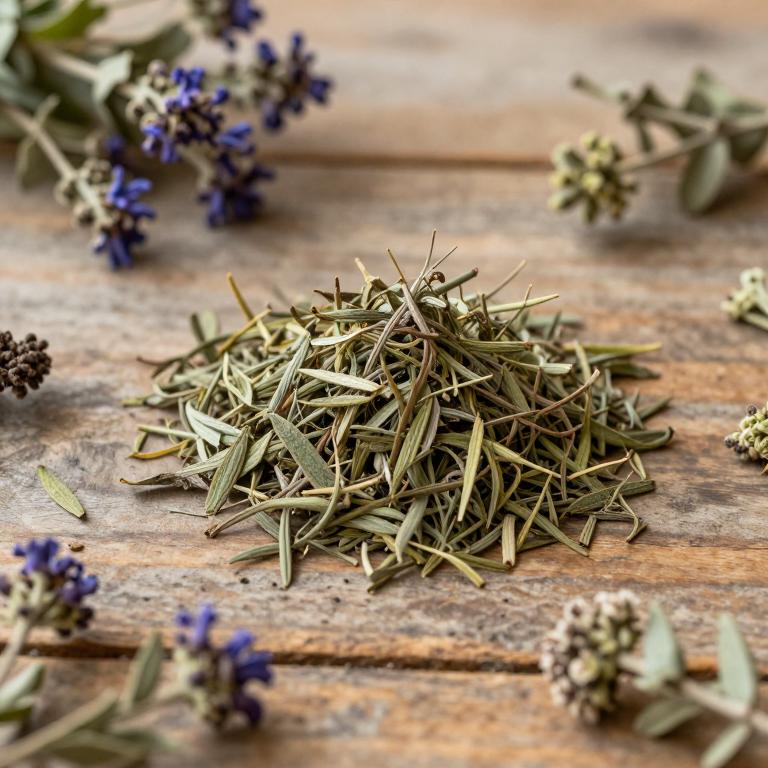
Names and Synonyms
Scientific Names
Accepted name
Nepeta avromanicaSynonyms
- Hymenocrater longiflorus
- Hymenocrater haussknechtii
Sources: Wikidata
Taxonomical Classification
This plant belongs to the kingdom Plantae within the phylum Streptophyta and the class Equisetopsida. It is further classified under the subclass Magnoliidae, the order Lamiales, and the family Lamiaceae. Finally, it is placed within the genus Nepeta.
| Rank | Classification |
|---|---|
| Kingdom | Plantae |
| Phylum | Streptophyta |
| Class | Equisetopsida |
| Subclass | Magnoliidae |
| Order | Lamiales |
| Family | Lamiaceae |
| Genus | Nepeta |
Sources: The World Checklist of Vascular Plants (WCVP)
Distribution
This plant exhibits a specific geographical range concentrated within the region of Western Asia. Its natural distribution is primarily identified in the country of Iran. Additionally, the species can be found growing within the borders of Iraq. These two nations represent the documented locations for its occurrence in the wild. Consequently, its habitat is limited to these specific territories within the Middle East.
| Region | Area |
|---|---|
| Western Asia | Iran |
| Western Asia | Iraq |
Sources: The World Checklist of Vascular Plants (WCVP)
Botanical Identification
Life history
The life history of Nepeta avromanica is characterized by its classification as a chamaephyte, a life form that dictates its survival strategy and growth habit. Within this biological framework, the plant exhibits a chamaephyte profile according to both its primary and secondary morphological categorizations, meaning its perennating buds are located near or just above the soil surface. This positioning allows the species to endure seasonal environmental fluctuations by maintaining a low-growing stature, effectively protecting its vital regenerative tissues from extreme temperatures or grazing. As a chamaephyte, its development is centered around these low-set buds, which facilitate a resilient growth cycle that enables the plant to re-emerge annually, maintaining a compact presence within its specific ecological niche.
- Life form :
- chamaephyte
Morphology
The morphology of Nepeta avromanica is characterized by its growth habit as a self-supporting plant, meaning it does not rely on external structures to climb but maintains its own upright or spreading posture. It functions as an independent organism, showing no parasitic behavior toward other plants. Furthermore, it is a terrestrial species, establishing its root system directly in the soil rather than growing as an epiphyte on other vegetation.
- Climber :
- self-supporting
- Epiphyte :
- terrestrial
- Parasite :
- independent
Sources: Global Inventory of Floras and Traits (GIFT)
Chemicals
Nepeta avromanica has 4 reported phytochemicals identified across 0 scientific publications and several other databases. The most consistently reported chemicals include 1,8-Cineole, CARVONE, Estragole, THYMOL.
| Chemical | Supporting sources | Consensus |
|---|---|---|
| 1,8-Cineole | 1 supporting sources | ★☆☆☆☆ |
| CARVONE | 1 supporting sources | ★☆☆☆☆ |
| Estragole | 1 supporting sources | ★☆☆☆☆ |
| THYMOL | 1 supporting sources | ★☆☆☆☆ |
1,8-Cineole
- Scientific reports
CARVONE
- Scientific reports
Estragole
- Scientific reports
THYMOL
- Scientific reports
Activities
Nepeta avromanica has 2 reported activities identified across 0 scientific publications and several other databases. The most consistently reported activities include Antifungal, Antioxidant.
| Activity | Supporting sources | Consensus |
|---|---|---|
| Antifungal | 1 supporting sources | ★☆☆☆☆ |
| Antioxidant | 1 supporting sources | ★☆☆☆☆ |
Antifungal
- Food and chemical toxicology : an international journal published for the British Industrial Biological Research Association
Antioxidant
- Food and chemical toxicology : an international journal published for the British Industrial Biological Research Association
Preparations
Nepeta avromanica has 1 reported preparations identified across 0 scientific publications and several other databases. The most consistently reported preparations include essential oils.
| Preparation | Supporting sources | Consensus |
|---|---|---|
| Essential oils | 1 supporting sources | ★☆☆☆☆ |
Essential oils
- Scientific reports