Nepeta multifida
Nepeta annua · Accepted scientific name
Scientific literature: Very Sparse (6 studies) · ★☆☆☆☆
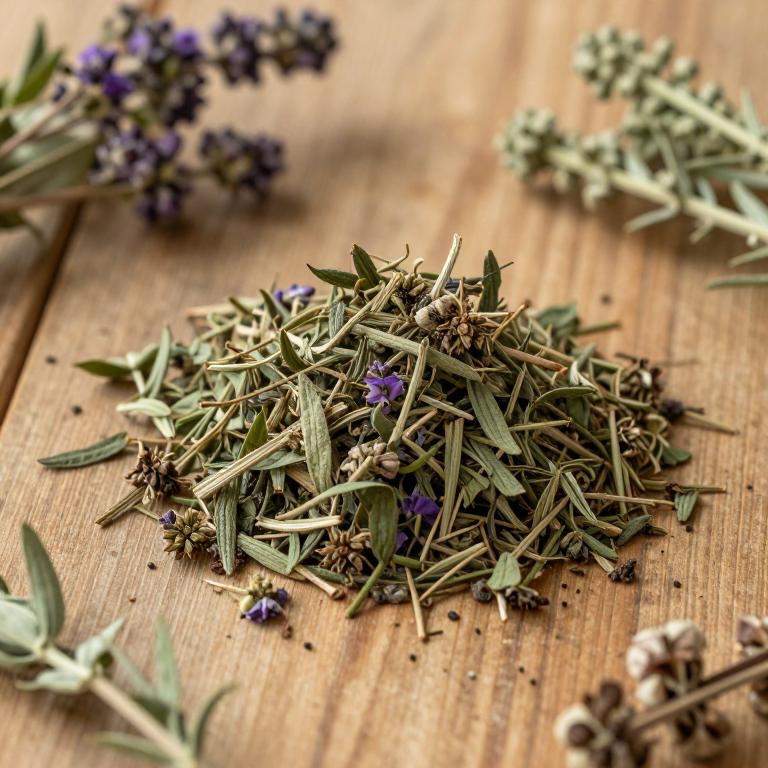
Nepeta multifida, scientifically known as Nepeta annua, is a versatile perennial herb cherished in traditional medicine. Characterized by its aromatic foliage and delicate blossoms, this plant offers potent therapeutic properties. It is widely utilized for its calming effects and ability to support respiratory health and overall wellness naturally.
- Family
- Lamiaceae
- Native range
- Asia-Temperate
- Parts used
- Not available
- Common names
- Nepeta Multifida
- Scientific synonyms
- Schizonepeta Botryoides · Schizonepeta Deserticola · 7 more
Names and Synonyms
Common Names
- Nepeta multifida
Scientific Names
Accepted name
Nepeta annuaSynonyms
- Schizonepeta botryoides
- Schizonepeta deserticola
- Nepeta bipinnatifida
- Glechoma annua
- Glechoma benthamii
- Nepeta bipinnata
- Schizonepeta annua
- Nepeta gracilis
- Nepeta botryoides
Regional and Traditional Names
Spanish:
- Nepeta multifida
German:
- Nepeta multifida
French:
- Nepeta multifida
Sources: Wikidata
Taxonomical Classification
This plant belongs to the kingdom Plantae and the phylum Streptophyta, placing it within the class Equisetopsida and subclass Magnoliidae. It is further classified under the order Lamiales and the family Lamiaceae. Finally, its specific taxonomic identity is defined by the genus Nepeta.
| Rank | Classification |
|---|---|
| Kingdom | Plantae |
| Phylum | Streptophyta |
| Class | Equisetopsida |
| Subclass | Magnoliidae |
| Order | Lamiales |
| Family | Lamiaceae |
| Genus | Nepeta |
Sources: The World Checklist of Vascular Plants (WCVP)
Distribution
This plant exhibits a broad geographical distribution across several key regions in Northern and Central Asia. In the vast territory of Siberia, it can be found inhabiting the Altai, Krasnoyarsk, and Tuva regions. Its presence extends significantly into China, where it is documented in Inner Mongolia. Furthermore, the species is also known to grow within the high-altitude landscapes of Tibet. Together, these locations highlight the diverse environmental range of Nepeta annua.
| Region | Area |
|---|---|
| Siberia | Altay |
| Siberia | Krasnoyarsk |
| Siberia | Tuva |
| China | Inner Mongolia |
| China | Tibet |
| China | Xinjiang |
| Mongolia | Mongolia |
| Indian Subcontinent | West Himalaya |
Sources: The World Checklist of Vascular Plants (WCVP)
Botanical Identification
Ecology
The ecology of Nepeta annua is characterized by its remarkable adaptability to diverse and often extreme environmental conditions. This species thrives across a wide spectrum of landscapes, ranging from arid desert regions and expansive steppes to rugged mountainous terrains and stony places. Its ecological footprint extends into more temperate and moisture-rich zones, where it can be found inhabiting forests, rolling hills, and lush meadows. Additionally, the plant exhibits a capacity to colonize areas near rivers, demonstrating a versatility that allows it to persist in both water-influenced habitats and dry, rocky substrates.
- Habitat :
- desert, mountains, steppe, stony places
- Habitat :
- forest, hills, meadows, mountains, rivers, steppe
Life history
The life history of Nepeta annua is characterized by a flexible developmental strategy, manifesting as both an annual and a perennial species depending on environmental conditions. As a plant that adapts its survival strategy to its habitat, it exhibits distinct life forms including therophyte and hemicryptophyte. When functioning as a therophyte, the plant completes its entire life cycle within a single growing season, relying on seeds to persist through unfavorable periods. Conversely, when it adopts a hemicryptohemicrypte life form, it survives through dormant seasons with its perennating buds located at or just below the soil surface, allowing for a perennial existence. This variability in lifecycle and life form enables the species to maintain a robust presence across diverse ecological niches.
- Life form :
- therophyte
- Life form :
- hemicryptophyte
- Lifecycle :
- annual
- Lifecycle :
- perennial
Morphology
The morphology of Nepeta annua is characterized by its growth as a non-woody herb, specifically classified as a terrestrial herb and forb. As a self-supporting plant, it does not function as a climber or an epiphyte, instead maintaining an independent lifestyle without parasitic tendencies. The plant exhibits a variable height depending on environmental conditions, typically ranging from a minimum of 0.09 to 0.15 meters up to a maximum of 0.4 to 0.6 meters. Its physical structure is entirely non-woody, consistent with its herbaceous growth form.
- Aquatic :
- terrestrial
- Climber :
- self-supporting
- Epiphyte :
- terrestrial
- Growth form :
- herb
- Parasite :
- independent
- Plant height max:
- 0.4 m
- Plant height max:
- 0.6 m
- Plant height min:
- 0.09 m
- Plant height min:
- 0.15 m
- Woodiness :
- non-woody
Physiology
The physiology of Nepeta annua is characterized by a metabolic framework centered around a C3 photosynthetic pathway, which dictates its carbon fixation processes and water-use efficiency. As a C3 plant, it utilizes the enzyme Rubisco to fix atmospheric carbon dioxide directly into a three-carbon compound during the Calvin cycle, a process that is highly efficient in temperate environments but necessitates careful regulation of stomatal conductance to balance gas exchange with transpiration. This metabolic strategy influences the plant's growth patterns, resource allocation, and its ability to synthesize secondary metabolites, including various essential oils and terpenoids, which are often integrated into its physiological response to environmental stressors. The reliance on the C3 pathway means that its photosynthetic rate is sensitive to photorespiration, particularly under conditions of high temperature or limited water availability, shaping its overall physiological adaptation to its ecological niche.
- Photosynthetic pathway :
- C3
Reproduction
The reproduction of Nepeta annua is characterized by its sexual reproductive mechanism, specifically through bisexual flowers that contain both male and female reproductive organs. The flowering phenology of this species exhibits some variability depending on environmental conditions, with primary flowering periods typically occurring between June and August, though some cycles may start as early as July and extend through August. This seasonal window ensures the successful production of seeds through the pollination of its bisexual blooms.
- Flowering time :
- Jul
- Flowering time :
- Aug
- Flowering time :
- Jun
- Reproduction sexual :
- bisexual
Sources: Global Inventory of Floras and Traits (GIFT)
Chemicals
Nepeta annua has 4 reported phytochemicals identified across 0 scientific publications and several other databases. The most consistently reported chemicals include Flavonoids, Monoterpenes, Sesquiterpenes, THYMOL.
| Chemical | Supporting sources | Consensus |
|---|---|---|
| Flavonoids | 1 supporting sources | ★☆☆☆☆ |
| Monoterpenes | 1 supporting sources | ★☆☆☆☆ |
| Sesquiterpenes | 1 supporting sources | ★☆☆☆☆ |
| THYMOL | 1 supporting sources | ★☆☆☆☆ |
Flavonoids
- Chemistry & biodiversity
Monoterpenes
- Chemistry & biodiversity
Sesquiterpenes
- Chemistry & biodiversity
THYMOL
- Chemistry & biodiversity
Activities
Nepeta annua has 2 reported activities identified across 0 scientific publications and several other databases. The most consistently reported activities include Antimicrobial, Antioxidant.
| Activity | Supporting sources | Consensus |
|---|---|---|
| Antimicrobial | 1 supporting sources | ★☆☆☆☆ |
| Antioxidant | 1 supporting sources | ★☆☆☆☆ |
Antimicrobial
- Chemistry & biodiversity
Antioxidant
- Chemistry & biodiversity