Neoglaziovia variegata
Neoglaziovia variegata · Accepted scientific name
Scientific literature: Very Sparse (19 studies) · ★☆☆☆☆
Neoglaziovia variegata, scientifically known as Neoglaziovia variegata, is a remarkable medicinal plant prized for its diverse therapeutic properties. Renowned for its striking foliage, this species contains potent bioactive compounds used in traditional healing to treat various ailments, offering significant potential for modern pharmacological research and natural wellness treatments.
- Family
- Bromeliaceae
- Native range
- Southern America
- Parts used
- Leaf · Fruit
- Common names
- Not available
- Scientific synonyms
- Billbergia Variegata · Agallostachys Variegata · 2 more
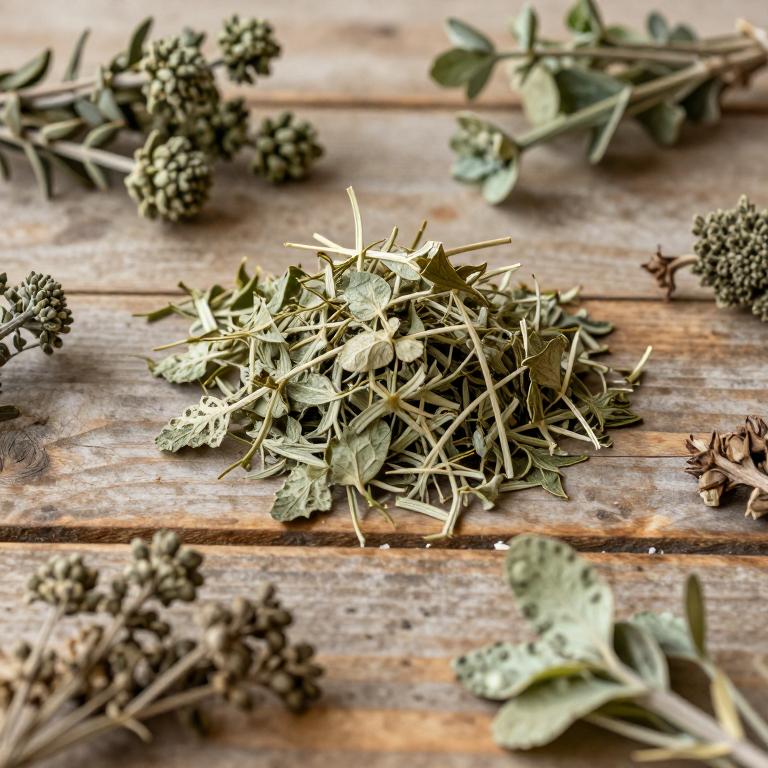
Names and Synonyms
Scientific Names
Accepted name
Neoglaziovia variegataSynonyms
- Billbergia variegata
- Agallostachys variegata
- Bromelia variegata
- Dyckia glaziovii
Sources: Wikidata, Catalogue of Life
Taxonomical Classification
This plant belongs to the kingdom Plantae and is classified under the phylum Streptophyta and the class Equisetopsida. Within the subclass Magnoliidae, it is ordered under Poales and categorized under the family Bromeliaceae. Its specific taxonomic identification is found within the genus Neoglaziovia, specifically as the species Neoglaziovia variegata.
| Rank | Classification |
|---|---|
| Kingdom | Plantae |
| Phylum | Streptophyta |
| Class | Equisetopsida |
| Subclass | Magnoliidae |
| Order | Poales |
| Family | Bromeliaceae |
| Genus | Neoglaziovia |
Sources: The World Checklist of Vascular Plants (WCVP)
Distribution
This plant exhibits a specific distribution pattern within the South American continent. It is primarily found across the vast landscapes of Brazil. Within this country, the species is documented to inhabit the Northeast region. Additionally, its presence extends into the diverse ecosystems of the Brazilian Southeast. These two distinct areas represent the known geographical range for Neoglaziovia variegata.
| Region | Area |
|---|---|
| Brazil | Brazil Northeast |
| Brazil | Brazil Southeast |
Sources: The World Checklist of Vascular Plants (WCVP)
Botanical Identification
Ecology
The ecology of Neoglaziovia variegata is intrinsically tied to the unique environmental conditions of the Caatinga (stricto sensu), a semi-arid biome characterized by seasonal drought and high solar radiation. Inhabiting this specific ecosystem, the species has adapted to a landscape defined by irregular precipitation patterns and high rates of evapotranspiration. The vegetation structure in its habitat typically consists of deciduous shrubs and small trees that shed leaves to conserve water during the prolonged dry season, a strategy that likely influences the microclimatic niche occupied by this plant. The soil composition and nutrient cycling within this Caatinga domain play a critical role in its survival, requiring specialized physiological mechanisms to endure the thermal fluctuations and periodic water scarcity characteristic of this strictly seasonal environment.
- Habitat :
- Caatinga (stricto sensu)
Life history
The life history of Neoglaziovia variegata is characterized by a perennial lifecycle, allowing the plant to persist through multiple growing seasons. It functions as a hemicryptophyte, a life form where the perennating buds are located at the soil surface, protected by leaf litter or surface debris. Furthermore, this species maintains an evergreen deciduousness, ensuring that its vegetative structures remain functional and present throughout various seasonal shifts rather than shedding all foliage annually.
- Deciduousness :
- evergreen
- Life form :
- hemicryptophyte
- Lifecycle :
- perennial
Morphology
The morphology of Neoglaziovia variegata is characterized by its growth as a non-woody herb, typically reaching an average height of 0.9 m. This species functions as a self-supporting plant rather than a climber and maintains an independent lifestyle, showing no parasitic tendencies. It is strictly a terrestrial organism, lacking aquatic or semiaquatic adaptations, and it does not exhibit epiphytic behavior, remaining grounded in its natural habitat.
- Aquatic :
- terrestrial
- Climber :
- self-supporting
- Epiphyte :
- terrestrial
- Growth form :
- herb
- Parasite :
- independent
- Plant height mean:
- 0.9 m
- Woodiness :
- non-woody
Physiology
The physiology of Neoglaziovia variegata is characterized by a complex metabolic framework tailored to its specific ecological niche, particularly regarding its nutrient acquisition strategies. A critical aspect of its physiological profile involves its interaction with soil chemistry and its ability to process essential macronutrients; specifically, regarding its capacity for biological nitrogen fixation, the plant functions as a non-nitrogen fixer. This means it lacks the symbiotic relationship with diazotrophic bacteria, such as Rhizobium, required to convert atmospheric nitrogen into ammonia, and instead relies entirely on the uptake of nitrate or ammonium ions through its root system from the surrounding substrate. Its metabolic processes are further defined by specialized enzymatic pathways that manage carbon sequestration and secondary metabolite production, which contribute to its unique physiological resilience.
- Nitrogen fixer :
- no
Sources: Global Inventory of Floras and Traits (GIFT)
Plant Parts
Neoglaziovia variegata has 2 reported plant parts identified across 3 scientific publications and several other databases that are studied for medicinal purposes. The most consistently reported plant part include leaf, fruit.
| Plant part | Supporting sources | Consensus |
|---|---|---|
| Leaf | 2 supporting sources | ★☆☆☆☆ |
| Fruit | 1 supporting sources | ★☆☆☆☆ |
Leaf
- Research in veterinary science
- Experimental & applied acarology
Fruit
- Heliyon
Chemicals
Neoglaziovia variegata has 7 reported phytochemicals identified across 3 scientific publications and several other databases. The most consistently reported chemicals include 5,6,7,4'-tetrahydroxy-3',5'-dimethoxy-flavone, CHLOROFORM, ETHYL ACETATE, HEXANE, STIGMASTANOL.
| Chemical | Supporting sources | Consensus |
|---|---|---|
| 5,6,7,4'-tetrahydroxy-3',5'-dimethoxy-flavone | 1 supporting sources | ★☆☆☆☆ |
| CHLOROFORM | 1 supporting sources | ★☆☆☆☆ |
| ETHYL ACETATE | 1 supporting sources | ★☆☆☆☆ |
| HEXANE | 1 supporting sources | ★☆☆☆☆ |
| STIGMASTANOL | 1 supporting sources | ★☆☆☆☆ |
| Stigmast-5-en-3-ol | 1 supporting sources | ★☆☆☆☆ |
| ethanol | 1 supporting sources | ★☆☆☆☆ |
5,6,7,4'-tetrahydroxy-3',5'-dimethoxy-flavone
- Heliyon
CHLOROFORM
- Research in veterinary science
ETHYL ACETATE
- Research in veterinary science
HEXANE
- Research in veterinary science
STIGMASTANOL
- Experimental & applied acarology
Stigmast-5-en-3-ol
- Experimental & applied acarology
ethanol
- Research in veterinary science
Conditions
Neoglaziovia variegata has 2 reported investigations on conditions identified across 3 scientific publications and several other databases. The most consistently reported conditions include antioxidant effect, gastric ulcer.
| Condition | Supporting sources | Consensus |
|---|---|---|
| Antioxidant effect | 1 supporting sources | ★☆☆☆☆ |
| Gastric ulcer | 1 supporting sources | ★☆☆☆☆ |
Antioxidant effect
- Heliyon
Gastric ulcer
- Zeitschrift fur Naturforschung. C, Journal of biosciences
Preparations
Neoglaziovia variegata has 6 reported preparations identified across 3 scientific publications and several other databases. The most consistently reported preparations include Extracts, chloroform extracts, ethanol extracts, ethyl acetate extracts, hexane extract.
| Preparation | Supporting sources | Consensus |
|---|---|---|
| Extracts | 1 supporting sources | ★☆☆☆☆ |
| Chloroform extracts | 1 supporting sources | ★☆☆☆☆ |
| Ethanol extracts | 1 supporting sources | ★☆☆☆☆ |
| Ethyl acetate extracts | 1 supporting sources | ★☆☆☆☆ |
| Hexane extract | 1 supporting sources | ★☆☆☆☆ |
| Hexane extracts | 1 supporting sources | ★☆☆☆☆ |
Extracts
- Heliyon
Chloroform extracts
- Research in veterinary science
Ethanol extracts
- Research in veterinary science
Ethyl acetate extracts
- Research in veterinary science
Hexane extract
- Experimental & applied acarology
Hexane extracts
- Research in veterinary science