Nekemias grossedentata
Nekemias grossedentata · Accepted scientific name
Scientific literature: Moderate (133 studies) · ★★★☆☆
, scientifically known as Nekemias grossedentata, is a resilient herbaceous plant often found in moist habitats. Commonly referred to as large-toothed nettles, it belongs to the Urticaceae family. While primarily recognized for its distinct serrated foliage, this species holds significant interest in ethnobotany for its potential therapeutic applications.
- Family
- Vitaceae
- Native range
- Asia-Temperate
- Parts used
- Leaf · Stem
- Common names
- Not available
- Scientific synonyms
- Ampelopsis Grossedentata · Ampelopsis Cantoniensis Var. Grossedentata
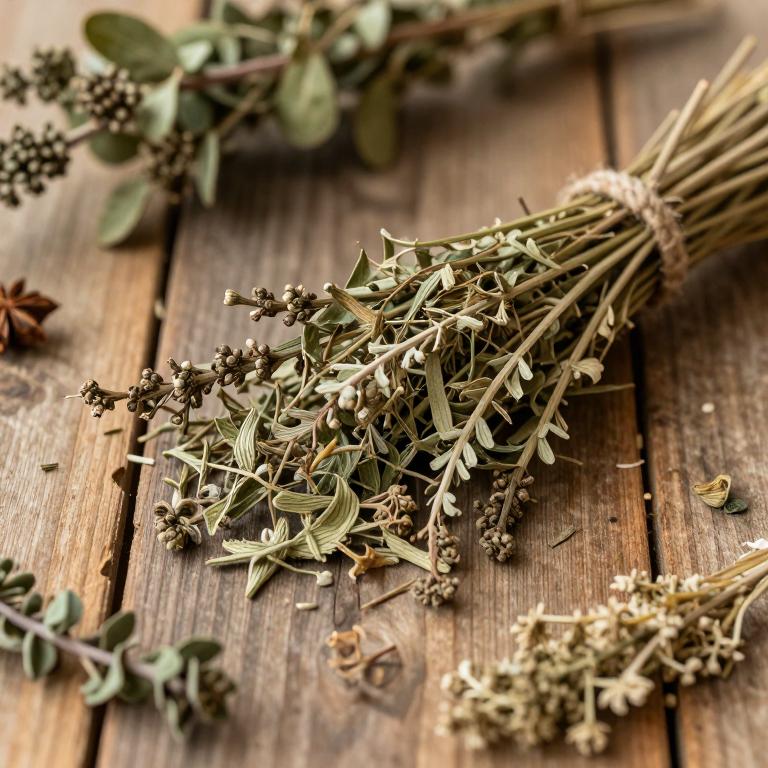
Names and Synonyms
Scientific Names
Accepted name
Nekemias grossedentataSynonyms
- Ampelopsis grossedentata
- Ampelopsis cantoniensis var. grossedentata
Sources: Wikidata, Catalogue of Life
Taxonomical Classification
This plant belongs to the kingdom Plantae and is classified under the phylum Streptophyta within the class Equisetopsida. It is further categorized under the subclass Magnoliidae and the order Vitales, falling into the family Vitaceae. Finally, it is identified by the genus Nekemias and the specific species Nekemias grossedentata.
| Rank | Classification |
|---|---|
| Kingdom | Plantae |
| Phylum | Streptophyta |
| Class | Equisetopsida |
| Subclass | Magnoliidae |
| Order | Vitales |
| Family | Vitaceae |
| Genus | Nekemias |
Sources: The World Checklist of Vascular Plants (WCVP)
Distribution
This plant exhibits a specific geographical range across several key regions in East and Southeast Asia. Within China, its presence is noted in the South-Central provinces. It is also found distributed throughout the Southeast regions of China. Furthermore, the species extends its reach into the Indo-China peninsula. Specifically, this medicinal plant is documented to grow within the borders of Vietnam.
| Region | Area |
|---|---|
| China | China South-Central |
| China | China Southeast |
| Indo-China | Vietnam |
Sources: The World Checklist of Vascular Plants (WCVP)
Botanical Identification
Ecology
The ecology of Nekemias grossedentata is characterized by its specific altitudinal distribution within its native habitat. This species thrives across a diverse elevational gradient, ranging from low-lying areas at a minimum of 200 m AMSL to higher montane regions reaching a maximum of 1500 m AMSL. Throughout its natural range, the plant maintains a mean elevation of approximately 850 m AMSL, indicating a preference for mid-elevation ecological niches where environmental conditions such as temperature and moisture levels are optimally balanced for its growth and medicinal potency.
- Elevational range max:
- 1500 m AMSL
- Elevational range mean:
- 850 m AMSL
- Elevational range min:
- 200 m AMSL
Life history
The life history of Nekemias grossedentata is characterized by its status as a perennial organism, allowing it to persist through multiple growing seasons rather than completing its life cycle in a single year. As a deciduous species, the plant undergoes a seasonal transformation where it sheds its foliage annually, typically in response to environmental cues such as decreasing temperatures or changes in photoperiod, entering a period of dormancy before regenerating new growth in the following spring.
- Deciduousness :
- deciduous
- Lifecycle :
- perennial
Morphology
The morphology of Nekemias grossedentata is characterized by its growth habit as a woody liana, functioning as an obligatory climber that relies on external structures for support rather than being self-supporting. As a vine, its structural development is defined by a woody stem that provides the necessary rigidity and longevity for its climbing life cycle, distinguishing it from non-woody or facultative climbers.
- Climber :
- liana
- Climber :
- obligatory
- Woodiness :
- woody
Physiology
The physiology of Nekemias grossedentata is characterized by a C3 photosynthetic pathway, reflecting its specific metabolic approach to carbon fixation. Its foliage exhibits a distinct morphological structure, featuring lanceolate-shaped leaves that possess toothed margins. The dimensions of the leaves vary according to developmental stages or environmental conditions, with a minimum leaf length of 2 cm and a maximum length reaching up to 5 cm, while the mean leaf length is recorded at 3.5 cm. In terms of lateral expansion, the leaf width ranges from a minimum of 1 cm to a maximum of 2.5 cm, maintaining a mean width of approximately 1.75 cm. Furthermore, the leaf physiology is notable for its lack of defensive integumentary structures, as the plant possesses no leaf thorns or spines.
- Leaf form :
- lanceolate
- Leaf length max:
- 5 cm
- Leaf length mean:
- 3.5 cm
- Leaf length min:
- 2 cm
- Leaf margin :
- toothed
- Leaf spines :
- no
- Leaf thorns :
- no
- Leaf width max:
- 2.5 cm
- Leaf width mean:
- 1.75 cm
- Leaf width min:
- 1 cm
- Photosynthetic pathway :
- C3
Reproduction
The reproduction of Nekemias grossedentata culminates in the development of its characteristic fruits, which exhibit specific morphological dimensions essential for identification. The fruits are relatively small and consistent in shape, with a mean length and width both measuring approximately 0.8 cm. While the dimensions can vary slightly among individuals, the fruit length and width typically range from a minimum of 0.6 cm to a maximum of 1 cm. This uniformity in size, where the mean dimensions align closely with the average diameter, characterizes the fruiting stage of the plant's reproductive cycle.
- Fruit length max:
- 1 cm
- Fruit length mean:
- 0.8 cm
- Fruit length min:
- 0.6 cm
- Fruit width max:
- 1 cm
- Fruit width mean:
- 0.8 cm
- Fruit width min:
- 0.6 cm
Sources: Global Inventory of Floras and Traits (GIFT)
Plant Parts
Nekemias grossedentata has 3 reported plant parts identified across 18 scientific publications and several other databases that are studied for medicinal purposes. The most consistently reported plant part include leaf, stem, root.
| Plant part | Supporting sources | Consensus |
|---|---|---|
| Leaf | 10 supporting sources | ★★★★★ |
| Stem | 5 supporting sources | ★★★☆☆ |
| Root | 3 supporting sources | ★★☆☆☆ |
Leaf
- Journal of food science
- Food research international (Ottawa, Ont.)
- Scientific reports
- Journal of ethnopharmacology
- Molecules (Basel, Switzerland)
View 5 additional sources
- Metabolites
- Zhong yao cai = Zhongyaocai = Journal of Chinese medicinal materials
- Frontiers in plant science
- Genomics
- BMC plant biology
Stem
- Scientific reports
- Molecules (Basel, Switzerland)
- Metabolites
- Zhong yao cai = Zhongyaocai = Journal of Chinese medicinal materials
- Frontiers in plant science
Root
- Plant physiology and biochemistry : PPB
- Metabolites
- Zhong yao cai = Zhongyaocai = Journal of Chinese medicinal materials
Chemicals
Nekemias grossedentata has 45 reported phytochemicals identified across 18 scientific publications and several other databases. The most consistently reported chemicals include Dihydromyricetin, Flavonoids, Ampelopsin, Myricitrin, dihydroquercetin.
| Chemical | Supporting sources | Consensus |
|---|---|---|
| Dihydromyricetin | 16 supporting sources | ★★★★★ |
| Flavonoids | 5 supporting sources | ★★★☆☆ |
| Ampelopsin | 3 supporting sources | ★★☆☆☆ |
| Myricitrin | 3 supporting sources | ★★☆☆☆ |
| dihydroquercetin | 3 supporting sources | ★★☆☆☆ |
| myricetin | 3 supporting sources | ★★☆☆☆ |
| polyphenols | 3 supporting sources | ★★☆☆☆ |
| BETA-SITOSTEROL | 2 supporting sources | ★☆☆☆☆ |
| DHM | 2 supporting sources | ★☆☆☆☆ |
| Gallic acid | 2 supporting sources | ★☆☆☆☆ |
Dihydromyricetin
- Journal of food science
- Plants (Basel, Switzerland)
- Yao xue xue bao = Acta pharmaceutica Sinica
- Scientific reports
- European journal of pharmacology
View 11 additional sources
- Brain research bulletin
- Food & function
- Molecular medicine reports
- Horticulture research
- Journal of agricultural and food chemistry
- Metabolites
- Frontiers in plant science
- Scanning
- Evidence-based complementary and alternative medicine : eCAM
- Genomics
- BMC plant biology
Flavonoids
- Mitochondrial DNA. Part B, Resources
- Food research international (Ottawa, Ont.)
- Journal of ethnopharmacology
- Molecules (Basel, Switzerland)
- Genomics
Ampelopsin
- Molecules (Basel, Switzerland)
- Zhongguo Zhong yao za zhi = Zhongguo zhongyao zazhi = China journal of Chinese materia medica
- Zhong yao cai = Zhongyaocai = Journal of Chinese medicinal materials
Myricitrin
- Zhongguo Zhong yao za zhi = Zhongguo zhongyao zazhi = China journal of Chinese materia medica
- Zhong yao cai = Zhongyaocai = Journal of Chinese medicinal materials
- Metabolites
dihydroquercetin
- Zhong yao cai = Zhongyaocai = Journal of Chinese medicinal materials
- Scientific reports
- Metabolites
myricetin
- Plants (Basel, Switzerland)
- Zhongguo Zhong yao za zhi = Zhongguo zhongyao zazhi = China journal of Chinese materia medica
- Zhong yao cai = Zhongyaocai = Journal of Chinese medicinal materials
polyphenols
- Journal of ethnopharmacology
- Acta pharmaceutica Sinica. B
- Genomics
BETA-SITOSTEROL
- Zhongguo Zhong yao za zhi = Zhongguo zhongyao zazhi = China journal of Chinese materia medica
- Zhong yao cai = Zhongyaocai = Journal of Chinese medicinal materials
DHM
- Plants (Basel, Switzerland)
- Food & function
Gallic acid
- Food chemistry: X
- Zhong yao cai = Zhongyaocai = Journal of Chinese medicinal materials
Activities
Nekemias grossedentata has 7 reported activities identified across 18 scientific publications and several other databases. The most consistently reported activities include Antioxidant, Hepatoprotective, Antibacterial, Antidiabetic, Antitumor.
| Activity | Supporting sources | Consensus |
|---|---|---|
| Antioxidant | 7 supporting sources | ★★★★☆ |
| Hepatoprotective | 3 supporting sources | ★★☆☆☆ |
| Antibacterial | 1 supporting sources | ★☆☆☆☆ |
| Antidiabetic | 1 supporting sources | ★☆☆☆☆ |
| Antitumor | 1 supporting sources | ★☆☆☆☆ |
| Antiviral | 1 supporting sources | ★☆☆☆☆ |
| Neuroprotective | 1 supporting sources | ★☆☆☆☆ |
Antioxidant
- Pharmacognosy magazine
- Journal of ethnopharmacology
- Frontiers in veterinary science
- Molecules (Basel, Switzerland)
- Journal of agricultural and food chemistry
View 2 additional sources
- Frontiers in bioengineering and biotechnology
- Food research international (Ottawa, Ont.)
Hepatoprotective
- Journal of ethnopharmacology
- Molecules (Basel, Switzerland)
- Food research international (Ottawa, Ont.)
Antibacterial
- Journal of ethnopharmacology
Antidiabetic
- Molecules (Basel, Switzerland)
Antitumor
- Journal of agricultural and food chemistry
Antiviral
- Food research international (Ottawa, Ont.)
Neuroprotective
- Journal of ethnopharmacology
Conditions
Nekemias grossedentata has 7 reported investigations on conditions identified across 18 scientific publications and several other databases. The most consistently reported conditions include aphonia, blood pressure, fatigue, heatstroke, sore throat.
| Condition | Supporting sources | Consensus |
|---|---|---|
| Aphonia | 1 supporting sources | ★☆☆☆☆ |
| Blood pressure | 1 supporting sources | ★☆☆☆☆ |
| Fatigue | 1 supporting sources | ★☆☆☆☆ |
| Heatstroke | 1 supporting sources | ★☆☆☆☆ |
| Sore throat | 1 supporting sources | ★☆☆☆☆ |
| Sore-throat | 1 supporting sources | ★☆☆☆☆ |
| Toothache | 1 supporting sources | ★☆☆☆☆ |
Aphonia
- Journal of ethnopharmacology
Blood pressure
- Journal of ethnopharmacology
Fatigue
- Journal of ethnopharmacology
Heatstroke
- Journal of ethnopharmacology
Sore throat
- Scientific reports
Sore-throat
- Journal of ethnopharmacology
Toothache
- Journal of ethnopharmacology
Preparations
Nekemias grossedentata has 21 reported preparations identified across 18 scientific publications and several other databases. The most consistently reported preparations include vine tea, AG extract, AGE, Ampelopsis grossedentata extracts (AMP), Dihydromyricetin.
| Preparation | Supporting sources | Consensus |
|---|---|---|
| Vine tea | 8 supporting sources | ★★★★☆ |
| Ag extract | 1 supporting sources | ★☆☆☆☆ |
| Age | 1 supporting sources | ★☆☆☆☆ |
| Ampelopsis grossedentata extracts (amp) | 1 supporting sources | ★☆☆☆☆ |
| Dihydromyricetin | 1 supporting sources | ★☆☆☆☆ |
| Dihydromyricetin (dhm) | 1 supporting sources | ★☆☆☆☆ |
| Leaf extractions | 1 supporting sources | ★☆☆☆☆ |
| Leaf extracts | 1 supporting sources | ★☆☆☆☆ |
| Vine tea | 1 supporting sources | ★☆☆☆☆ |
| Vine tea | 1 supporting sources | ★☆☆☆☆ |
Vine tea
- Scientific reports
- Journal of ethnopharmacology
- Frontiers in veterinary science
- Metabolites
- Frontiers in plant science
View 3 additional sources
- Genomics
- Food research international (Ottawa, Ont.)
- BMC plant biology
Ag extract
- Molecules (Basel, Switzerland)
Age
- Frontiers in veterinary science
Ampelopsis grossedentata extracts (amp)
- Food research international (Ottawa, Ont.)
Dihydromyricetin
- Scanning
Dihydromyricetin (dhm)
- Journal of agricultural and food chemistry
Leaf extractions
- Journal of food science
Leaf extracts
- Journal of food science
Vine tea
- Plant physiology and biochemistry : PPB
Vine tea
- Plants (Basel, Switzerland)