Nectandra cuspidata
Nectandra cuspidata · Accepted scientific name
Scientific literature: Very Sparse (5 studies) · ★☆☆☆☆
Nectandra cuspidata, scientifically known as Nectandra cuspidata, is a versatile medicinal shrub native to tropical regions. Renowned for its therapeutic properties, this plant is frequently utilized in traditional medicine to treat inflammation, skin ailments, and digestive issues. Its bioactive compounds offer significant potential for developing natural pharmacological treatments.
- Family
- Lauraceae
- Native range
- Northern America
- Parts used
- Leaf
- Common names
- Not available
- Scientific synonyms
- Nectandra Pichurim Var. Cuprea · Nectandra Gentlei · 3 more
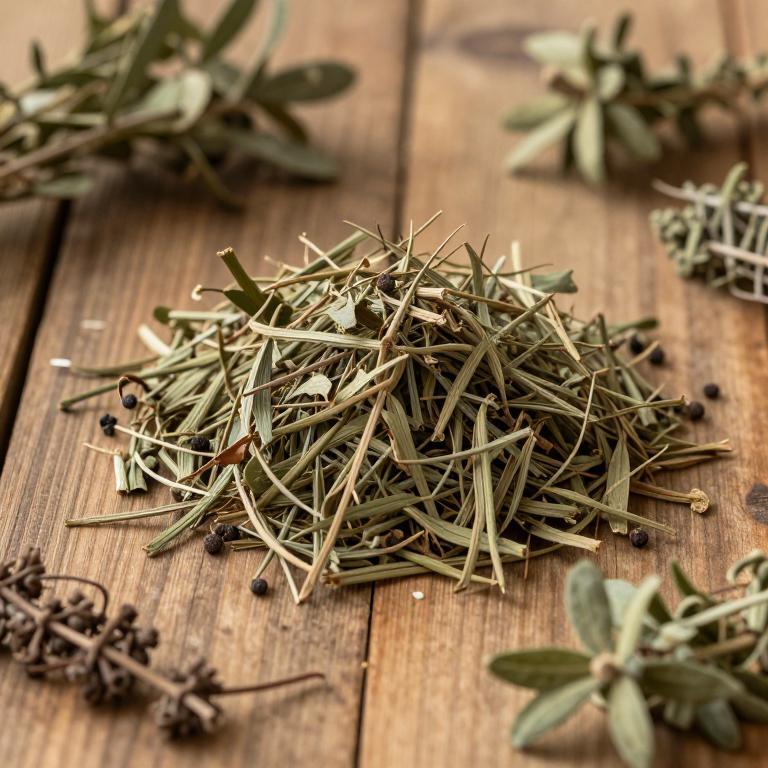
Names and Synonyms
Scientific Names
Accepted name
Nectandra cuspidataSynonyms
- Nectandra pichurim var. cuprea
- Nectandra gentlei
- Nectandra membranacea subsp. cuspidata
- Nectandra olivacea
- Nectandra cuspidata var. dubia
Sources: Wikidata, Catalogue of Life
Taxonomical Classification
This plant belongs to the kingdom Plantae and is classified under the phylum Streptophyta within the class Equisetopsida. It is further categorized under the subclass Magnoliidae and the order Laurales, falling into the family Lauraceae. Finally, its specific taxonomic identification is placed within the genus Nectandra.
| Rank | Classification |
|---|---|
| Kingdom | Plantae |
| Phylum | Streptophyta |
| Class | Equisetopsida |
| Subclass | Magnoliidae |
| Order | Laurales |
| Family | Lauraceae |
| Genus | Nectandra |
Sources: The World Checklist of Vascular Plants (WCVP)
Distribution
This plant exhibits a diverse geographical distribution spanning across several key regions of North and Central America. Within Mexico, its presence is noted in the central territories as well as the coastal areas of the Gulf. Furthermore, it can be found throughout the southwestern and southeastern portions of the Mexican landscape. Moving south into Central America, the species expands its range into the nation of Belize. This broad distribution highlights the plant's ability to thrive in various environmental conditions across these specific locales.
| Region | Area |
|---|---|
| Mexico | Mexico Central |
| Mexico | Mexico Gulf |
| Mexico | Mexico Southwest |
| Mexico | Mexico Southeast |
| Central America | Belize |
| Central America | Costa Rica |
| Central America | El Salvador |
| Central America | Guatemala |
| Central America | Honduras |
| Central America | Nicaragua |
Sources: The World Checklist of Vascular Plants (WCVP)
Botanical Identification
Ecology
The ecology of Nectandra cuspidata is characterized by a broad altitudinal distribution, spanning from sea level up to an elevation of 2000 m AMSL. This species is primarily found inhabiting high-altitude forests, specifically within the Bosque alto ecosystem, where it adapts to the distinct environmental conditions present in these montane habitats.
- Elevational range max:
- 2000 m AMSL
- Elevational range min:
- 0 m AMSL
- Habitat :
- Bosque alto
Life history
The life history of Nectandra cuspidata is characterized by its status as a perennial species, allowing it to persist in its environment through multiple growing seasons. Throughout its existence, the plant maintains an evergreen habit, ensuring that its foliage remains functional and present regardless of seasonal shifts, rather than shedding its leaves in a deciduous manner.
- Deciduousness :
- evergreen
- Lifecycle :
- perennial
Morphology
The morphology of Neckandtia cuspiculata is characterized by a woody growth form that can manifest as both a tree and a shrub. This plant is a terrestrial species, functioning as an independent organism without parasitic tendencies. In terms of its physical stature, it exhibits significant verticality, with an average plant height of approximately 20 m and the potential to reach a maximum height of 30 m. Although it possesses climbing characteristics, it is categorized as a self-supporting plant rather than an obligatory vine or liana, and it does not exhibit epiphytic behavior, remaining strictly terrestrial in its growth habit.
- Aquatic :
- terrestrial
- Climber :
- self-supporting
- Epiphyte :
- terrestrial
- Growth form :
- tree
- Growth form :
- shrub
- Parasite :
- independent
- Plant height max:
- 30 m
- Plant height mean:
- 20 m
- Woodiness :
- woody
Physiology
The physiology of Nectandra cuspidata is characterized by a C3 photosynthetic pathway, which dictates its carbon fixation processes and metabolic efficiency. In terms of leaf structural composition, the plant exhibits a consistent Leaf Dry Matter Content (LDMC) of 492.1 mg/g, showing no variance between its minimum and maximum recorded values. Additionally, this species does not function as a nitrogen fixer, meaning it lacks the symbiotic or autonomous biological mechanisms required to convert atmospheric nitrogen into a usable form.
- Leaf dry matter content (LDMC) mean:
- 492.1 mg/g
- Nitrogen fixer :
- no
- Photosynthetic pathway :
- C3
Reproduction
The reproduction of Nectandra cuspidata is driven by biotic pollination syndromes, specifically utilizing insect vectors to facilitate fertilization. Within these biotic interactions, the plant relies heavily on bees as primary pollinators. Following successful pollination, the plant develops a fruit characterized as a drupe, which is indehiscent, meaning it does not split open at maturity to release its seeds. The resulting fruit has an average width of approximately 1.2 cm. For the stage of seed dissemination, the species employs a zoochorous dispersal syndrome, relying on animals to transport its fruits and ensure the spread of its progeny throughout the environment.
- Dehiscence :
- indehiscent
- Dispersal syndrome :
- zoochorous
- Fruit type :
- drupe
- Fruit width mean:
- 1.2 cm
- Pollination syndrome :
- insect
- Pollination syndrome :
- bee
- Pollination syndrome :
- biotic
Sources: Global Inventory of Floras and Traits (GIFT)
Plant Parts
Nectandra cuspidata has 1 reported plant parts identified across 1 scientific publications and several other databases that are studied for medicinal purposes. The most consistently reported plant part include leaf.
| Plant part | Supporting sources | Consensus |
|---|---|---|
| Leaf | 1 supporting sources | ★☆☆☆☆ |
Leaf
- Natural product research
Chemicals
Nectandra cuspidata has 3 reported phytochemicals identified across 1 scientific publications and several other databases. The most consistently reported chemicals include Epicatechin, Isovitexin, Vitexin.
| Chemical | Supporting sources | Consensus |
|---|---|---|
| Epicatechin | 1 supporting sources | ★☆☆☆☆ |
| Isovitexin | 1 supporting sources | ★☆☆☆☆ |
| Vitexin | 1 supporting sources | ★☆☆☆☆ |
Epicatechin
- Natural product research
Isovitexin
- Natural product research
Vitexin
- Natural product research
Activities
Nectandra cuspidata has 1 reported activities identified across 1 scientific publications and several other databases. The most consistently reported activities include Antioxidant.
| Activity | Supporting sources | Consensus |
|---|---|---|
| Antioxidant | 1 supporting sources | ★☆☆☆☆ |
Antioxidant
- Natural product research
Preparations
Nectandra cuspidata has 4 reported preparations identified across 1 scientific publications and several other databases. The most consistently reported preparations include ethanolic extract, ethyl acetate fraction (EAF), fractions, isolated compounds.
| Preparation | Supporting sources | Consensus |
|---|---|---|
| Ethanolic extract | 1 supporting sources | ★☆☆☆☆ |
| Ethyl acetate fraction (eaf) | 1 supporting sources | ★☆☆☆☆ |
| Fractions | 1 supporting sources | ★☆☆☆☆ |
| Isolated compounds | 1 supporting sources | ★☆☆☆☆ |
Ethanolic extract
- Natural product research
Ethyl acetate fraction (eaf)
- Natural product research
Fractions
- Natural product research
Isolated compounds
- Natural product research