African peach
Nauclea latifolia · Accepted scientific name
Scientific literature: Moderate (118 studies) · ★★★☆☆
African peach, scientifically known as Nauclea latifolia, is a versatile medicinal tree native to tropical Africa. Renowned for its therapeutic properties, various parts of the plant are utilized in traditional medicine to treat ailments such as inflammation, fever, and skin infections, offering significant pharmacological potential for modern drug development.
- Family
- Rubiaceae
- Native range
- Africa
- Parts used
- Root · Stem
- Common names
- African Peach
- Scientific synonyms
- Sarcocephalus Russeggeri · Sarcocephalus Latifolius · 6 more
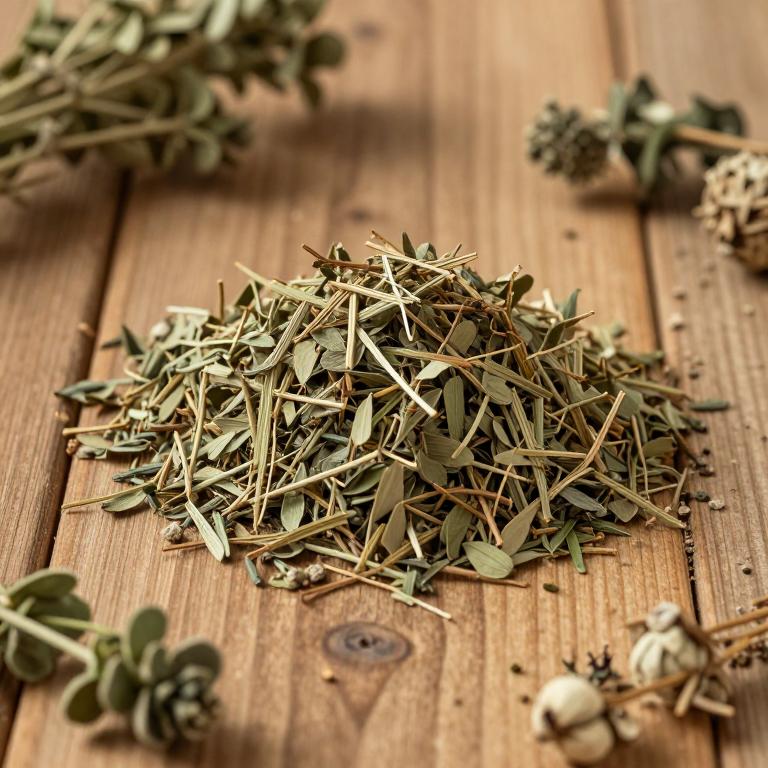
Names and Synonyms
Common Names
- African peach
Scientific Names
Accepted name
Nauclea latifoliaSynonyms
- Sarcocephalus russeggeri
- Sarcocephalus latifolius
- Nauclea esculenta
- Sarcocephalus sambucinus
- Sarcocephalus esculentus
- Sarcocephalus esculentus var. amarissima
- Sarcocephalus esculentus var. velutina
- Cephalina esculenta
Sources: Wikidata, Catalogue of Life
Taxonomical Classification
This plant belongs to the kingdom Plantae and the phylum Streptophyta, falling under the class Equisetopsida and subclass Magnoliidae. Within the order Gentianaales, it is classified under the family Rubiaceae. Specifically, its taxonomic identity is defined by the genus Nauclea, which includes the species Nauclea latifolia.
| Rank | Classification |
|---|---|
| Kingdom | Plantae |
| Phylum | Streptophyta |
| Class | Equisetopsida |
| Subclass | Magnoliidae |
| Order | Gentianales |
| Family | Rubiaceae |
| Genus | Nauclea |
Sources: The World Checklist of Vascular Plants (WCVP)
Distribution
This plant is primarily distributed across the diverse landscapes of West Tropical Africa. Its presence can be documented in the country of Benin, where it plays a role in the local ecosystem. It is also found within the borders of Burkina, contributing to the region's botanical diversity. Furthermore, the species extends its range into Gambia and Ghana. Finally, its geographical reach includes the coastal and inland territories of Guinea-Bissau.
| Region | Area |
|---|---|
| West Tropical Africa | Benin |
| West Tropical Africa | Burkina |
| West Tropical Africa | Gambia |
| West Tropical Africa | Ghana |
| West Tropical Africa | Guinea-Bissau |
| West Tropical Africa | Guinea |
| West Tropical Africa | Ivory Coast |
| West Tropical Africa | Liberia |
| West Tropical Africa | Mali |
| West Tropical Africa | Mauritania |
Sources: The World Checklist of Vascular Plants (WCVP)
Botanical Identification
Life history
The life history of Nauclea latifolia is characterized by a perennial lifecycle, allowing the plant to persist across multiple growing seasons. As a phanerophyte, it maintains its conducting shoots well above the ground, specifically functioning as a nanophanerophyte in certain developmental stages or environmental contexts. The plant exhibits a deciduous nature, shedding its foliage periodically as part of its seasonal biological rhythm.
- Deciduousness :
- deciduous
- Life form :
- nanophanerophyte
- Life form :
- phanerophyte
- Lifecycle :
- perennial
Morphology
The morphology of Nauclea latifolia is characterized by a woody growth form that primarily manifests as a tree, though it can also present as a shrub. As a self-supporting organism, it does not function as a climber, liana, or vine, and it is classified as an independent species rather than a parasite or an epiphyte, maintaining a terrestrial habit. The plant exhibits significant variation in stature, with a minimum height of 10 m and a maximum height reaching up to 30 m, resulting in a mean plant height of approximately 6.52 m.
- Aquatic :
- terrestrial
- Climber :
- self-supporting
- Epiphyte :
- terrestrial
- Growth form :
- tree
- Growth form :
- shrub
- Parasite :
- independent
- Plant height max:
- 30 m
- Plant height mean:
- 6.524018532 m
- Plant height min:
- 10 m
- Woodiness :
- woody
Physiology
The physiology of Nauclea latifolia is characterized by its specialized metabolic pathways and growth strategies adapted to tropical forest ecosystems. As a woody perennial, its physiological processes are heavily reliant on efficient photosynthetic mechanisms to support rapid biomass accumulation and the synthesis of complex secondary metabolites, such as indole alkaloids. In terms of nutrient acquisition, the plant does not engage in symbiotic relationships with diazotrophic bacteria to convert atmospheric gas into organic forms; therefore, it is not a nitrogen fixer, as indicated by its lack of specialized root nodules for this purpose. Instead, its nitrogen physiology depends on the uptake of nitrates and ammonium from the soil through an extensive root system. This reliance on soil-derived nitrogen dictates its distribution patterns, often favoring nutrient-rich riparian zones where mineral availability supports its robust vegetative growth and reproductive cycles.
- Nitrogen fixer :
- no
Reproduction
The reproduction of Nauclea latifolia is characterized by a biotic pollination syndrome, primarily involving insects and specifically bees, which facilitate the fertilization process. The fruiting period is highly concentrated, with both the onset and conclusion of fruiting occurring around July, though the timing can be variable. Once fertilization is successful, the plant produces seeds that are remarkably lightweight; the seed mass is extremely fine, ranging from a minimum of 0.00018 g to a maximum of 0.00022 g, with an average mass of approximately 2e-04 g. Following maturation, the plant utilizes a zoochorous dispersal syndrome, relying on animals to distribute its seeds throughout its habitat.
- Dispersal syndrome :
- zoochorous
- Fruiting time :
- Jul
- Pollination syndrome :
- insect
- Pollination syndrome :
- bee
- Pollination syndrome :
- biotic
- Seed mass max:
- 0.00022 g
- Seed mass mean:
- 2e-04 g
- Seed mass min:
- 0.00018 g
Sources: Global Inventory of Floras and Traits (GIFT)
Plant Parts
Nauclea latifolia has 3 reported plant parts identified across 16 scientific publications and several other databases that are studied for medicinal purposes. The most consistently reported plant part include root, stem, leaf.
| Plant part | Supporting sources | Consensus |
|---|---|---|
| Root | 11 supporting sources | ★★★★★ |
| Stem | 3 supporting sources | ★★☆☆☆ |
| Leaf | 2 supporting sources | ★☆☆☆☆ |
Root
- Proceedings of the National Academy of Sciences of the United States of America
- BMC complementary medicine and therapies
- Journal of ethnopharmacology
- Die Pharmazie
- Methods and findings in experimental and clinical pharmacology
View 6 additional sources
- BMC complementary and alternative medicine
- Zhongguo Zhong yao za zhi = Zhongguo zhongyao zazhi = China journal of Chinese materia medica
- Poultry science
- Parasitology research
- Angewandte Chemie (International ed. in English)
- Pakistan journal of biological sciences : PJBS
Stem
- Fitoterapia
- Journal of ethnopharmacology
- BMC complementary and alternative medicine
Leaf
- Journal of ethnopharmacology
- Parasitology research
Chemicals
Nauclea latifolia has 24 reported phytochemicals identified across 16 scientific publications and several other databases. The most consistently reported chemicals include Saponins, Strictosamide, Tramadol, Vincosamide, BETA-SITOSTEROL.
| Chemical | Supporting sources | Consensus |
|---|---|---|
| Saponins | 2 supporting sources | ★☆☆☆☆ |
| Strictosamide | 2 supporting sources | ★☆☆☆☆ |
| Tramadol | 2 supporting sources | ★☆☆☆☆ |
| Vincosamide | 2 supporting sources | ★☆☆☆☆ |
| BETA-SITOSTEROL | 1 supporting sources | ★☆☆☆☆ |
| Daucosterol | 1 supporting sources | ★☆☆☆☆ |
| Flavonoid | 1 supporting sources | ★☆☆☆☆ |
| Flavonoids | 1 supporting sources | ★☆☆☆☆ |
| N-Desmethyltramadol | 1 supporting sources | ★☆☆☆☆ |
| O-Desmethyltramadol | 1 supporting sources | ★☆☆☆☆ |
Saponins
- BMC complementary and alternative medicine
- Journal of ethnopharmacology
Strictosamide
- Journal of ethnopharmacology
- BMC complementary and alternative medicine
Tramadol
- Proceedings of the National Academy of Sciences of the United States of America
- Angewandte Chemie (International ed. in English)
Vincosamide
- Journal of ethnopharmacology
- BMC complementary and alternative medicine
BETA-SITOSTEROL
- Zhongguo Zhong yao za zhi = Zhongguo zhongyao zazhi = China journal of Chinese materia medica
Daucosterol
- Zhongguo Zhong yao za zhi = Zhongguo zhongyao zazhi = China journal of Chinese materia medica
Flavonoid
- BMC complementary and alternative medicine
Flavonoids
- BMC complementary and alternative medicine
N-Desmethyltramadol
- Angewandte Chemie (International ed. in English)
O-Desmethyltramadol
- Angewandte Chemie (International ed. in English)
Activities
Nauclea latifolia has 9 reported activities identified across 16 scientific publications and several other databases. The most consistently reported activities include Antimalarial, Analgesic, Antibacterial, Antifungal, Antinociceptive.
| Activity | Supporting sources | Consensus |
|---|---|---|
| Antimalarial | 3 supporting sources | ★★☆☆☆ |
| Analgesic | 1 supporting sources | ★☆☆☆☆ |
| Antibacterial | 1 supporting sources | ★☆☆☆☆ |
| Antifungal | 1 supporting sources | ★☆☆☆☆ |
| Antinociceptive | 1 supporting sources | ★☆☆☆☆ |
| Antioxidant | 1 supporting sources | ★☆☆☆☆ |
| Antiplasmodial | 1 supporting sources | ★☆☆☆☆ |
| Bacteriostatic | 1 supporting sources | ★☆☆☆☆ |
| Spasmolytic | 1 supporting sources | ★☆☆☆☆ |
Antimalarial
- Journal of ethnopharmacology
- BMC complementary medicine and therapies
- Phytotherapy research : PTR
Analgesic
- Proceedings of the National Academy of Sciences of the United States of America
Antibacterial
- Journal of ethnopharmacology
Antifungal
- Journal of ethnopharmacology
Antinociceptive
- Journal of ethnopharmacology
Antioxidant
- BMC complementary and alternative medicine
Antiplasmodial
- BMC complementary medicine and therapies
Bacteriostatic
- Journal of ethnopharmacology
Spasmolytic
- Phytomedicine : international journal of phytotherapy and phytopharmacology
Conditions
Nauclea latifolia has 32 reported investigations on conditions identified across 16 scientific publications and several other databases. The most consistently reported conditions include malaria, diarrhea, E. coli, Entamoeba histolytica, Gram-negative bacterial infections.
| Condition | Supporting sources | Consensus |
|---|---|---|
| Malaria | 5 supporting sources | ★★★☆☆ |
| Diarrhea | 3 supporting sources | ★★☆☆☆ |
| E. coli | 1 supporting sources | ★☆☆☆☆ |
| Entamoeba histolytica | 1 supporting sources | ★☆☆☆☆ |
| Gram-negative bacterial infections | 1 supporting sources | ★☆☆☆☆ |
| Hsv-2 | 1 supporting sources | ★☆☆☆☆ |
| Malaria | 1 supporting sources | ★☆☆☆☆ |
| Abdominal pains | 1 supporting sources | ★☆☆☆☆ |
| Analgesic | 1 supporting sources | ★☆☆☆☆ |
| Anxiety | 1 supporting sources | ★☆☆☆☆ |
Malaria
- Journal of ethnopharmacology
- BMC complementary medicine and therapies
- Parasitology research
- Natural product communications
- Phytotherapy research : PTR
Diarrhea
- Journal of ethnopharmacology
- Methods and findings in experimental and clinical pharmacology
- BMC complementary and alternative medicine
E. coli
- Journal of ethnopharmacology
Entamoeba histolytica
- Phytomedicine : international journal of phytotherapy and phytopharmacology
Gram-negative bacterial infections
- BMC complementary and alternative medicine
Hsv-2
- BMC complementary and alternative medicine
Malaria
- Malaria journal
Abdominal pains
- BMC complementary and alternative medicine
Analgesic
- Proceedings of the National Academy of Sciences of the United States of America
Anxiety
- CNS drugs
Preparations
Nauclea latifolia has 28 reported preparations identified across 16 scientific publications and several other databases. The most consistently reported preparations include Bark extracts, Extracts, Fresh or dry barks, Hydromethanolic extracts, Methanolic extracts.
| Preparation | Supporting sources | Consensus |
|---|---|---|
| Bark extracts | 1 supporting sources | ★☆☆☆☆ |
| Extracts | 1 supporting sources | ★☆☆☆☆ |
| Fresh or dry barks | 1 supporting sources | ★☆☆☆☆ |
| Hydromethanolic extracts | 1 supporting sources | ★☆☆☆☆ |
| Methanolic extracts | 1 supporting sources | ★☆☆☆☆ |
| Methylene chloride-methanol (1:1) extracts | 1 supporting sources | ★☆☆☆☆ |
| Methylene chloride-methanol of nauclea latifolia (mcm nl) | 1 supporting sources | ★☆☆☆☆ |
| Nauclea latifolia fraction | 1 supporting sources | ★☆☆☆☆ |
| Powdered s. latifolius leaves | 1 supporting sources | ★☆☆☆☆ |
| Sarcocephalus latifolius root infusion | 1 supporting sources | ★☆☆☆☆ |
Bark extracts
- Journal of ethnopharmacology
Extracts
- Phytotherapy research : PTR
Fresh or dry barks
- Journal of analytical & pharmaceutical research
Hydromethanolic extracts
- Journal of ethnopharmacology
Methanolic extracts
- Pakistan journal of biological sciences : PJBS
Methylene chloride-methanol (1:1) extracts
- BMC complementary and alternative medicine
Methylene chloride-methanol of nauclea latifolia (mcm nl)
- BMC complementary and alternative medicine
Nauclea latifolia fraction
- Journal of ethnopharmacology
Powdered s. latifolius leaves
- Journal of ethnopharmacology
Sarcocephalus latifolius root infusion
- Journal of ethnopharmacology