jonquil
Narcissus jonquilla · Accepted scientific name
Scientific literature: Very Sparse (5 studies) · ★☆☆☆☆
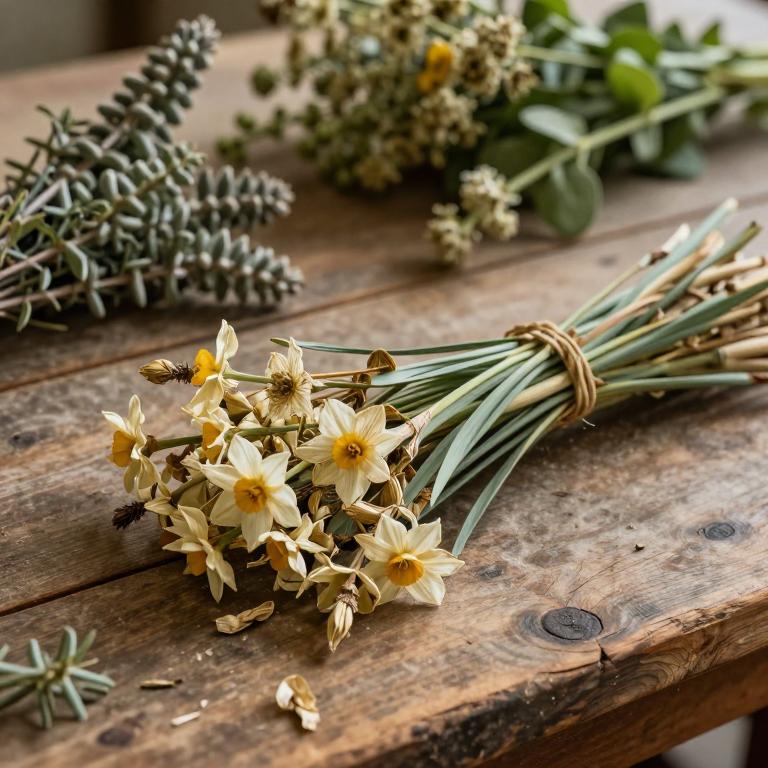
Jonquil, scientifically known as Narcissus jonquilla, is a charming perennial bulb native to the Mediterranean. Renowned for its clusters of small, fragrant, yellow trumpet-shaped flowers, it is widely cultivated for ornamental beauty. While primarily used in landscaping, its historical role in traditional herbal practices highlights its botanical significance.
- Family
- Amaryllidaceae
- Native range
- Europe
- Parts used
- Not available
- Common names
- Apodanthus Daffodil · Jonquil
- Scientific synonyms
- Jonquilla Juncifolia · Hermione Jonquilla · 2 more
Names and Synonyms
Common Names
- apodanthus daffodil
- jonquil
Scientific Names
Accepted name
Narcissus jonquillaSynonyms
- Jonquilla juncifolia
- Hermione jonquilla
- Queltia juncifolia
- Queltia jonquilla
Regional and Traditional Names
Spanish:
- Hermione jonquilla
- Hermione juncifolia
- Jonquilla juncifolia
- Narcissus juncifolius
- Queltia jonquilla
- Queltia juncifolia
- Tityrus jonquilla
- Alhelías
- Campanita de la Virgen
- Candeleros de las riberas
- Junquillo amarillo
- Junquillo de olor
- Junquillo menor
- Junquillo oloroso
- Junquillos
- Manolas
- Narciso toledano
- Vara de Joseph
- Alhelias
- junquillo amarillo
German:
- Jonquille
- Narzissen
French:
- jonquille
- narcisse jonquille
Sources: Wikidata, Catalogue of Life
Taxonomical Classification
This plant belongs to the kingdom Plantae and the phylum Streptophyta, falling under the class Equisetopsida and subclass Magnoliidae. Within the order Asparagales, it is classified under the family Amaryllidaceae and the genus Narcissus.
| Rank | Classification |
|---|---|
| Kingdom | Plantae |
| Phylum | Streptophyta |
| Class | Equisetopsida |
| Subclass | Magnoliidae |
| Order | Asparagales |
| Family | Amaryllidaceae |
| Genus | Narcissus |
Sources: The World Checklist of Vascular Plants (WCVP)
Distribution
This plant exhibits a varied presence across several distinct regions of the European continent. In Northern Europe, its distribution can be observed within Great Britain. Moving into Middle Europe, the species is also found growing in Germany. Its presence extends significantly into Southwestern Europe, where it inhabits the landscapes of France. Furthermore, the plant is commonly distributed across the Southwestern European territories of Portugal and Spain.
| Region | Area |
|---|---|
| Northern Europe | Great Britain |
| Middle Europe | Germany |
| Southwestern Europe | France |
| Southwestern Europe | Portugal |
| Southwestern Europe | Spain |
| Southeastern Europe | Italy |
| Southeastern Europe | Türkiye-in-Europe |
| Southeastern Europe | NW. Balkan Pen. |
| Macaronesia | Madeira |
| Western Canada | British Columbia |
Sources: The World Checklist of Vascular Plants (WCVP)
Botanical Identification
Life history
The life history of Narcissus jonquilla is characterized by its status as a perennial plant, allowing it to persist in its environment through multiple growing seasons. As a cryptophyte, it employs specialized survival strategies to protect its vital organs from seasonal environmental stressors. Specifically, its life form is classified as a geophyte, meaning it relies on underground storage organs—typically bulbs—to endure unfavorable periods such as drought or extreme temperatures. This biological framework enables the plant to remain dormant during harsh conditions and emerge vigorously when favorable growing cycles return.
- Life form :
- geophyte
- Life form :
- cryptophyte
- Lifecycle :
- perennial
Morphology
The morphology of Narcissus jonquilla is characterized by its growth form as a non-woody herb and forb, functioning as an independent organism rather than a parasite or epiphyte. As a terrestrial species, it does not exhibit aquatic or semiaquatic tendencies, nor does it possess climbing habits, being entirely self-supporting in its structure. The plant maintains a relatively modest stature, with a plant height ranging from a minimum of 0.2 m to a maximum of 0.5 m.
- Aquatic :
- terrestrial
- Climber :
- self-supporting
- Epiphyte :
- terrestrial
- Growth form :
- herb
- Growth form :
- forb
- Parasite :
- independent
- Plant height max:
- 0.5 m
- Plant height min:
- 0.2 m
- Woodiness :
- non-woody
Physiology
The physiology of Narcissus jonquilla is characterized by its metabolic efficiency and specialized nutritional strategies suited for its natural habitats. As a plant utilizing the C3 photosynthetic pathway, it fixes atmospheric carbon dioxide through the Calvin cycle, relying on the enzyme Rubisco to incorporate CO2 into organic molecules, which is typical for many temperate bulbous perennials. This pathway allows the plant to optimize energy production under moderate light and temperature conditions. Furthermore, the species is classified as non-carnivorous, meaning it obtains its essential nutrients, such as nitrogen and phosphorus, through the absorption of minerals from the soil via its root system rather than through the digestion of prey.
- Carnivory :
- non-carnivorous
- Photosynthetic pathway :
- C3
Reproduction
The reproduction of Narcissus jonquilla is driven by a combination of biotic pollination strategies and specialized seed dispersal mechanisms. The flowering period is characterized by seasonal timing, typically beginning in March and concluding in April, though the window can be variable. Pollination is achieved through a biotic syndrome, specifically relying on insects, with butterflies playing a notable role in the process. Following successful fertilization, the plant produces a capsule as its fruit type. This capsule is dehiscent, meaning it opens at maturity to release the seeds. Regarding its life cycle, asexual reproduction is noted as absent, indicating a primary reliance on sexual reproduction for the propagation of the species.
- Dehiscence :
- dehiscent
- Flowering time :
- Mar
- Flowering time :
- Apr
- Fruit type :
- capsule
- Pollination syndrome :
- insect
- Pollination syndrome :
- butterfly
- Pollination syndrome :
- biotic
- Reproduction asexual :
- absent
Sources: Global Inventory of Floras and Traits (GIFT)
Chemicals
Narcissus jonquilla has 3 reported phytochemicals identified across 0 scientific publications and several other databases. The most consistently reported chemicals include galanthamine, 1,2-Dihydrogalanthamine, lycorine.
| Chemical | Supporting sources | Consensus |
|---|---|---|
| galanthamine | 2 supporting sources | ★☆☆☆☆ |
| 1,2-Dihydrogalanthamine | 1 supporting sources | ★☆☆☆☆ |
| lycorine | 1 supporting sources | ★☆☆☆☆ |
galanthamine
- Journal of chromatography. A
- Analytica chimica acta
1,2-Dihydrogalanthamine
- Journal of chromatography. A
lycorine
- Analytica chimica acta
Activities
Narcissus jonquilla has 1 reported activities identified across 0 scientific publications and several other databases. The most consistently reported activities include AChE-Inhibitor.
| Activity | Supporting sources | Consensus |
|---|---|---|
| AChE-Inhibitor | 1 supporting sources | ★☆☆☆☆ |
AChE-Inhibitor
- Journal of chromatography. A