myrthe
Myrtus · Accepted scientific name
Scientific literature: Very Sparse (4 studies) · ★☆☆☆☆
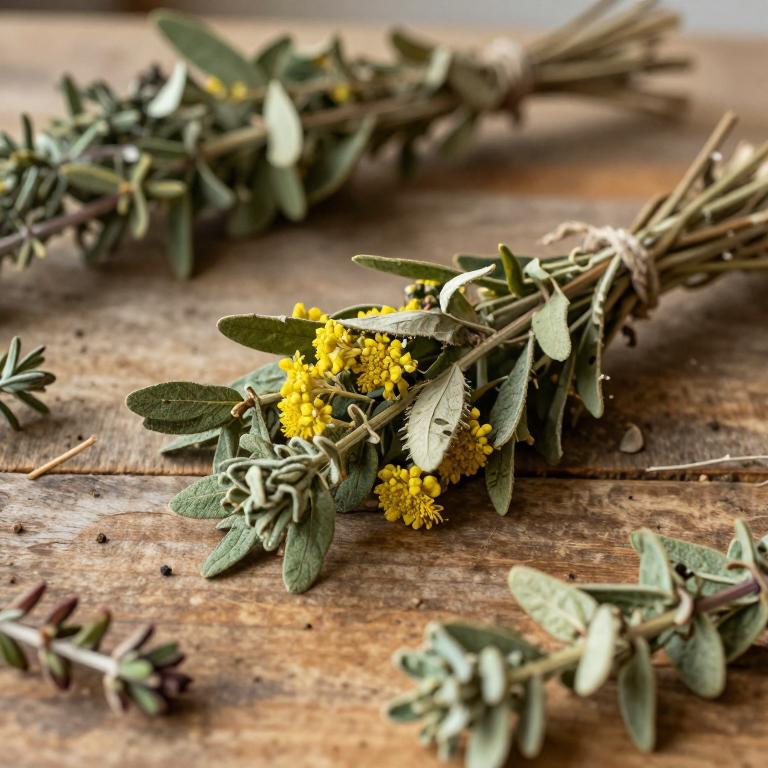
Myrthe, scientifically known as Myrtus, is a versatile evergreen shrub cherished for its fragrant leaves and healing properties. Renowned in traditional medicine for its antiseptic and anti-inflammatory qualities, this botanical treasure offers diverse therapeutic benefits. From soothing skin ailments to supporting respiratory health, Myrtus remains a cornerstone of herbal wellness.
- Family
- Myrtaceae
- Native range
- Europe
- Parts used
- Not available
- Common names
- Not available
- Scientific synonyms
- Myrthus
Names and Synonyms
Scientific Names
Accepted name
MyrtusSynonyms
- Myrthus
Regional and Traditional Names
German:
- Myrthe
- Myrten
- Myrten
French:
- myrte
Sources: Wikidata, Catalogue of Life
Taxonomical Classification
This plant belongs to the kingdom Plantae and is classified within the phylum Streptophyta and the class Equisetopsida. It is further categorized under the subclass Magnoliidae and the order Myrtales, falling into the family Myrtaeae. Finally, the medicinal plant is identified by the genus Myrtus.
| Rank | Classification |
|---|---|
| Kingdom | Plantae |
| Phylum | Streptophyta |
| Class | Equisetopsida |
| Subclass | Magnoliidae |
| Order | Myrtales |
| Family | Myrtaceae |
| Genus | Myrtus |
Sources: The World Checklist of Vascular Plants (WCVP)
Distribution
This plant is primarily distributed across the Mediterranean region of Southwestern Europe. Its presence can be found spanning several distinct island territories, including the Baleares and Corse. Additionally, the species is widely established throughout the mainland regions of France and Portugal. It also thrives in the specific coastal environments of Sardegna. Overall, these locations define the core geographical range for this medicinal species.
| Region | Area |
|---|---|
| Southwestern Europe | Baleares |
| Southwestern Europe | Corse |
| Southwestern Europe | France |
| Southwestern Europe | Portugal |
| Southwestern Europe | Sardegna |
| Southwestern Europe | Spain |
| Southeastern Europe | Albania |
| Southeastern Europe | Greece |
| Southeastern Europe | Italy |
| Southeastern Europe | Kriti |
Sources: The World Checklist of Vascular Plants (WCVP)
Activities
Myrtus has 4 reported activities identified across 0 scientific publications and several other databases. The most consistently reported activities include Antibacterial, Antihypertensive, Antioxidant, Hepatoprotective.
| Activity | Supporting sources | Consensus |
|---|---|---|
| Antibacterial | 1 supporting sources | ★☆☆☆☆ |
| Antihypertensive | 1 supporting sources | ★☆☆☆☆ |
| Antioxidant | 1 supporting sources | ★☆☆☆☆ |
| Hepatoprotective | 1 supporting sources | ★☆☆☆☆ |
Antibacterial
- Nutrire : revista de Sociedade Brasileira de Alimentacao e Nutricao = journal of the Brazilian Society of Food and Nutrition
Antihypertensive
- Nutrire : revista de Sociedade Brasileira de Alimentacao e Nutricao = journal of the Brazilian Society of Food and Nutrition
Antioxidant
- Nutrire : revista de Sociedade Brasileira de Alimentacao e Nutricao = journal of the Brazilian Society of Food and Nutrition
Hepatoprotective
- Nutrire : revista de Sociedade Brasileira de Alimentacao e Nutricao = journal of the Brazilian Society of Food and Nutrition
Preparations
Myrtus has 3 reported preparations identified across 0 scientific publications and several other databases. The most consistently reported preparations include EO, Myrtus extracts, ointment.
| Preparation | Supporting sources | Consensus |
|---|---|---|
| Eo | 1 supporting sources | ★☆☆☆☆ |
| Myrtus extracts | 1 supporting sources | ★☆☆☆☆ |
| Ointment | 1 supporting sources | ★☆☆☆☆ |
Eo
- Heliyon
Myrtus extracts
- Antioxidants (Basel, Switzerland)
Ointment
- BioMed research international