Saharan myrtle
Myrtus nivellei · Accepted scientific name
Scientific literature: Very Sparse (7 studies) · ★☆☆☆☆
Saharan myrtle, scientifically known as Myrtus nivellei, is a resilient medicinal shrub native to arid landscapes. Renowned for its potent antioxidant properties, this botanical treasure is traditionally utilized to treat inflammatory conditions and skin ailments. Its unique chemical profile offers promising therapeutic potential for modern pharmacological research and holistic wellness.
- Family
- Myrtaceae
- Native range
- Africa
- Parts used
- Flower · Leaf
- Common names
- Saharan Myrtle
- Scientific synonyms
- Not available
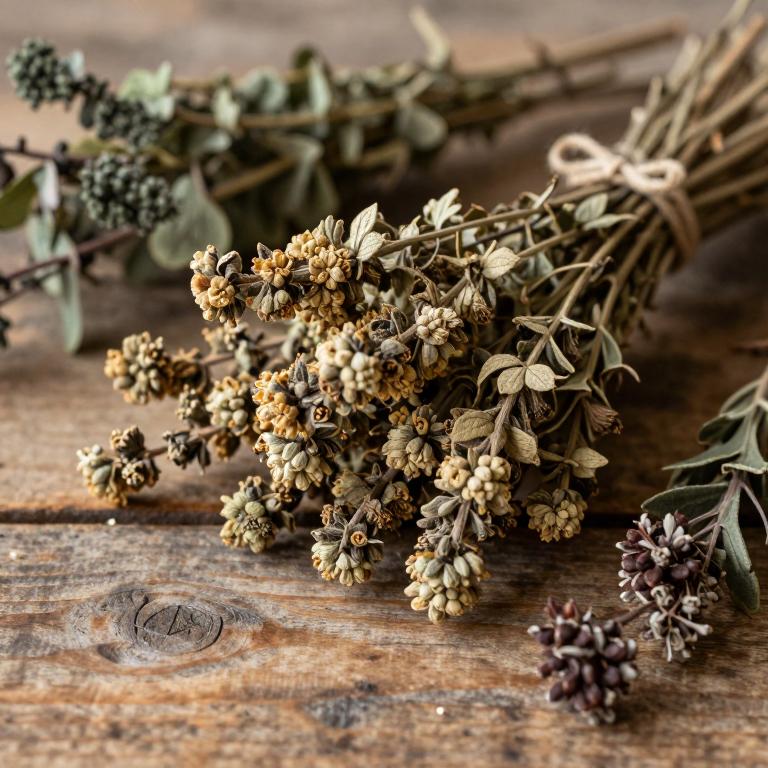
Names and Synonyms
Common Names
- Saharan myrtle
Scientific Names
Accepted name
Myrtus nivelleiRegional and Traditional Names
Spanish:
- Myrtus nivelii
German:
- Myrtus nivelii
French:
- Myrtus nivelii
Sources: Wikidata, Catalogue of Life
Taxonomical Classification
This plant belongs to the kingdom Plantae and the phylum Streptophyta, falling under the class Equisetopsida and subclass Magnoliidae. It is further classified within the order Myrtales and the family Myrtaeaceae. Finally, its taxonomic identity is defined by its placement in the genus Myrtus.
| Rank | Classification |
|---|---|
| Kingdom | Plantae |
| Phylum | Streptophyta |
| Class | Equisetopsida |
| Subclass | Magnoliidae |
| Order | Myrtales |
| Family | Myrtaceae |
| Genus | Myrtus |
Sources: The World Checklist of Vascular Plants (WCVP)
Distribution
This plant, known as Myrtus nivellei, exhibits a specific geographical range across the African continent. Its distribution is primarily concentrated within the Northern Africa region. Specifically, it can be found growing in the territories of Algeria and Libya. Furthermore, the species extends its presence into the Northeast Tropical Africa region. This expansion reaches into the country of Chad, marking the extent of its natural habitat.
| Region | Area |
|---|---|
| Northern Africa | Algeria |
| Northern Africa | Libya |
| Northeast Tropical Africa | Chad |
Sources: The World Checklist of Vascular Plants (WCVP)
Botanical Identification
Life history
The life history of Myrtus nivellei is characterized by its status as a perennial plant, allowing it to persist through multiple growing seasons and establish a stable presence within its ecosystem. In terms of its growth architecture and survival strategy, the species exhibits a dual classification of life forms, manifesting as both a phanerophyte and a nanophanerophyte. This indicates that while it can develop more substantial, elevated woody structures typical of phanerophytes, it also maintains a compact growth habit characteristic of nanophanerophytes, where the stems remain relatively low to the ground.
- Life form :
- nanophanerophyte
- Life form :
- phanerophyte
- Lifecycle :
- perennial
Morphology
The morphology of Myrtus nivellei is characterized by a woody structure that provides a robust framework for its growth habit. It functions as a self-supporting climber, utilizing its physical architecture to ascend without requiring external hosts for structural stability. As an independent organism, it does not exhibit parasitic behavior, maintaining its own nutritional processes. Furthermore, it is a terrestrial plant, establishing its root systems and life cycle within the soil rather than living as an epiphyte.
- Climber :
- self-supporting
- Epiphyte :
- terrestrial
- Parasite :
- independent
- Woodiness :
- woody
Sources: Global Inventory of Floras and Traits (GIFT)
Plant Parts
Myrtus nivellei has 2 reported plant parts identified across 2 scientific publications and several other databases that are studied for medicinal purposes. The most consistently reported plant part include flower, leaf.
| Plant part | Supporting sources | Consensus |
|---|---|---|
| Flower | 1 supporting sources | ★☆☆☆☆ |
| Leaf | 1 supporting sources | ★☆☆☆☆ |
Flower
- Journal of ethnopharmacology
Leaf
- Journal of ethnopharmacology
Chemicals
Myrtus nivellei has 2 reported phytochemicals identified across 2 scientific publications and several other databases. The most consistently reported chemicals include 1,8-Cineole, LIMONENE.
| Chemical | Supporting sources | Consensus |
|---|---|---|
| 1,8-Cineole | 1 supporting sources | ★☆☆☆☆ |
| LIMONENE | 1 supporting sources | ★☆☆☆☆ |
1,8-Cineole
- Journal of ethnopharmacology
LIMONENE
- Journal of ethnopharmacology
Conditions
Myrtus nivellei has 2 reported investigations on conditions identified across 2 scientific publications and several other databases. The most consistently reported conditions include dermatosis, diarrhea.
| Condition | Supporting sources | Consensus |
|---|---|---|
| Dermatosis | 1 supporting sources | ★☆☆☆☆ |
| Diarrhea | 1 supporting sources | ★☆☆☆☆ |
Dermatosis
- Journal of ethnopharmacology
Diarrhea
- Journal of ethnopharmacology
Preparations
Myrtus nivellei has 2 reported preparations identified across 2 scientific publications and several other databases. The most consistently reported preparations include essential oil, essential oils.
| Preparation | Supporting sources | Consensus |
|---|---|---|
| Essential oil | 1 supporting sources | ★☆☆☆☆ |
| Essential oils | 1 supporting sources | ★☆☆☆☆ |
Essential oil
- Journal of ethnopharmacology
Essential oils
- Journal of ethnopharmacology