Myrsine parvifolia
Myrsine parvifolia · Accepted scientific name
Scientific literature: Very Sparse (11 studies) · ★☆☆☆☆
Myrsine parvifolia, scientifically known as Myrsine parvifolia, is a resilient evergreen shrub native to various tropical and subtropical regions. Valued in traditional ethnobotany, this plant possesses unique bioactive compounds. It is frequently studied for its potential therapeutic properties, particularly in addressing inflammatory conditions and supporting holistic wellness.
- Family
- Primulaceae
- Native range
- Southern America
- Parts used
- Leaf
- Common names
- Not available
- Scientific synonyms
- Rapanea Parvifolia · Myrsine Bahiensis
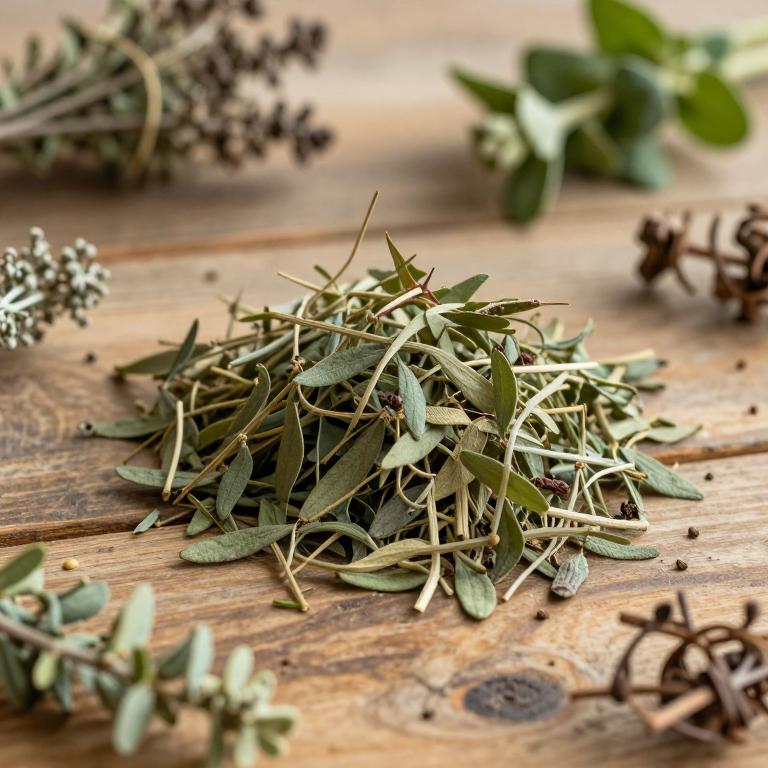
Names and Synonyms
Scientific Names
Accepted name
Myrsine parvifoliaSynonyms
- Rapanea parvifolia
- Myrsine bahiensis
Sources: Wikidata, Catalogue of Life
Taxonomical Classification
This plant belongs to the kingdom Plantae within the phylum Streptophyta and the class Equisetopsida. Classified under the subclass Magnoliidae and the order Ericales, it is a member of the family Primulaceae. Finally, it is identified by the genus Myrsine.
| Rank | Classification |
|---|---|
| Kingdom | Plantae |
| Phylum | Streptophyta |
| Class | Equisetopsida |
| Subclass | Magnoliidae |
| Order | Ericales |
| Family | Primulaceae |
| Genus | Myrsine |
Sources: The World Checklist of Vascular Plants (WCVP)
Distribution
This plant exhibits a broad distribution across several distinct regions of South America. Within Brazil, its presence is recorded across the Northeast, Southeast, and South regions. Moving beyond Brazilian borders, it also inhabits the southern reaches of the continent. Specifically, the species can be found throughout Uruguay in Southern South America. Together, these locations highlight a wide geographical range for Myrsine parvifolia.
| Region | Area |
|---|---|
| Brazil | Brazil Northeast |
| Brazil | Brazil Southeast |
| Brazil | Brazil South |
| Southern South America | Uruguay |
Sources: The World Checklist of Vascular Plants (WCVP)
Botanical Identification
Ecology
The ecology of Myrsine parvifolia is characterized by its presence in diverse environments, ranging from the nutrient-poor, rocky outcrops of the Campo Rupestre to the humid, dense conditions of the Floresta Ombrófila (also known as Floresta Pluvial). This species exhibits a broad altitudinal distribution, occupying a vertical range that begins at sea level (0 m AMSL) and extends up to an elevation of 100 m AMSL. This ability to inhabit both specialized rupestrian grasslands and lush, high-moisture rainforest ecosystems suggests a versatile adaptation to varying levels of light availability and soil moisture within these tropical or subtropical landscapes.
- Elevational range max:
- 100 m AMSL
- Elevational range min:
- 0 m AMSL
- Habitat :
- Campo Rupestre, Floresta Ombrófila (= Floresta Pluvial)
Life history
The life history of Myrsine parvifolia is characterized by its status as a perennial organism, allowing it to persist in its environment over many years rather than completing a single reproductive cycle. Throughout its existence, the plant maintains a stable vegetative presence, a trait further supported by its evergreen deciduousness, which ensures that it retains its foliage continuously rather than shedding it seasonally. This combination of a long-lived lifecycle and a constant canopy of leaves allows the species to maintain consistent photosynthetic activity and structural presence within its ecological niche.
- Deciduousness :
- evergreen
- Lifecycle :
- perennial
Morphology
The morphology of Myrsine parvifolia is characterized by a woody growth form, primarily manifesting as a tree. It is a terrestrial species that functions as a self-supporting organism, lacking any climbing or parasitic tendencies, as it grows independently. In terms of stature, the plant reaches a mean height of approximately 5 m, though it can achieve a maximum height of up to 7 m.
- Aquatic :
- terrestrial
- Climber :
- self-supporting
- Epiphyte :
- terrestrial
- Growth form :
- tree
- Parasite :
- independent
- Plant height max:
- 7 m
- Plant height mean:
- 5 m
- Woodiness :
- woody
Physiology
The physiology of Myrsine parvifolia is characterized by a C3 photosynthetic pathway, a mechanism typical of many woody plants that utilizes the Calvin cycle for carbon fixation. The plant exhibits a highly consistent leaf morphology regarding its resource investment, with a Specific Leaf Area (SLA) measured at a uniform value of 16.08 cm²/g, representing the minimum, mean, and maximum values recorded. This low SLA value suggests a structural adaptation toward thicker or denser leaves, which is often associated with more conservative nutrient use or resilience to specific environmental stressors. Furthermore, Myrsine parvifolia does not function as a nitrogen fixer, meaning it lacks the symbiotic relationship with diazotrophic bacteria required to convert atmospheric nitrogen into a usable form, and instead relies on the uptake of nitrogen from the soil substrate.
- Nitrogen fixer :
- no
- Photosynthetic pathway :
- C3
- Specific Leaf Area (SLA) min:
- 16.08 cm²/g
Sources: Global Inventory of Floras and Traits (GIFT)
Plant Parts
Myrsine parvifolia has 1 reported plant parts identified across 1 scientific publications and several other databases that are studied for medicinal purposes. The most consistently reported plant part include leaf.
| Plant part | Supporting sources | Consensus |
|---|---|---|
| Leaf | 1 supporting sources | ★☆☆☆☆ |
Leaf
- Toxicon : official journal of the International Society on Toxinology
Chemicals
Myrsine parvifolia has 7 reported phytochemicals identified across 1 scientific publications and several other databases. The most consistently reported chemicals include Fatty acids, Flavonoid, Tannin, Terpenes, kaempferol.
| Chemical | Supporting sources | Consensus |
|---|---|---|
| Fatty acids | 1 supporting sources | ★☆☆☆☆ |
| Flavonoid | 1 supporting sources | ★☆☆☆☆ |
| Tannin | 1 supporting sources | ★☆☆☆☆ |
| Terpenes | 1 supporting sources | ★☆☆☆☆ |
| kaempferol | 1 supporting sources | ★☆☆☆☆ |
| myricetin | 1 supporting sources | ★☆☆☆☆ |
| quercetin | 1 supporting sources | ★☆☆☆☆ |
Fatty acids
- Toxicon : official journal of the International Society on Toxinology
Flavonoid
- Toxicon : official journal of the International Society on Toxinology
Tannin
- Toxicon : official journal of the International Society on Toxinology
Terpenes
- Toxicon : official journal of the International Society on Toxinology
kaempferol
- Toxicon : official journal of the International Society on Toxinology
myricetin
- Toxicon : official journal of the International Society on Toxinology
quercetin
- Toxicon : official journal of the International Society on Toxinology
Conditions
Myrsine parvifolia has 3 reported investigations on conditions identified across 1 scientific publications and several other databases. The most consistently reported conditions include edema, snakebites, vascular permeability.
| Condition | Supporting sources | Consensus |
|---|---|---|
| Edema | 1 supporting sources | ★☆☆☆☆ |
| Snakebites | 1 supporting sources | ★☆☆☆☆ |
| Vascular permeability | 1 supporting sources | ★☆☆☆☆ |
Edema
- Toxicon : official journal of the International Society on Toxinology
Snakebites
- Toxicon : official journal of the International Society on Toxinology
Vascular permeability
- Toxicon : official journal of the International Society on Toxinology