Cape beech
Myrsine melanophloeos · Accepted scientific name
Scientific literature: Very Sparse (7 studies) · ★☆☆☆☆
Cape beech, scientifically known as Myrsine melanophloeos, is a versatile evergreen shrub native to subtropical regions. Renowned for its medicinal properties, various parts of the plant are utilized in traditional remedies to treat inflammatory conditions, skin ailments, and digestive issues, offering significant therapeutic potential in ethnobotanical studies.
- Family
- Primulaceae
- Native range
- Africa
- Parts used
- Stem · Leaf
- Common names
- Not available
- Scientific synonyms
- Chrysophyllum Melanophoeos · Rapanea Bequaertii · 29 more
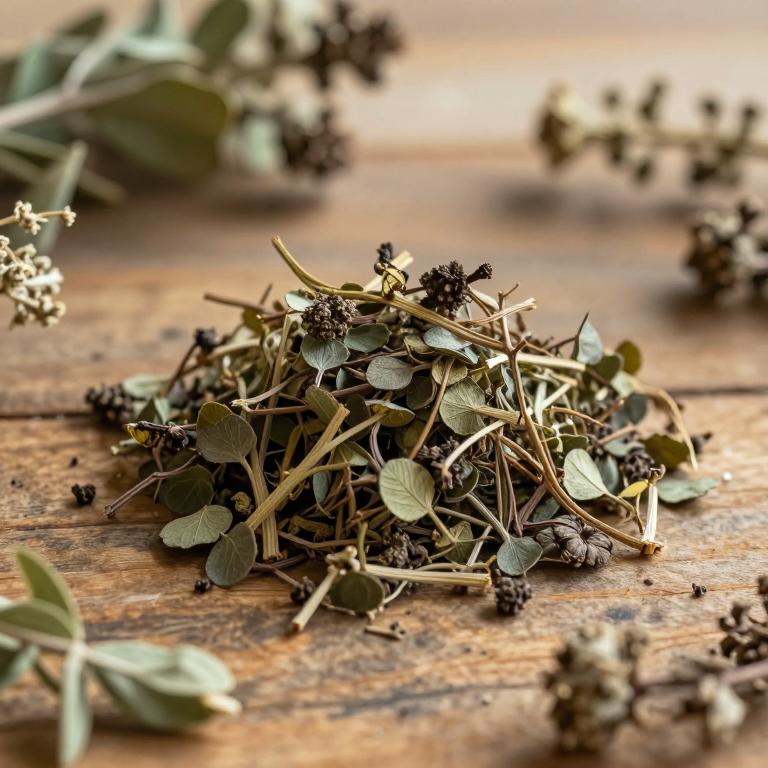
Names and Synonyms
Scientific Names
Accepted name
Myrsine melanophloeosSynonyms
- Chrysophyllum melanophoeos
- Rapanea bequaertii
- Rapanea melanophloeos
- Rapanea usambarensis
- Rapanea lamiaensis
- Myrsine pentandra
- Rapanea gracilior
- Rapanea schliebenii
- Rapanea ulugurensis
- Rapanea umbratilis
- Myrsine simensis
- Rapanea thomensis
- Myrsine rhododendroides
- Rapanea simensis
- Myrsine runssorica
- Myrsine neurophylla
- Rapanea pulchra
- Rapanea neurophylla
- Manglilla melanophloeos
- Rapanea runssorica
- Manglilla venulosa
- Myrsine venulosa
- Scleroxylum melanophloeum
- Samara pentandra
- Rapanea rhododendroides
- Roemeria melanophloeos
- Heeria melanophloeos
- Myrsine ulugurensis
- Scleroxylum venulosum
- Sideroxylon melanophloeos
- Chrysophyllum millerianum
Sources: Wikidata, Catalogue of Life
Taxonomical Classification
This plant belongs to the kingdom Plantae within the phylum Streptophyta and the class Equisetopsida. As a member of the subclass Magnoliidae and the order Ericales, it is classified under the family Primulaceae. Finally, it is categorized under the genus Myrsine.
| Rank | Classification |
|---|---|
| Kingdom | Plantae |
| Phylum | Streptophyta |
| Class | Equisetopsida |
| Subclass | Magnoliidae |
| Order | Ericales |
| Family | Primulaceae |
| Genus | Myrsine |
Sources: The World Checklist of Vascular Plants (WCVP)
Distribution
This plant exhibits a diverse geographical distribution across several regions of the African continent. In West Tropical Africa, it can be specifically identified in Nigeria. Its presence extends significantly into West-Central Tropical Africa, where it is found in Burundi, Cameroon, and Congo. Furthermore, the species is documented within the Gulf of Guinea Islands. Collectively, these locations highlight its importance within tropical African ecosystems.
| Region | Area |
|---|---|
| West Tropical Africa | Nigeria |
| West-Central Tropical Africa | Burundi |
| West-Central Tropical Africa | Cameroon |
| West-Central Tropical Africa | Congo |
| West-Central Tropical Africa | Gulf of Guinea Is. |
| West-Central Tropical Africa | Rwanda |
| West-Central Tropical Africa | DR Congo |
| Northeast Tropical Africa | Ethiopia |
| Northeast Tropical Africa | Sudan-South Sudan |
| East Tropical Africa | Kenya |
Sources: The World Checklist of Vascular Plants (WCVP)
Botanical Identification
Ecology
The ecology of Myrsine melanophloeos is characterized by a broad altitudinal distribution, spanning from low-lying areas at 5 m AMSL up to high-altitude environments reaching 2000 m AMSL. It typically inhabits upland forests and occupies the transitional zones at the edges of moorlands. While its primary ecological niche is found within these forested and montane settings, there is evidence of its presence near coastal regions, though this specific occurrence requires further investigation to confirm its typical coastal habitat preferences.
- Elevational range max:
- 2000 m AMSL
- Elevational range min:
- 5 m AMSL
- Habitat :
- upland forest to edge of moorlands; one collection near coast, but needing further investigation
Life history
The life history of Myrsine melanophloeos is characterized by its nature as a perennial plant, allowing it to persist in its environment over many years. As an evergreen species, it maintains its foliage throughout the year, providing continuous photosynthetic activity and structural stability within its ecological niche.
- Deciduousness :
- evergreen
- Lifecycle :
- perennial
Morphology
The morphology of Myrsine melanophloeos is characterized by its growth form as a woody tree. As a terrestrial and independent organism, it does not function as a parasite or an epiphyte. The plant exhibits a self-supporting structure rather than acting as a climber, liana, or vine. In terms of stature, its height is variable, ranging from a minimum of 1.21 m to a maximum of 20 m, with an average plant height of approximately 7.25 m.
- Aquatic :
- terrestrial
- Climber :
- self-supporting
- Epiphyte :
- terrestrial
- Growth form :
- tree
- Parasite :
- independent
- Plant height max:
- 20 m
- Plant height mean:
- 7.25 m
- Plant height min:
- 1.21 m
- Woodiness :
- woody
Physiology
The physiology of Myrsine melanophloeos is characterized by a standard C3 photosynthetic pathway, which dictates its carbon fixation processes and metabolic efficiency in varying environmental conditions. As a C3 plant, it utilizes the Calvin cycle to fix atmospheric carbon dioxide directly through the enzyme RuBisCO, typically optimizing its energy production in temperate or shaded forest environments. Furthermore, the plant does not function as a nitrogen fixer, meaning it lacks the specialized symbiotic relationship with nitrogen-fixing bacteria required to convert atmospheric nitrogen into bioavailable forms, and instead relies on the uptake of nitrates and ammonium from the surrounding soil to meet its nutritional requirements for growth and development.
- Nitrogen fixer :
- no
- Photosynthetic pathway :
- C3
Reproduction
The reproduction of Myrsine melanophloeos is characterized by a biotic pollination strategy, primarily facilitated by insects, with bees playing a significant role in the pollination process. The plant produces fleshy, indehiscent fruits classified as drupes, which typically exhibit a mean length of 0.6 cm and a mean width of 0.6 cm. These fruits are designed for zoochorous dispersal, relying on animals to spread the seeds. The seeds contained within the fruit are uniform in size and weight, with a mean seed mass of 0.03996 g (ranging from a minimum to a maximum of 0.03996 g) and a consistent seed volume of 45 mm³.
- Dehiscence :
- indehiscent
- Dispersal syndrome :
- zoochorous
- Fruit dryness :
- fleshy
- Fruit length mean:
- 0.6 cm
- Fruit type :
- drupe
- Fruit width mean:
- 0.6 cm
- Pollination syndrome :
- insect
- Pollination syndrome :
- bee
- Pollination syndrome :
- biotic
- Seed mass mean:
- 0.03996 g
- Seed volume max:
- 45 mm³
Sources: Global Inventory of Floras and Traits (GIFT)
Plant Parts
Myrsine melanophloeos has 2 reported plant parts identified across 3 scientific publications and several other databases that are studied for medicinal purposes. The most consistently reported plant part include stem, leaf.
| Plant part | Supporting sources | Consensus |
|---|---|---|
| Stem | 2 supporting sources | ★☆☆☆☆ |
| Leaf | 1 supporting sources | ★☆☆☆☆ |
Stem
- Evidence-based complementary and alternative medicine : eCAM
- Journal of ethnopharmacology
Leaf
- BMC complementary and alternative medicine
Chemicals
Myrsine melanophloeos has 1 reported phytochemicals identified across 3 scientific publications and several other databases. The most consistently reported chemicals include EMBELIN.
| Chemical | Supporting sources | Consensus |
|---|---|---|
| EMBELIN | 1 supporting sources | ★☆☆☆☆ |
EMBELIN
- Veterinary parasitology
Activities
Myrsine melanophloeos has 1 reported activities identified across 3 scientific publications and several other databases. The most consistently reported activities include Antibacterial.
| Activity | Supporting sources | Consensus |
|---|---|---|
| Antibacterial | 1 supporting sources | ★☆☆☆☆ |
Antibacterial
- Journal of ethnopharmacology
Preparations
Myrsine melanophloeos has 7 reported preparations identified across 3 scientific publications and several other databases. The most consistently reported preparations include DCM extracts, aqueous extract of R. melanophloeos stem bark, chloroformic extract of Rapanea melanophloeos (L.) Mez, chloroformic stem bark extract of Rapanea melanophloeos, medicinal bark.
| Preparation | Supporting sources | Consensus |
|---|---|---|
| Dcm extracts | 1 supporting sources | ★☆☆☆☆ |
| Aqueous extract of r. melanophloeos stem bark | 1 supporting sources | ★☆☆☆☆ |
| Chloroformic extract of rapanea melanophloeos (l.) mez | 1 supporting sources | ★☆☆☆☆ |
| Chloroformic stem bark extract of rapanea melanophloeos | 1 supporting sources | ★☆☆☆☆ |
| Medicinal bark | 1 supporting sources | ★☆☆☆☆ |
| Methanol leaf extract | 1 supporting sources | ★☆☆☆☆ |
| Methanolic extract | 1 supporting sources | ★☆☆☆☆ |
Dcm extracts
- Journal of ethnopharmacology
Aqueous extract of r. melanophloeos stem bark
- Evidence-based complementary and alternative medicine : eCAM
Chloroformic extract of rapanea melanophloeos (l.) mez
- Journal of ethnopharmacology
Chloroformic stem bark extract of rapanea melanophloeos
- Journal of ethnopharmacology
Medicinal bark
- Antonie van Leeuwenhoek
Methanol leaf extract
- BMC complementary and alternative medicine
Methanolic extract
- BMC complementary and alternative medicine