Myroxylon peruiferum
Myroxylon peruiferum · Accepted scientific name
Scientific literature: Very Sparse (8 studies) · ★☆☆☆☆
Myroxylon peruiferum, scientifically known as Myroxylon peruiferum, is a remarkable medicinal plant native to tropical regions. Renowned for its potent bioactive compounds, it has long been utilized in traditional healing practices to treat various ailments. This study explores its pharmacological potential, highlighting its significance in modern botanical medicine.
- Family
- Fabaceae
- Native range
- Northern America
- Parts used
- Leaf
- Common names
- Not available
- Scientific synonyms
- Myrospermum Pubescens · Toluifera Balsamum Var. Peruifera · 10 more
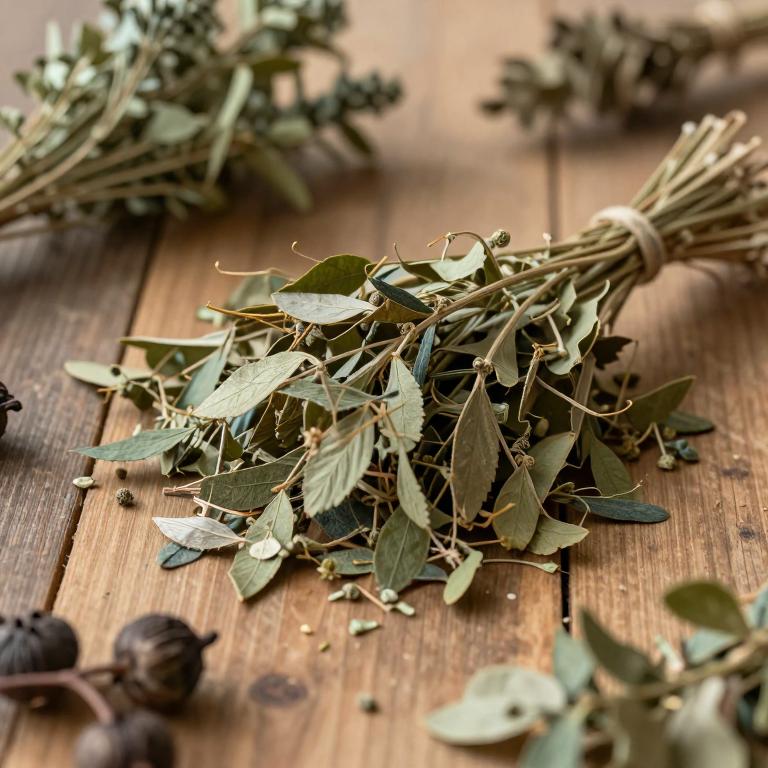
Names and Synonyms
Scientific Names
Accepted name
Myroxylon peruiferumSynonyms
- Myrospermum pubescens
- Toluifera balsamum var. peruifera
- Toluifera peruifera
- Myrospermum peruiferum
- Myroxylon robiniifolium
- Toluifera erythroxyla
- Toluifera pubescens
- Toluifera pedicellata
- Myroxylon pedicellatum
- Myrospermum pedicellatum
- Myrospermum erythroxylum
- Myrospermum arboreum
Regional and Traditional Names
Spanish:
- Quina colorada
- cedro-quino
- quina-quina
- quinillo
Sources: Wikidata, Catalogue of Life
Taxonomical Classification
This plant belongs to the kingdom Plantae and the phylum Streptophyta, specifically classified within the class Equisetopsida and subclass Magnoliidae. It falls under the order Fabales and the family Fabaceae. Ultimately, its taxonomic identity is defined by its placement within the genus Myroxylon.
| Rank | Classification |
|---|---|
| Kingdom | Plantae |
| Phylum | Streptophyta |
| Class | Equisetopsida |
| Subclass | Magnoliidae |
| Order | Fabales |
| Family | Fabaceae |
| Genus | Myroxylon |
Sources: The World Checklist of Vascular Plants (WCVP)
Distribution
This plant exhibits a diverse range of habitats throughout the southern portions of North America and Central America. Within Mexico, its presence is widely recorded across the Central, Southwest, and Southeast regions. Moving southward, the species extends its range into the Central American isthmus. Specifically, it can be found growing in the territory of El Salvador. Additionally, the distribution continues further south into the country of Costa Rica.
| Region | Area |
|---|---|
| Mexico | Mexico Central |
| Mexico | Mexico Southwest |
| Mexico | Mexico Southeast |
| Central America | Costa Rica |
| Central America | El Salvador |
| Central America | Honduras |
| Central America | Nicaragua |
| Northern South America | Guyana |
| Western South America | Bolivia |
| Western South America | Colombia |
Sources: The World Checklist of Vascular Plants (WCVP)
Botanical Identification
Ecology
The ecology of Myroxylon peruiferum is characterized by its presence in diverse forest ecosystems, ranging from riparian habitats such as gallery forests (Floresta Ciliar ou Galeria) to more seasonally variable environments like deciduous seasonal forests (Floresta Estacional Decidual) and semi-deciduous seasonal forests (Floresta Estacional Semi-decidual). It is also frequently found in more humid environments, including ombrophilous rain forests (Floresta Ombrófila/Pluvial) and mixed ombrophilous forests (Floresta Ombrófila Mista). This species thrives within a specific altitudinal gradient, typically occurring at elevations between 500 m and 1000 m AMSL (meters above sea level).
- Elevational range max:
- 1000 m AMSL
- Elevational range min:
- 500 m AMSL
- Habitat :
- Floresta Ciliar ou Galeria, Floresta Estacional Decidual, Floresta Estacional Semidecidual, Floresta Ombrófila (= Floresta Pluvial), Floresta Ombrófila Mista
Life history
The life history of Myroxylon peruiferum is characterized by its existence as a perennial organism, allowing it to persist in its environment through multiple growing seasons. As it progresses through its developmental stages, the plant exhibits a deciduous nature, shedding its foliage periodically as part of its seasonal physiological cycles.
- Deciduousness :
- deciduous
- Lifecycle :
- perennial
Morphology
The morphology of Myroxylon peruiferum is characterized by its robust growth form as a woody tree, reaching a mean height of approximately 15 meters, though it can attain a maximum height of up to 30 meters. This species is strictly terrestrial in its habitat, functioning as an independent organism rather than acting as a parasite or an epiphyte. In terms of its structural support, it is a self-supporting plant, lacking the climbing habits of lianas or vines.
- Aquatic :
- terrestrial
- Climber :
- self-supporting
- Epiphyte :
- terrestrial
- Growth form :
- tree
- Parasite :
- independent
- Plant height max:
- 30 m
- Plant height mean:
- 15 m
- Woodiness :
- woody
Physiology
The physiology of Myroxylon peruiferum is characterized by specific leaf morphological parameters and nutrient acquisition strategies. The plant exhibits a highly consistent Specific Leaf Area (SLA), with recorded values showing no variance across its range; both the minimum, mean, and maximum SLA measurements are documented at exactly 104 cm²/g. This uniformity in SLA suggests a stable leaf mass per area, which is a critical factor in its photosynthetic efficiency and water-use strategy within its ecosystem. Furthermore, regarding its nitrogen metabolism, Myroxylon peruiferum does not function as a nitrogen fixer, meaning it relies on the uptake of available nitrogen from the soil rather than through symbiotic biological nitrogen fixation.
- Nitrogen fixer :
- no
- Specific Leaf Area (SLA) min:
- 104 cm²/g
Reproduction
The reproduction of Myroxylon peruiferum is driven by biotic pollination syndromes, specifically relying on insects to facilitate the transfer of pollen. This insect-mediated pollination mechanism is a key component of its reproductive biology, ensuring successful fertilization through animal vectors. Once fertilization is achieved, the plant produces seeds characterized by a highly consistent mass. The seed mass data indicates no variability, with a recorded minimum, maximum, and mean value all strictly fixed at 0.28498 g. This uniformity in seed size suggests a highly standardized reproductive output for the species.
- Pollination syndrome :
- insect
- Pollination syndrome :
- biotic
- Seed mass mean:
- 0.28498 g
Sources: Global Inventory of Floras and Traits (GIFT)
Plant Parts
Myroxylon peruiferum has 1 reported plant parts identified across 1 scientific publications and several other databases that are studied for medicinal purposes. The most consistently reported plant part include leaf.
| Plant part | Supporting sources | Consensus |
|---|---|---|
| Leaf | 1 supporting sources | ★☆☆☆☆ |
Leaf
- Medicines (Basel, Switzerland)
Chemicals
Myroxylon peruiferum has 4 reported phytochemicals identified across 1 scientific publications and several other databases. The most consistently reported chemicals include Cabreuvin, Caryophyllene oxide, Spathulenol, safrole.
| Chemical | Supporting sources | Consensus |
|---|---|---|
| Cabreuvin | 1 supporting sources | ★☆☆☆☆ |
| Caryophyllene oxide | 1 supporting sources | ★☆☆☆☆ |
| Spathulenol | 1 supporting sources | ★☆☆☆☆ |
| safrole | 1 supporting sources | ★☆☆☆☆ |
Cabreuvin
- Bioorganic & medicinal chemistry letters
Caryophyllene oxide
- Medicines (Basel, Switzerland)
Spathulenol
- Medicines (Basel, Switzerland)
safrole
- BMC complementary and alternative medicine
Conditions
Myroxylon peruiferum has 3 reported investigations on conditions identified across 1 scientific publications and several other databases. The most consistently reported conditions include Helicobacter pylori, Ralstonia solanacearum, candidiasis.
| Condition | Supporting sources | Consensus |
|---|---|---|
| Helicobacter pylori | 1 supporting sources | ★☆☆☆☆ |
| Ralstonia solanacearum | 1 supporting sources | ★☆☆☆☆ |
| Candidiasis | 1 supporting sources | ★☆☆☆☆ |
Helicobacter pylori
- Bioorganic & medicinal chemistry letters
Ralstonia solanacearum
- Microbial ecology
Candidiasis
- Medicines (Basel, Switzerland)
Preparations
Myroxylon peruiferum has 4 reported preparations identified across 1 scientific publications and several other databases. The most consistently reported preparations include EO, aqueous extracts, essential oils from leaves, methanol extract.
| Preparation | Supporting sources | Consensus |
|---|---|---|
| Eo | 1 supporting sources | ★☆☆☆☆ |
| Aqueous extracts | 1 supporting sources | ★☆☆☆☆ |
| Essential oils from leaves | 1 supporting sources | ★☆☆☆☆ |
| Methanol extract | 1 supporting sources | ★☆☆☆☆ |
Eo
- BMC complementary and alternative medicine
Aqueous extracts
- Microbial ecology
Essential oils from leaves
- Medicines (Basel, Switzerland)
Methanol extract
- Bioorganic & medicinal chemistry letters