Resurrection Bush
Myrothamnus flabellifolius · Accepted scientific name
Scientific literature: Very Sparse (30 studies) · ★☆☆☆☆
Resurrection Bush, scientifically known as Myrothamnus flabellifolius, is a remarkable perennial shrub renowned for its ability to survive extreme desiccation. Capable of reviving after intense drought, this resilient plant is valued in traditional medicine for its potent antioxidant, anti-inflammatory, and antimicrobial properties, offering significant potential in modern pharmacology.
- Family
- Myrothamnaceae
- Native range
- Africa
- Parts used
- Leaf · Stem
- Common names
- Resurrection Bush · Resurrection Plant
- Scientific synonyms
- Myrothamnus Flabellifolius Subsp. Robustus · Cliffortia Flabellifolia · 1 more
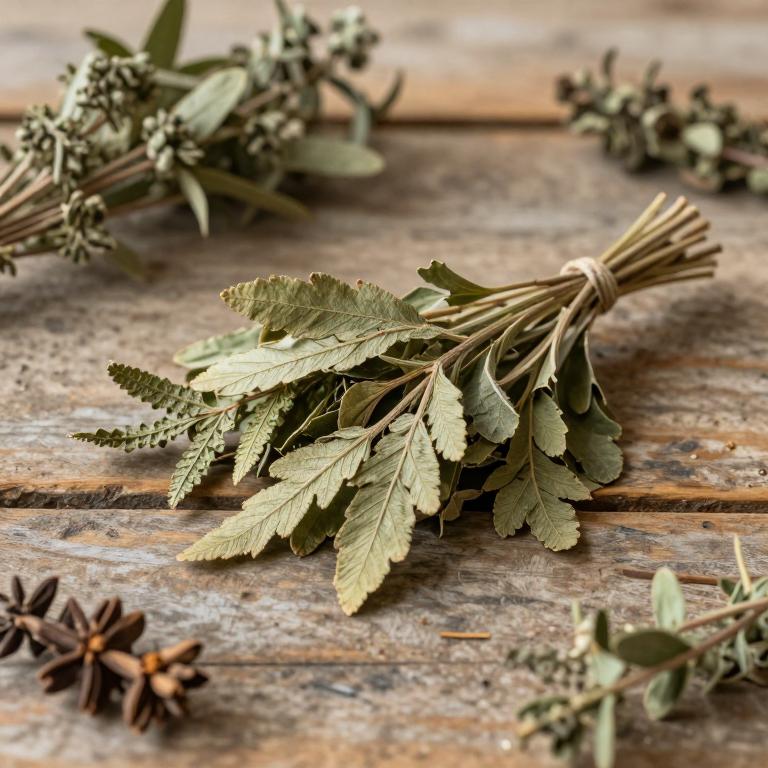
Names and Synonyms
Common Names
- Resurrection Bush
- Resurrection Plant
Scientific Names
Accepted name
Myrothamnus flabellifoliusSynonyms
- Myrothamnus flabellifolius subsp. robustus
- Cliffortia flabellifolia
- Myrothamnus flabellifolius subsp. elongatus
Regional and Traditional Names
Spanish:
- Myrothamnus flabellifolia
German:
- Myrothamnus flabellifolia
French:
- Myrothamnus flabellifolia
Sources: Wikidata, Catalogue of Life
Taxonomical Classification
This plant belongs to the kingdom Plantae and the phylum Streptophyta. Within the class Equisetopsida and subclass Magnoliidae, it is categorized under the order Gunnerales. Finally, it is classified within the family Myrothamnaceae under the genus Myrothamnus.
| Rank | Classification |
|---|---|
| Kingdom | Plantae |
| Phylum | Streptophyta |
| Class | Equisetopsida |
| Subclass | Magnoliidae |
| Order | Gunnerales |
| Family | Myrothamnaceae |
| Genus | Myrothamnus |
Sources: The World Checklist of Vascular Plants (WCVP)
Distribution
This plant exhibits a diverse geographical distribution spanning several regions across the African continent. Within West-Central Tropical Africa, it can be found in the Democratic Republic of the Congo. Its presence extends into East Tropical Africa, where it grows in both Kenya and Tanzania. Moving toward the southern reaches, the species is documented in the South Tropical Africa region of Angola. Finally, the plant is also distributed within South Tropical Africa in Malawi.
| Region | Area |
|---|---|
| West-Central Tropical Africa | DR Congo |
| East Tropical Africa | Kenya |
| East Tropical Africa | Tanzania |
| South Tropical Africa | Angola |
| South Tropical Africa | Malawi |
| South Tropical Africa | Mozambique |
| South Tropical Africa | Zambia |
| South Tropical Africa | Zimbabwe |
| Southern Africa | Botswana |
| Southern Africa | Lesotho |
Sources: The World Checklist of Vascular Plants (WCVP)
Botanical Identification
Ecology
The ecology of Myrothamnus flabellifolius is characterized by its ability to inhabit diverse altitudinal gradients, allowing it to thrive across various topographical landscapes. This species exhibits a broad ecological plasticity, occupying an elevational range that extends from a minimum of 365 m AMSL to a maximum of 1850 m AMSL. This significant vertical distribution suggests an adaptability to varying temperature regimes, atmospheric pressures, and moisture availability found between lowland and montane environments. Such a range indicates that the plant can successfully compete and establish itself in diverse microclimates, ranging from warmer, more humid lower elevations to cooler, potentially more seasonal higher-altitude habitats.
- Elevational range max:
- 1850 m AMSL
- Elevational range min:
- 365 m AMSL
Life history
The life history of Myrothamnus flabellifolius is characterized by its status as a perennial species, meaning it maintains its vegetative structures and biological functions over multiple years rather than completing its cycle in a single season. As a perennial, the plant establishes a long-term presence in its habitat, allowing it to undergo repeated cycles of growth, flowering, and seed production. This extended lifecycle enables the species to accumulate biomass and develop robust root systems, which contribute to its ability to survive seasonal fluctuations and environmental stressors. Through its multi-year existence, it can stabilize its population within its ecological niche, transitioning through various stages of maturity and reproductive maturity across successive growing seasons.
- Lifecycle :
- perennial
Morphology
The morphology of Myrothamnus flabellifolius is characterized by its growth form as a woody shrub, displaying a self-supporting structure rather than acting as a climber, vine, or liana. It is a terrestrial plant, existing independently without parasitic or epiphytic dependencies. In terms of stature, the plant maintains a relatively low profile, with a height ranging from a minimum of 0.3 m to a maximum of 0.89 m.
- Aquatic :
- terrestrial
- Climber :
- self-supporting
- Epiphyte :
- terrestrial
- Growth form :
- shrub
- Parasite :
- independent
- Plant height max:
- 0.89 m
- Plant height min:
- 0.3 m
- Woodiness :
- woody
Reproduction
The reproduction of Myrothamnus flabellifolius involves the development of specialized fruit structures, specifically characterized by the production of a follicle. The seeds contained within these fruits are notably minute, exhibiting a highly consistent mass profile. The seed mass ranges from a minimum of 2e-05 g to a maximum of 4e-05 g, with a calculated mean seed mass of 3e-05 g.
- Fruit type :
- follicle
- Seed mass max:
- 4e-05 g
- Seed mass mean:
- 3e-05 g
- Seed mass min:
- 2e-05 g
Sources: Global Inventory of Floras and Traits (GIFT)
Plant Parts
Myrothamnus flabellifolius has 2 reported plant parts identified across 2 scientific publications and several other databases that are studied for medicinal purposes. The most consistently reported plant part include leaf, stem.
| Plant part | Supporting sources | Consensus |
|---|---|---|
| Leaf | 1 supporting sources | ★☆☆☆☆ |
| Stem | 1 supporting sources | ★☆☆☆☆ |
Leaf
- Plants (Basel, Switzerland)
Stem
- Plants (Basel, Switzerland)
Chemicals
Myrothamnus flabellifolius has 1 reported phytochemicals identified across 2 scientific publications and several other databases. The most consistently reported chemicals include polyphenols.
| Chemical | Supporting sources | Consensus |
|---|---|---|
| polyphenols | 1 supporting sources | ★☆☆☆☆ |
polyphenols
- Plants (Basel, Switzerland)
Activities
Myrothamnus flabellifolius has 8 reported activities identified across 2 scientific publications and several other databases. The most consistently reported activities include Antioxidant, Antiarthritic, Antibacterial, Anticancer, Antidiabetic.
| Activity | Supporting sources | Consensus |
|---|---|---|
| Antioxidant | 2 supporting sources | ★☆☆☆☆ |
| Antiarthritic | 1 supporting sources | ★☆☆☆☆ |
| Antibacterial | 1 supporting sources | ★☆☆☆☆ |
| Anticancer | 1 supporting sources | ★☆☆☆☆ |
| Antidiabetic | 1 supporting sources | ★☆☆☆☆ |
| Antimicrobial | 1 supporting sources | ★☆☆☆☆ |
| Antiulcer | 1 supporting sources | ★☆☆☆☆ |
| Antiviral | 1 supporting sources | ★☆☆☆☆ |
Antioxidant
- Plants (Basel, Switzerland)
- Journal of ethnopharmacology
Antiarthritic
- Journal of ethnopharmacology
Antibacterial
- Plants (Basel, Switzerland)
Anticancer
- Journal of ethnopharmacology
Antidiabetic
- Journal of ethnopharmacology
Antimicrobial
- Journal of ethnopharmacology
Antiulcer
- Journal of ethnopharmacology
Antiviral
- Journal of ethnopharmacology
Conditions
Myrothamnus flabellifolius has 16 reported investigations on conditions identified across 2 scientific publications and several other databases. The most consistently reported conditions include Klebsiella pneumoniae, Mycobacterium smegmatis, Pseudomonas aeruginosa, asthma, bacterial infections.
| Condition | Supporting sources | Consensus |
|---|---|---|
| Klebsiella pneumoniae | 1 supporting sources | ★☆☆☆☆ |
| Mycobacterium smegmatis | 1 supporting sources | ★☆☆☆☆ |
| Pseudomonas aeruginosa | 1 supporting sources | ★☆☆☆☆ |
| Asthma | 1 supporting sources | ★☆☆☆☆ |
| Bacterial infections | 1 supporting sources | ★☆☆☆☆ |
| Cough | 1 supporting sources | ★☆☆☆☆ |
| Epilepsy | 1 supporting sources | ★☆☆☆☆ |
| Hypertension | 1 supporting sources | ★☆☆☆☆ |
| Infectious diseases | 1 supporting sources | ★☆☆☆☆ |
| Inflammation | 1 supporting sources | ★☆☆☆☆ |
Klebsiella pneumoniae
- Plants (Basel, Switzerland)
Mycobacterium smegmatis
- Plants (Basel, Switzerland)
Pseudomonas aeruginosa
- Plants (Basel, Switzerland)
Asthma
- Journal of ethnopharmacology
Bacterial infections
- Plants (Basel, Switzerland)
Cough
- Journal of ethnopharmacology
Epilepsy
- Journal of ethnopharmacology
Hypertension
- Journal of ethnopharmacology
Infectious diseases
- Journal of ethnopharmacology
Inflammation
- Journal of ethnopharmacology
Preparations
Myrothamnus flabellifolius has 6 reported preparations identified across 2 scientific publications and several other databases. The most consistently reported preparations include Leaves and Stem Defatted Subfractions, Myrothamnus flabellifolius extract, defatted fractions, ethyl acetate and n-butanol fractions, ethyl acetate fractions.
| Preparation | Supporting sources | Consensus |
|---|---|---|
| Leaves and stem defatted subfractions | 1 supporting sources | ★☆☆☆☆ |
| Myrothamnus flabellifolius extract | 1 supporting sources | ★☆☆☆☆ |
| Defatted fractions | 1 supporting sources | ★☆☆☆☆ |
| Ethyl acetate and n-butanol fractions | 1 supporting sources | ★☆☆☆☆ |
| Ethyl acetate fractions | 1 supporting sources | ★☆☆☆☆ |
| Smoke fraction | 1 supporting sources | ★☆☆☆☆ |
Leaves and stem defatted subfractions
- Plants (Basel, Switzerland)
Myrothamnus flabellifolius extract
- Molecules (Basel, Switzerland)
Defatted fractions
- Plants (Basel, Switzerland)
Ethyl acetate and n-butanol fractions
- Plants (Basel, Switzerland)
Ethyl acetate fractions
- Plants (Basel, Switzerland)
Smoke fraction
- Journal of ethnopharmacology