cercipo
Myrospermum frutescens · Accepted scientific name
Scientific literature: Very Sparse (5 studies) · ★☆☆☆☆
Cercipo, scientifically known as Myrospermum frutescens, is a versatile medicinal shrub native to the Neotropics. Renowned for its therapeutic properties, the plant is traditionally used to treat various ailments, including skin inflammations and digestive issues. Its bioactive compounds offer significant potential for pharmacological research and natural healing remedies.
- Family
- Fabaceae
- Native range
- Northern America
- Parts used
- Leaf
- Common names
- Cercipo
- Scientific synonyms
- Myrospermum Frutescens Var. Emarginatum · Myroxylon Frutescens · 4 more
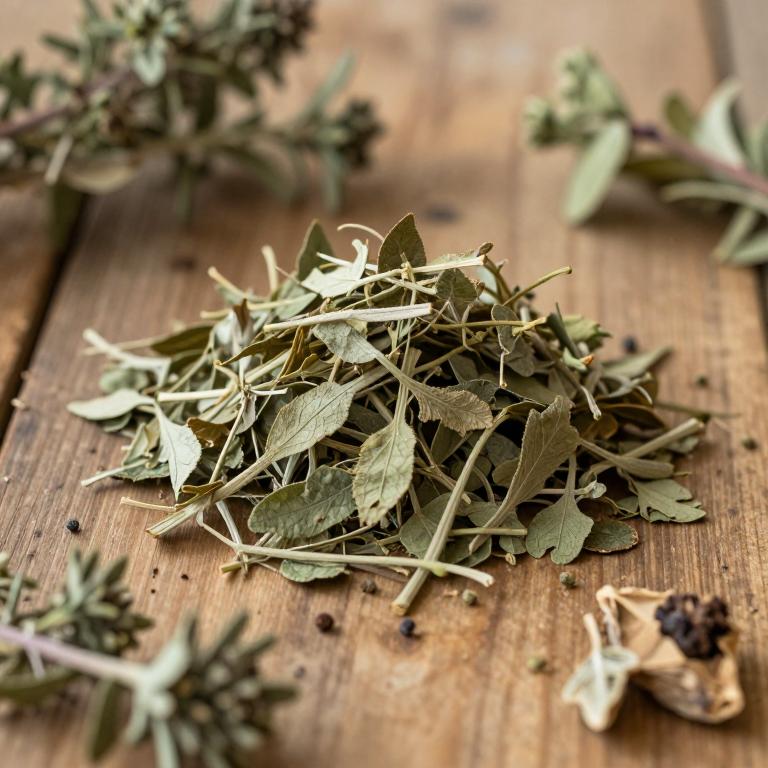
Names and Synonyms
Common Names
- cercipo
Scientific Names
Accepted name
Myrospermum frutescensSynonyms
- Myrospermum frutescens var. emarginatum
- Myroxylon frutescens
- Toluifera frutescens
- Calusia emarginata
- Myrospermum secundum
- Myrospermum emarginatum
Regional and Traditional Names
Spanish:
- cuerillo
Sources: Wikidata, Catalogue of Life
Taxonomical Classification
This plant belongs to the kingdom Plantae and is classified under the phylum Streptophyta and class Equisetopsida. Within the subclass Magnoliidae, it is ordered under Fabales and is a member of the family Fabaceae. Finally, it is identified by the genus Myrospermum.
| Rank | Classification |
|---|---|
| Kingdom | Plantae |
| Phylum | Streptophyta |
| Class | Equisetopsida |
| Subclass | Magnoliidae |
| Order | Fabales |
| Family | Fabaceae |
| Genus | Myrospermum |
Sources: The World Checklist of Vascular Plants (WCVP)
Distribution
This plant exhibits a widespread distribution across several key regions in North and Central America. Within Mexico, it can be found spanning from the Central regions to the Southwest. Its presence also extends into the Southeast portion of Mexico. Moving into Central America, the species is documented in El Salvador. Finally, its range reaches as far south as Costa Rica.
| Region | Area |
|---|---|
| Mexico | Mexico Central |
| Mexico | Mexico Southwest |
| Mexico | Mexico Southeast |
| Central America | Costa Rica |
| Central America | El Salvador |
| Central America | Guatemala |
| Central America | Honduras |
| Central America | Nicaragua |
| Central America | Panamá |
| Caribbean | Cuba |
Sources: The World Checklist of Vascular Plants (WCVP)
Botanical Identification
Ecology
The ecology of Myrospermum frutescens is characterized by its ability to inhabit a broad vertical gradient within its native habitats, spanning an elevational range from 0 m AMSL to a maximum of 1000 m AMSL. This distribution indicates a versatile adaptability to varying altitudinal pressures, allowing the species to thrive in both lowland coastal or tropical environments and mid-elevation montane zones. By occupying this extensive range, the plant can interface with diverse microclimates, ranging from the high humidity and heat of sea-level ecosystems to the slightly cooler, more temperate conditions found at higher elevations. This ecological plasticity suggests that Myrospermum frutescens is capable of navigating different soil compositions and moisture availability levels across its altitudinal span, facilitating its presence in various successional stages of forest or scrubland ecosystems.
- Elevational range max:
- 1000 m AMSL
- Elevational range min:
- 0 m AMSL
Life history
The life history of Myrospermum frutescens is characterized by a perennial lifecycle, allowing the plant to persist in its environment over many years. As a long-lived woody species, it avoids the rapid turnover associated with annuals or biennials, instead focusing on sustained vegetative growth and repeated reproductive cycles. This perennial nature enables the plant to establish a stable presence within its ecological niche, accumulating biomass and developing a robust structural framework that supports continuous development through successive growing seasons.
- Lifecycle :
- perennial
Morphology
The morphology of Myrospermum frutescens is characterized by a woody structure that allows it to function as a self-supporting growth form, ranging from a shrub to a larger tree. It is a terrestrial plant, meaning it is not aquatic or semiaquatic, nor does it function as an epiphyte, remaining strictly grounded in its habitat. As an independent organism, it does not exhibit parasitic behavior. The plant is not a climber, liana, or vine, as it maintains a self-supporting architecture rather than relying on other structures for ascent. In terms of physical stature, its growth can reach a maximum plant height of 26 meters.
- Aquatic :
- terrestrial
- Climber :
- self-supporting
- Epiphyte :
- terrestrial
- Growth form :
- tree
- Growth form :
- shrub
- Parasite :
- independent
- Plant height max:
- 26 m
- Woodiness :
- woody
Physiology
The physiology of Myrospermum frutescens is characterized by a C3 photosynthetic pathway, which dictates its carbon fixation mechanisms and metabolic processes. Regarding its leaf structural composition, the plant exhibits a highly consistent Leaf Dry Matter Content (LDMC), with a measured mean, minimum, and maximum value of 388.3 mg/g. This uniformity in LDMC suggests a stable allocation of biomass within the leaf tissue, reflecting specific strategies for managing resource use and structural integrity.
- Leaf dry matter content (LDMC) mean:
- 388.3 mg/g
- Photosynthetic pathway :
- C3
Reproduction
The reproduction of Myrospermum frutescens is characterized by specific morphological dimensions of its seeds, which exhibit a high degree of uniformity. The seeds possess a consistent mean length of 27.33 mm, a value that remains constant across the observed range, as both the minimum and maximum seed lengths are recorded at exactly 27.33 mm. In terms of weight, the seeds display an identical level of stability, with a mean seed mass of 0.014 g. This mass is uniform throughout the sample, as the minimum and maximum seed mass values are both measured at 0.014 g, indicating a highly standardized reproductive output in terms of seed size and weight.
- Seed length mean:
- 27.33 mm
- Seed mass mean:
- 0.014 g
Sources: Global Inventory of Floras and Traits (GIFT)
Plant Parts
Myrospermum frutescens has 1 reported plant parts identified across 1 scientific publications and several other databases that are studied for medicinal purposes. The most consistently reported plant part include leaf.
| Plant part | Supporting sources | Consensus |
|---|---|---|
| Leaf | 1 supporting sources | ★☆☆☆☆ |
Leaf
- Journal of natural products
Chemicals
Myrospermum frutescens has 3 reported phytochemicals identified across 1 scientific publications and several other databases. The most consistently reported chemicals include Chagresnol, Chagresnone, chagreslactone.
| Chemical | Supporting sources | Consensus |
|---|---|---|
| Chagresnol | 1 supporting sources | ★☆☆☆☆ |
| Chagresnone | 1 supporting sources | ★☆☆☆☆ |
| chagreslactone | 1 supporting sources | ★☆☆☆☆ |
Chagresnol
- Journal of natural products
Chagresnone
- Journal of natural products
chagreslactone
- Journal of natural products
Preparations
Myrospermum frutescens has 1 reported preparations identified across 1 scientific publications and several other databases. The most consistently reported preparations include leaves.
| Preparation | Supporting sources | Consensus |
|---|---|---|
| Leaves | 1 supporting sources | ★☆☆☆☆ |
Leaves
- Journal of natural products