Myrica salicifolia
Myrica salicifolia · Accepted scientific name
Scientific literature: Very Sparse (3 studies) · ★☆☆☆☆
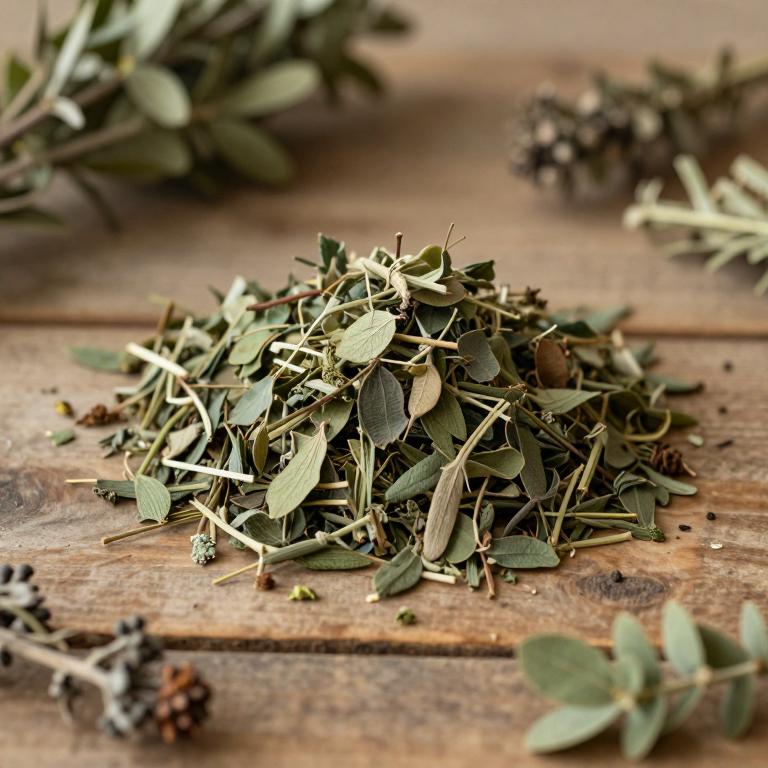
Myrica salicifolia, scientifically known as Myrica salicifolia, is a versatile medicinal shrub renowned for its therapeutic properties. Commonly found in diverse ecosystems, this plant contains bioactive compounds used in traditional healing to treat inflammation and skin ailments. Its unique chemical profile offers significant potential for modern pharmacological research and development.
- Family
- Not available
- Native range
- Africa
- Parts used
- Root
- Common names
- Not available
- Scientific synonyms
- Not available
Names and Synonyms
Scientific Names
Accepted name
Myrica salicifoliaDistribution
This plant exhibits a specific distribution pattern across various regions of the African continent. In West-Central Tropical Africa, it can be found inhabiting the landscapes of Burundi, Cameroon, and Rwanda. Its presence is also noted within the vast territories of the Democratic Republic of the Congo. Moving toward a different climatic zone, the species extends into Northeast Tropical Africa. Specifically, it has been documented growing in the country of Eritrea.
| Region | Area |
|---|---|
| West-Central Tropical Africa | Burundi |
| West-Central Tropical Africa | Cameroon |
| West-Central Tropical Africa | Rwanda |
| West-Central Tropical Africa | DR Congo |
| Northeast Tropical Africa | Eritrea |
| Northeast Tropical Africa | Ethiopia |
| Northeast Tropical Africa | Sudan-South Sudan |
| East Tropical Africa | Uganda |
| Western Indian Ocean | Madagascar |
| Arabian Peninsula | Saudi Arabia |
Sources: The World Checklist of Vascular Plants (WCVP)
Botanical Identification
Morphology
The morphology of Myrica salicifolia is characterized by its growth form as a tree, exhibiting a robust and woody structure. In terms of its ecological habit, the plant is primarily terrestrial, though it can exist within a spectrum of habitats ranging from semiaquatic to aquatic environments. It is a self-supporting species, functioning neither as an obligatory nor a facultative climber, such as a liana or vine, nor as an epiphyte, maintaining its position as a terrestrial organism.
- Aquatic :
- terrestrial
- Climber :
- self-supporting
- Epiphyte :
- terrestrial
- Growth form :
- tree
- Woodiness :
- woody
Reproduction
The reproduction of Myrica salicifolia is characterized by the production of small, specialized fruits and seeds designed for effective propagation. The plant produces fruit classified as a drupe, which is characterized by its indehiscent nature, meaning it does not split open at maturity to release its contents. These fruits are relatively uniform in size, possessing a mean length of 0.5 cm and a mean width of 0.5 cm. Within these fruits, the seeds exhibit a highly consistent mass, with a recorded mean, minimum, and maximum value of 0.0253 g. The dispersal of the species is driven by a zoochorous syndrome, indicating that the plant relies on animals to facilitate the movement and distribution of its seeds across the landscape.
- Dehiscence :
- indehiscent
- Dispersal syndrome :
- zoochorous
- Fruit length mean:
- 0.5 cm
- Fruit type :
- drupe
- Fruit width mean:
- 0.5 cm
- Seed mass mean:
- 0.0253 g
Sources: Global Inventory of Floras and Traits (GIFT)
Plant Parts
Myrica salicifolia has 1 reported plant parts identified across 1 scientific publications and several other databases that are studied for medicinal purposes. The most consistently reported plant part include root.
| Plant part | Supporting sources | Consensus |
|---|---|---|
| Root | 1 supporting sources | ★☆☆☆☆ |
Root
- Journal of evidence-based integrative medicine
Conditions
Myrica salicifolia has 1 reported investigations on conditions identified across 1 scientific publications and several other databases. The most consistently reported conditions include malaria.
| Condition | Supporting sources | Consensus |
|---|---|---|
| Malaria | 2 supporting sources | ★☆☆☆☆ |
Malaria
- Journal of evidence-based integrative medicine
- Journal of ethnopharmacology
Preparations
Myrica salicifolia has 3 reported preparations identified across 1 scientific publications and several other databases. The most consistently reported preparations include Methanolic Root Extract, methanol and aqueous extracts, root crude extract.
| Preparation | Supporting sources | Consensus |
|---|---|---|
| Methanolic root extract | 1 supporting sources | ★☆☆☆☆ |
| Methanol and aqueous extracts | 1 supporting sources | ★☆☆☆☆ |
| Root crude extract | 1 supporting sources | ★☆☆☆☆ |
Methanolic root extract
- Journal of evidence-based integrative medicine
Methanol and aqueous extracts
- Journal of ethnopharmacology
Root crude extract
- Journal of evidence-based integrative medicine