guavaberry
Myrciaria · Accepted scientific name
Scientific literature: Very Sparse (23 studies) · ★☆☆☆☆
Guavaberry, scientifically known as Myrciaaria, is a versatile medicinal shrub cherished for its potent antioxidant properties. Native to tropical regions, its fruits and leaves contain essential bioactive compounds used to combat inflammation and support digestive health. This resilient plant remains a vital resource in traditional herbal medicine worldwide.
- Family
- Myrtaceae
- Native range
- Africa
- Parts used
- Fruit · Leaf
- Common names
- Guavaberry
- Scientific synonyms
- Paramyrciaria · Myrciariopsis
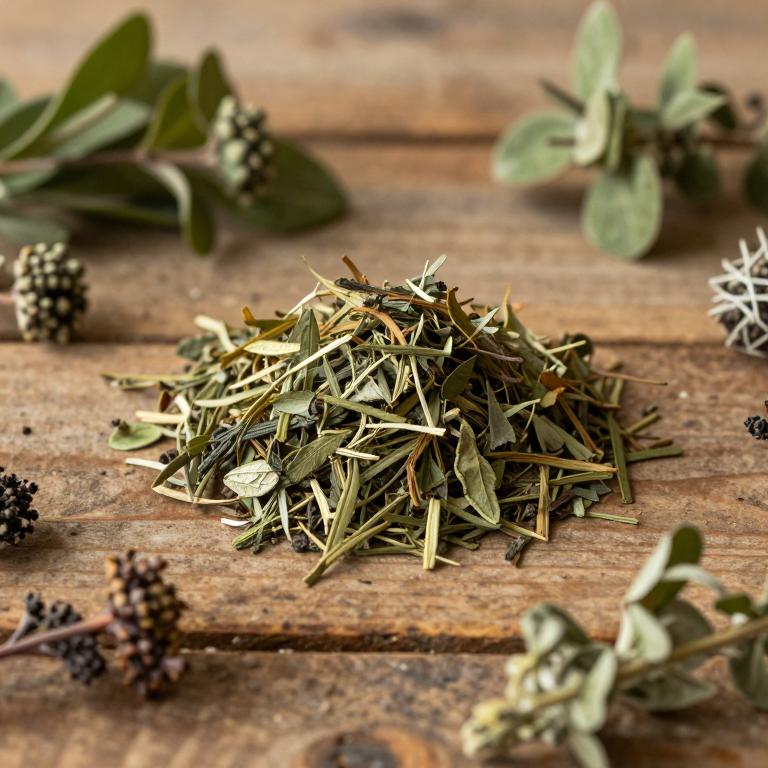
Names and Synonyms
Common Names
- guavaberry
Scientific Names
Accepted name
MyrciariaSynonyms
- Paramyrciaria
- Myrciariopsis
Regional and Traditional Names
Spanish:
- Myrciariopsis
- Paramyrciaria
Sources: Wikidata, Catalogue of Life
Taxonomical Classification
This plant belongs to the kingdom Plantae and the phylum Streptophyta, falling under the class Equisetopsida and subclass Magnoliidae. Within the order Myrtales and the family Myrtaceae, it is classified under the genus Myrciaria.
| Rank | Classification |
|---|---|
| Kingdom | Plantae |
| Phylum | Streptophyta |
| Class | Equisetopsida |
| Subclass | Magnoliidae |
| Order | Myrtales |
| Family | Myrtaceae |
| Genus | Myrciaria |
Sources: The World Checklist of Vascular Plants (WCVP)
Distribution
This plant exhibits a diverse geographical distribution spanning several distinct global regions. In East Tropical Africa, its presence is specifically noted within the borders of Tanzania. The species also extends across the North-Central Pacific, with established populations in Hawaii. Within Mexico, it can be found throughout the Mexico Gulf area as well as the Mexico Southwest region. Finally, its range encompasses the Mexico Southeast territory, completing its wide environmental reach.
| Region | Area |
|---|---|
| East Tropical Africa | Tanzania |
| North-Central Pacific | Hawaii |
| Mexico | Mexico Gulf |
| Mexico | Mexico Southwest |
| Mexico | Mexico Southeast |
| Central America | Belize |
| Central America | Costa Rica |
| Central America | El Salvador |
| Central America | Guatemala |
| Central America | Honduras |
Sources: The World Checklist of Vascular Plants (WCVP)
Plant Parts
Myrciaria has 2 reported plant parts identified across 2 scientific publications and several other databases that are studied for medicinal purposes. The most consistently reported plant part include fruit, leaf.
| Plant part | Supporting sources | Consensus |
|---|---|---|
| Fruit | 1 supporting sources | ★☆☆☆☆ |
| Leaf | 1 supporting sources | ★☆☆☆☆ |
Fruit
- Food chemistry
Leaf
- Food chemistry
Chemicals
Myrciaria has 9 reported phytochemicals identified across 2 scientific publications and several other databases. The most consistently reported chemicals include Flavonoids, Tannins, Anthocyanins, Coumarins, Naphthoquinones.
| Chemical | Supporting sources | Consensus |
|---|---|---|
| Flavonoids | 2 supporting sources | ★☆☆☆☆ |
| Tannins | 2 supporting sources | ★☆☆☆☆ |
| Anthocyanins | 1 supporting sources | ★☆☆☆☆ |
| Coumarins | 1 supporting sources | ★☆☆☆☆ |
| Naphthoquinones | 1 supporting sources | ★☆☆☆☆ |
| Saponins | 1 supporting sources | ★☆☆☆☆ |
| Steroids | 1 supporting sources | ★☆☆☆☆ |
| Terpenes | 1 supporting sources | ★☆☆☆☆ |
| ellagic acid | 1 supporting sources | ★☆☆☆☆ |
Flavonoids
- Chemistry & biodiversity
- Food chemistry
Tannins
- Chemistry & biodiversity
- Food chemistry
Anthocyanins
- Food chemistry
Coumarins
- Chemistry & biodiversity
Naphthoquinones
- Chemistry & biodiversity
Saponins
- Chemistry & biodiversity
Steroids
- Chemistry & biodiversity
Terpenes
- Chemistry & biodiversity
ellagic acid
- Food chemistry
Activities
Myrciaria has 8 reported activities identified across 2 scientific publications and several other databases. The most consistently reported activities include Antioxidant, Analgesic, Antibacterial, Antifungal, Antimicrobial.
| Activity | Supporting sources | Consensus |
|---|---|---|
| Antioxidant | 2 supporting sources | ★☆☆☆☆ |
| Analgesic | 1 supporting sources | ★☆☆☆☆ |
| Antibacterial | 1 supporting sources | ★☆☆☆☆ |
| Antifungal | 1 supporting sources | ★☆☆☆☆ |
| Antimicrobial | 1 supporting sources | ★☆☆☆☆ |
| Antiparasitic | 1 supporting sources | ★☆☆☆☆ |
| Antiproliferative | 1 supporting sources | ★☆☆☆☆ |
| Insecticide | 1 supporting sources | ★☆☆☆☆ |
Antioxidant
- Chemistry & biodiversity
- Food chemistry
Analgesic
- Chemistry & biodiversity
Antibacterial
- Food chemistry
Antifungal
- Food chemistry
Antimicrobial
- Chemistry & biodiversity
Antiparasitic
- Chemistry & biodiversity
Antiproliferative
- Chemistry & biodiversity
Insecticide
- Chemistry & biodiversity