Myrciaria tenella
Myrciaria tenella · Accepted scientific name
Scientific literature: Very Sparse (19 studies) · ★☆☆☆☆
, scientifically known as Myrciaaria tenella, is a medicinal plant valued for its unique therapeutic properties. Often utilized in traditional healing practices, this species is recognized for its potential bioactive compounds. Exploring its botanical characteristics and pharmacological applications offers valuable insights into its role in natural wellness and ethnopharmacology.
- Family
- Myrtaceae
- Native range
- Southern America
- Parts used
- Fruit · Leaf
- Common names
- Not available
- Scientific synonyms
- Plinia Montecristina · Eugenia Tenella Var. Spathulata · 8 more
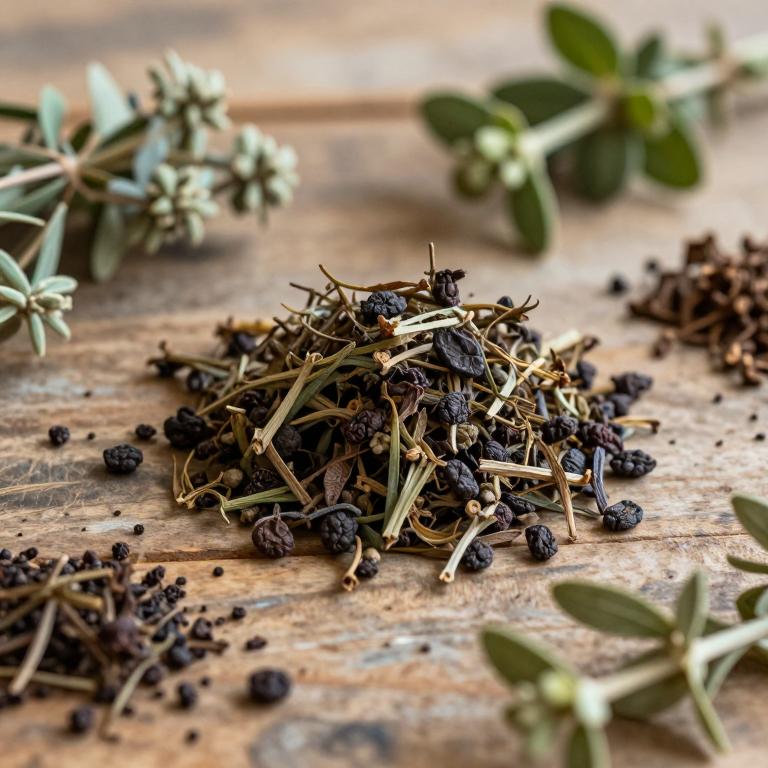
Names and Synonyms
Scientific Names
Accepted name
Myrciaria tenellaSynonyms
- Plinia montecristina
- Eugenia tenella var. spathulata
- Eugenia tenella var. macrocarpa
- Eugenia tenella var. minor
- Eugenia tenella var. elliptica
- Eugenia tenella var. glazioviana
- Plinia haitiensis
- Myrciaria tenella var. elliptica
- Myrciaria tenella var. spathulata
- Myrciaria undulata
Sources: Wikidata, Catalogue of Life
Taxonomical Classification
This plant, Myrciaria tenella, belongs to the kingdom Plantae and the phylum Streptophyta. Within the class Equisetopsida and subclass Magnoliidae, it is classified under the order Myrtoales and the family Myrtaceae. Finally, it is positioned within the genus Myrciaria.
| Rank | Classification |
|---|---|
| Kingdom | Plantae |
| Phylum | Streptophyta |
| Class | Equisetopsida |
| Subclass | Magnoliidae |
| Order | Myrtales |
| Family | Myrtaceae |
| Genus | Myrciaria |
Sources: The World Checklist of Vascular Plants (WCVP)
Distribution
This plant exhibits a broad geographical range that spans across several distinct regions of the Americas. Within the Caribbean, its presence is noted in both the Dominican Republic and Haiti. Moving to the northern part of South America, the species can be found in Venezuela and French Guiana. Its distribution extends even further south into the western reaches of the continent in Bolivia. Ultimately, these locations highlight the diverse environmental settings where the plant thrives.
| Region | Area |
|---|---|
| Caribbean | Dominican Republic |
| Caribbean | Haiti |
| Northern South America | French Guiana |
| Northern South America | Venezuela |
| Western South America | Bolivia |
| Western South America | Peru |
| Brazil | Brazil West-Central |
| Brazil | Brazil Northeast |
| Brazil | Brazil Southeast |
| Brazil | Brazil North |
Sources: The World Checklist of Vascular Plants (WCVP)
Botanical Identification
Ecology
The ecology of Myrcia aria tenella is characterized by its presence in specific vegetation types, primarily thriving within the habitats of bosque bajo (lowland forest) and cerrado. This species exhibits a broad altitudinal distribution, spanning from sea level up to a maximum elevation of 1300 m AMSL. Across its range, it maintains an average elevation of approximately 800 m AMSL, demonstrating an ability to adapt to varying topographical gradients within its preferred ecological niches.
- Elevational range max:
- 1300 m AMSL
- Elevational range mean:
- 800 m AMSL
- Elevational range min:
- 0 m AMSL
- Habitat :
- Bosque bajo, cerrado
Life history
The life history of Myrciaria tenebra is characterized by a perennial lifecycle, allowing the plant to persist through multiple growing seasons. In terms of its structural growth habits and ecological positioning, it exhibits characteristics consistent with both phanerophyte and nanophanerophyte life forms, indicating a capacity to maintain its reproductive shoots above the ground level.
- Life form :
- nanophanerophyte
- Life form :
- phanerophyte
- Lifecycle :
- perennial
Morphology
The morphology of Myrciaria tenebra is characterized by a woody growth form that can manifest as either a tree or a shrub. This species is a terrestrial plant that grows independently, lacking parasitic tendencies. In terms of stature, it is a self-supporting plant that does not function as a climber, liana, or vine, nor does it exhibit epiphytic behavior. The plant reaches a mean height of approximately 3 m, though it has the potential to reach a maximum height of up to 5 m.
- Aquatic :
- terrestrial
- Climber :
- self-supporting
- Epiphyte :
- terrestrial
- Growth form :
- tree
- Growth form :
- shrub
- Parasite :
- independent
- Plant height max:
- 5 m
- Plant height mean:
- 3 m
- Woodiness :
- woody
Physiology
The physiology of Myrcia aria tenella is characterized by distinct morphological and metabolic parameters, particularly regarding its leaf architecture and nutrient acquisition strategies. The plant exhibits a Specific Leaf Area (SLA) that is remarkably consistent across its sampled structures, with a recorded minimum, mean, and maximum value all equal to 364.33 cm²/g. This uniform SLA suggests a specialized leaf mass distribution that likely optimizes light interception and gas exchange within its specific ecological niche. Furthermore, in terms of nutrient cycling and symbiotic capabilities, Myrcia aria tenella does not function as a nitrogen fixer, meaning it relies on the uptake of available nitrogen from the soil rather than through biological nitrogen fixation via symbiotic relationships with diazotrophic microorganisms.
- Nitrogen fixer :
- no
- Specific Leaf Area (SLA) min:
- 364.33 cm²/g
Sources: Global Inventory of Floras and Traits (GIFT)
Plant Parts
Myrciaria tenella has 2 reported plant parts identified across 2 scientific publications and several other databases that are studied for medicinal purposes. The most consistently reported plant part include fruit, leaf.
| Plant part | Supporting sources | Consensus |
|---|---|---|
| Fruit | 1 supporting sources | ★☆☆☆☆ |
| Leaf | 1 supporting sources | ★☆☆☆☆ |
Fruit
- Molecules (Basel, Switzerland)
Leaf
- Antioxidants (Basel, Switzerland)
Chemicals
Myrciaria tenella has 8 reported phytochemicals identified across 2 scientific publications and several other databases. The most consistently reported chemicals include Anthraquinones, Flavonoids, Gallic acid, RUTIN, SAPONIN.
| Chemical | Supporting sources | Consensus |
|---|---|---|
| Anthraquinones | 1 supporting sources | ★☆☆☆☆ |
| Flavonoids | 1 supporting sources | ★☆☆☆☆ |
| Gallic acid | 1 supporting sources | ★☆☆☆☆ |
| RUTIN | 1 supporting sources | ★☆☆☆☆ |
| SAPONIN | 1 supporting sources | ★☆☆☆☆ |
| Tannin | 1 supporting sources | ★☆☆☆☆ |
| Tannins | 1 supporting sources | ★☆☆☆☆ |
| Ursolic acid | 1 supporting sources | ★☆☆☆☆ |
Anthraquinones
- Phytotherapy research : PTR
Flavonoids
- Phytotherapy research : PTR
Gallic acid
- Molecules (Basel, Switzerland)
RUTIN
- Antioxidants (Basel, Switzerland)
SAPONIN
- Antioxidants (Basel, Switzerland)
Tannin
- Antioxidants (Basel, Switzerland)
Tannins
- Phytotherapy research : PTR
Ursolic acid
- Antioxidants (Basel, Switzerland)
Activities
Myrciaria tenella has 5 reported activities identified across 2 scientific publications and several other databases. The most consistently reported activities include Antidiabetic, Antimicrobial, Antioxidant, Antiproliferative, Gastroprotective.
| Activity | Supporting sources | Consensus |
|---|---|---|
| Antidiabetic | 1 supporting sources | ★☆☆☆☆ |
| Antimicrobial | 1 supporting sources | ★☆☆☆☆ |
| Antioxidant | 1 supporting sources | ★☆☆☆☆ |
| Antiproliferative | 1 supporting sources | ★☆☆☆☆ |
| Gastroprotective | 1 supporting sources | ★☆☆☆☆ |
Antidiabetic
- Molecules (Basel, Switzerland)
Antimicrobial
- Molecules (Basel, Switzerland)
Antioxidant
- Antioxidants (Basel, Switzerland)
Antiproliferative
- Antioxidants (Basel, Switzerland)
Gastroprotective
- Molecules (Basel, Switzerland)
Conditions
Myrciaria tenella has 3 reported investigations on conditions identified across 2 scientific publications and several other databases. The most consistently reported conditions include antidiabetic, oxidative damage, oxidative stress.
| Condition | Supporting sources | Consensus |
|---|---|---|
| Antidiabetic | 1 supporting sources | ★☆☆☆☆ |
| Oxidative damage | 1 supporting sources | ★☆☆☆☆ |
| Oxidative stress | 1 supporting sources | ★☆☆☆☆ |
Antidiabetic
- Molecules (Basel, Switzerland)
Oxidative damage
- Antioxidants (Basel, Switzerland)
Oxidative stress
- Molecules (Basel, Switzerland)
Preparations
Myrciaria tenella has 7 reported preparations identified across 2 scientific publications and several other databases. The most consistently reported preparations include Aqueous extracts, aqueous final (CFAE), chloroform (CCE), ethanolic (CEE), hexane (CHE).
| Preparation | Supporting sources | Consensus |
|---|---|---|
| Aqueous extracts | 1 supporting sources | ★☆☆☆☆ |
| Aqueous final (cfae) | 1 supporting sources | ★☆☆☆☆ |
| Chloroform (cce) | 1 supporting sources | ★☆☆☆☆ |
| Ethanolic (cee) | 1 supporting sources | ★☆☆☆☆ |
| Hexane (che) | 1 supporting sources | ★☆☆☆☆ |
| Methanolic (cme) | 1 supporting sources | ★☆☆☆☆ |
| Only aqueous (cae) | 1 supporting sources | ★☆☆☆☆ |
Aqueous extracts
- Phytotherapy research : PTR
Aqueous final (cfae)
- Antioxidants (Basel, Switzerland)
Chloroform (cce)
- Antioxidants (Basel, Switzerland)
Ethanolic (cee)
- Antioxidants (Basel, Switzerland)
Hexane (che)
- Antioxidants (Basel, Switzerland)
Methanolic (cme)
- Antioxidants (Basel, Switzerland)
Only aqueous (cae)
- Antioxidants (Basel, Switzerland)