Vjok
Myrciaria dubia · Accepted scientific name
Scientific literature: Very Extensive (397 studies) · ★★★★★
Vjok, scientifically known as Myrciaria dubia, is a versatile medicinal plant highly valued in traditional herbal practices. Renowned for its diverse therapeutic properties, it is frequently utilized to treat various ailments, including skin conditions and digestive issues. This potent botanical offers significant pharmacological potential for modern holistic healthcare applications.
- Family
- Myrtaceae
- Native range
- Southern America
- Parts used
- Fruit
- Common names
- Camu-Camu
- Scientific synonyms
- Eugenia Grandiglandulosa · Myrtus Phillyreoides · 12 more
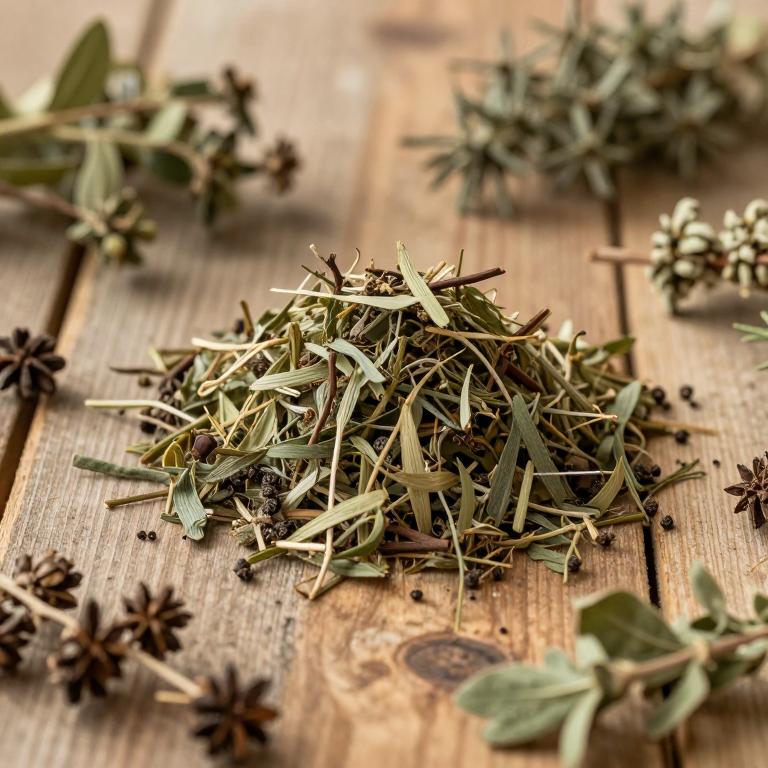
Names and Synonyms
Common Names
- camu-camu
Scientific Names
Accepted name
Myrciaria dubiaSynonyms
- Eugenia grandiglandulosa
- Myrtus phillyreoides
- Myrciaria spruceana
- Psidium dubium
- Myrciaria phillyreoides
- Myrciaria obscura
- Myrciaria paraensis
- Myrciaria lanceolata var. angustifolia
- Myrciaria lanceolata var. glomerata
- Myrciaria lanceolata var. laxa
- Myrciaria divaricata
- Myrciaria lanceolata
- Myrciaria caurensis
- Myrciaria riedeliana
Regional and Traditional Names
Spanish:
- Camu camu
- Camu-camu
- Psidium dubium
- Myrciaria divaricata
- Myrciaria phillyraeoides
- Myrtus phillyraeoides
- Myrciaria lanceolata
- Myrciaria lanceolata var. angustifolia
- Myrciaria lanceolata var. glomerata
- Myrciaria lanceolata var. laxa
- Myrciaria obscura
- Myrciaria paraensis
- Myrciaria spruceana
- Myrciaria riedeliana
- Eugenia grandiglandulosa
- Myrciaria caurensis
- Marlierea macedoi
- Myrciaria lanceolata var angustifolia
- Myrciaria lanceolata var glomerata
- Myrciaria lanceolata var laxa
- Camu camu
German:
- Camu-Camu
- Camu Camu
French:
- Camu camu
Sources: Wikidata, Catalogue of Life
Taxonomical Classification
This plant belongs to the kingdom Plantae within the phylum Streptophyta and the class Equisetopsida. It is further classified under the subclass Magnoliidae and the order Myrtoales, falling within the family Myrtaceae. Finally, it is identified by the genus Myrciaria.
| Rank | Classification |
|---|---|
| Kingdom | Plantae |
| Phylum | Streptophyta |
| Class | Equisetopsida |
| Subclass | Magnoliidae |
| Order | Myrtales |
| Family | Myrtaceae |
| Genus | Myrciaria |
Sources: The World Checklist of Vascular Plants (WCVP)
Distribution
This plant exhibits a diverse range of habitats across the South American continent. In the northern part of the continent, its distribution includes Guyana and Venezuela. Moving toward the western regions, it can also be found thriving in Colombia and Ecuador. Additionally, the species extends its reach further south into Bolivia. Overall, these locations highlight its significant presence across both northern and western South America.
| Region | Area |
|---|---|
| Northern South America | Guyana |
| Northern South America | Venezuela |
| Western South America | Bolivia |
| Western South America | Colombia |
| Western South America | Ecuador |
| Western South America | Peru |
| Brazil | Brazil West-Central |
| Brazil | Brazil North |
Sources: The World Checklist of Vascular Plants (WCVP)
Botanical Identification
Ecology
The ecology of Myrciaaria dubia is characterized by its preference for specific low-altitude wetland ecosystems, specifically within the Floresta de Várzea habitat. This plant thrives in these seasonally flooded forest environments, maintaining a specialized ecological niche dictated by its altitudinal requirements. Its distribution is restricted to a narrow elevational range, occurring between a minimum of 100 m AMSL and a maximum of 150 m AMSL.
- Elevational range max:
- 150 m AMSL
- Elevational range min:
- 100 m AMSL
- Habitat :
- Floresta de Várzea
Life history
The life history of Myrciaria dubia is characterized by a perennial lifecycle, allowing the plant to persist in its environment over many years. Depending on the specific environmental conditions and developmental stages, its growth habit can be classified under different life forms, exhibiting traits of both phanerophyte and nanophanerophyte structures. Throughout its existence, the plant maintains an evergreen deciduousness, ensuring that its foliage remains functional across different seasons without the need for a complete seasonal shedding of leaves.
- Deciduousness :
- evergreen
- Life form :
- nanophanerophyte
- Life form :
- phanerophyte
- Lifecycle :
- perennial
Morphology
The morphology of Myrciaria dubia is characterized by its growth form as a woody tree that functions as an independent organism, meaning it does not act as a parasite. This terrestrial species exhibits a significant range in stature, with a plant height that typically reaches a mean of 3 m, though individual specimens can vary from a minimum of 3 m to a maximum of 17 m. In terms of its structural habit, the plant is classified as self-supporting rather than a liana, vine, or climbing entity. Furthermore, it is strictly a terrestrial plant, lacking any epiphytic or aquatic characteristics.
- Aquatic :
- terrestrial
- Climber :
- self-supporting
- Epiphyte :
- terrestrial
- Growth form :
- tree
- Parasite :
- independent
- Plant height max:
- 17 m
- Plant height mean:
- 3 m
- Woodiness :
- woody
Physiology
The physiology of Myrciaria dubia is characterized by its specific metabolic and nutritional strategies. The plant utilizes a C3 photosynthetic pathway, which involves the direct fixation of carbon dioxide through the Calvin cycle, a process typical of most woody tropical species. Regarding its nutrient acquisition, the species is not a nitrogen fixer, meaning it does not possess a symbiotic relationship with nitrogen-fixing bacteria to convert atmospheric nitrogen into usable forms and must instead rely on the uptake of nitrates or ammonium present in the soil through its root system.
- Nitrogen fixer :
- no
- Photosynthetic pathway :
- C3
Sources: Global Inventory of Floras and Traits (GIFT)
Plant Parts
Myrciaria dubia has 1 reported plant parts identified across 2 scientific publications and several other databases that are studied for medicinal purposes. The most consistently reported plant part include fruit.
| Plant part | Supporting sources | Consensus |
|---|---|---|
| Fruit | 2 supporting sources | ★☆☆☆☆ |
Fruit
- Bioelectromagnetics
- Foods (Basel, Switzerland)
Chemicals
Myrciaria dubia has 51 reported phytochemicals identified across 2 scientific publications and several other databases. The most consistently reported chemicals include ascorbic acid, Anthocyanins, Flavonoids, 4-Terpineol, ALPHA-PHELLANDRENE.
| Chemical | Supporting sources | Consensus |
|---|---|---|
| ascorbic acid | 3 supporting sources | ★★☆☆☆ |
| Anthocyanins | 2 supporting sources | ★☆☆☆☆ |
| Flavonoids | 2 supporting sources | ★☆☆☆☆ |
| 4-Terpineol | 1 supporting sources | ★☆☆☆☆ |
| ALPHA-PHELLANDRENE | 1 supporting sources | ★☆☆☆☆ |
| ALPHA-PINENE | 1 supporting sources | ★☆☆☆☆ |
| Alpha terpinene | 1 supporting sources | ★☆☆☆☆ |
| Ash | 1 supporting sources | ★☆☆☆☆ |
| BETA-CARYOPHYLLENE | 1 supporting sources | ★☆☆☆☆ |
| BETA-PHELLANDRENE | 1 supporting sources | ★☆☆☆☆ |
ascorbic acid
- Dr. Duke
- Toxicology mechanisms and methods
- Bioelectromagnetics
Anthocyanins
- Dr. Duke
- Inflammopharmacology
Flavonoids
- Inflammopharmacology
- Toxicology mechanisms and methods
4-Terpineol
- Dr. Duke
ALPHA-PHELLANDRENE
- Dr. Duke
ALPHA-PINENE
- Dr. Duke
Alpha terpinene
- Dr. Duke
Ash
- Dr. Duke
BETA-CARYOPHYLLENE
- Dr. Duke
BETA-PHELLANDRENE
- Dr. Duke
Activities
Myrciaria dubia has 335 reported activities identified across 2 scientific publications and several other databases. The most consistently reported activities include Antioxidant, Hypoglycemic, Hypolipidemic, ACE-Inhibitor, Abortifacient.
| Activity | Supporting sources | Consensus |
|---|---|---|
| Antioxidant | 2 supporting sources | ★☆☆☆☆ |
| Hypoglycemic | 2 supporting sources | ★☆☆☆☆ |
| Hypolipidemic | 2 supporting sources | ★☆☆☆☆ |
| ACE-Inhibitor | 1 supporting sources | ★☆☆☆☆ |
| Abortifacient | 1 supporting sources | ★☆☆☆☆ |
| Acaricide | 1 supporting sources | ★☆☆☆☆ |
| Acetylcholinergic | 1 supporting sources | ★☆☆☆☆ |
| Acidulant | 1 supporting sources | ★☆☆☆☆ |
| Aldose-Reductase-Inhibitor | 1 supporting sources | ★☆☆☆☆ |
| Allelochemic | 1 supporting sources | ★☆☆☆☆ |
Antioxidant
- Dr. Duke
- Inflammopharmacology
Hypoglycemic
- Dr. Duke
- Inflammopharmacology
Hypolipidemic
- Dr. Duke
- Inflammopharmacology
ACE-Inhibitor
- Dr. Duke
Abortifacient
- Dr. Duke
Acaricide
- Dr. Duke
Acetylcholinergic
- Dr. Duke
Acidulant
- Dr. Duke
Aldose-Reductase-Inhibitor
- Dr. Duke
Allelochemic
- Dr. Duke
Conditions
Myrciaria dubia has 2 reported investigations on conditions identified across 2 scientific publications and several other databases. The most consistently reported conditions include oxidative damage, spermatogenesis.
| Condition | Supporting sources | Consensus |
|---|---|---|
| Oxidative damage | 1 supporting sources | ★☆☆☆☆ |
| Spermatogenesis | 1 supporting sources | ★☆☆☆☆ |
Oxidative damage
- Bioelectromagnetics
Spermatogenesis
- Toxicology mechanisms and methods
Preparations
Myrciaria dubia has 2 reported preparations identified across 2 scientific publications and several other databases. The most consistently reported preparations include flour, volatile concentrate.
| Preparation | Supporting sources | Consensus |
|---|---|---|
| Flour | 1 supporting sources | ★☆☆☆☆ |
| Volatile concentrate | 1 supporting sources | ★☆☆☆☆ |
Flour
- Bioelectromagnetics
Volatile concentrate
- Foods (Basel, Switzerland)