Myrcianthes myrsinoides
Myrcianthes myrsinoides · Accepted scientific name
Scientific literature: Very Sparse (2 studies) · ★☆☆☆☆
Myrcianthes myrsinoides, scientifically known as Myrcianthes myrsinoides, is a versatile evergreen shrub native to tropical regions. Valued in traditional medicine for its diverse therapeutic properties, this plant offers significant bioactive compounds. Exploring its phytochemical potential reveals its importance in treating various ailments and advancing modern natural pharmacology.
- Family
- Myrtaceae
- Native range
- Southern America
- Parts used
- Leaf
- Common names
- Not available
- Scientific synonyms
- Eugenia Myrsinoides · Cluacena Myrsinoides · 7 more
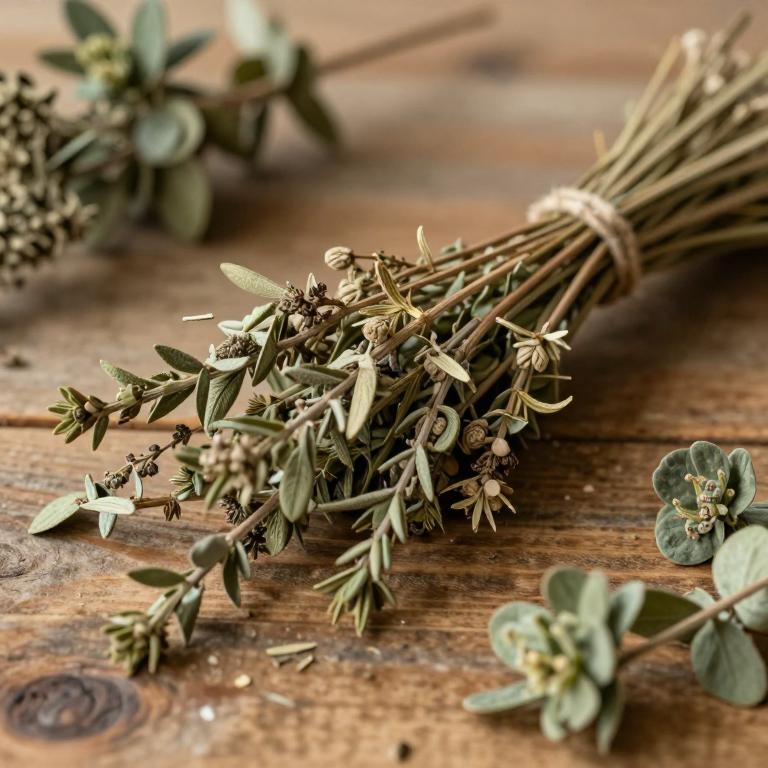
Names and Synonyms
Scientific Names
Accepted name
Myrcianthes myrsinoidesSynonyms
- Eugenia myrsinoides
- Cluacena myrsinoides
- Myrcianthes ternifolia
- Myrtus myrsinoides
- Eugenia triquetra var. aequatorialis
- Eugenia weberbaueri
- Eugenia triquetra
- Eugenia cartilaginea
- Myrteola myrsinoides
Regional and Traditional Names
Spanish:
- Carapollau
- Rumilanche
Sources: Wikidata, Catalogue of Life
Taxonomical Classification
This plant belongs to the kingdom Plantae within the phylum Streptophyta and the class Equisetopsida. Classified under the subclass Magnoliidae and the order Myrtaleales, it is a member of the family Myrtaceae. Its specific taxonomic designation is placed within the genus Myrcianthes.
| Rank | Classification |
|---|---|
| Kingdom | Plantae |
| Phylum | Streptophyta |
| Class | Equisetopsida |
| Subclass | Magnoliidae |
| Order | Myrtales |
| Family | Myrtaceae |
| Genus | Myrcianthes |
Sources: The World Checklist of Vascular Plants (WCVP)
Distribution
This plant exhibits a diverse range of locations across the South American continent. In the northern part of the continent, it can be found growing in Venezuela. Moving toward the western regions, its presence is well-documented throughout Colombia and Ecuador. The species also extends its reach further south into Peru. Finally, its geographical distribution includes the western territory of Bolivia.
| Region | Area |
|---|---|
| Northern South America | Venezuela |
| Western South America | Bolivia |
| Western South America | Colombia |
| Western South America | Ecuador |
| Western South America | Peru |
Sources: The World Checklist of Vascular Plants (WCVP)
Botanical Identification
Ecology
The ecology of Myrcianthes myrsinoides is strictly defined by its high-altitude habitat within montane ecosystems, where it thrives within a specific vertical niche. This species is specialized to inhabit cloud forests and high-elevation paramo transitions, occupying an elevational range that begins at 2000 m AMSL and extends up to a maximum of 3500 m AMSL. Within this altitudinal belt, the plant is adapted to the unique environmental stressors characteristic of the high Andes, including high levels of solar radiation, frequent mist and fog, and significant temperature fluctuations between day and night. Its presence in these upper montane zones indicates an ecological requirement for cool, moist environments and specific soil compositions typically found in high-altitude tropical mountain ranges.
- Elevational range max:
- 3500 m AMSL
- Elevational range min:
- 2000 m AMSL
Life history
The life history of Myrcianthes myrsinoides is characterized by a perennial growth pattern that allows it to establish a stable presence within its ecosystem. As a woody species, it primarily exhibits a phanerophyte life form, maintaining its photosynthetic organs on elevated branches well above the soil surface to maximize light interception. Depending on the specific environmental conditions and the structural development of the individual, it may also manifest traits associated with the nanophanerophyte life form, where the height of the woody structure remains relatively low. This life history strategy supports its long-term survival and its ability to endure seasonal variations through its perennial, woody architecture.
- Life form :
- nanophanerophyte
- Life form :
- phanerophyte
Morphology
The morphology of Myrcianthes myrsinoides is characterized by a woody growth form, primarily developing as a self-supporting tree. It functions as an independent organism, lacking any parasitic tendencies, and is classified as a terrestrial species rather than an aquatic or semiaquatic plant. Unlike climbing vines or lianas, this species does not exhibit climbing behavior, maintaining a sturdy, self-supporting structure. It is not an epiphyte, as it grows directly in the soil as a terrestrial plant. In terms of scale, the plant reaches a maximum height of approximately 8 meters, showcasing a robust and well-defined woody architecture.
- Aquatic :
- terrestrial
- Climber :
- self-supporting
- Epiphyte :
- terrestrial
- Growth form :
- tree
- Parasite :
- independent
- Plant height max:
- 8 m
- Woodiness :
- woody
Sources: Global Inventory of Floras and Traits (GIFT)
Plant Parts
Myrcianthes myrsinoides has 1 reported plant parts identified across 1 scientific publications and several other databases that are studied for medicinal purposes. The most consistently reported plant part include leaf.
| Plant part | Supporting sources | Consensus |
|---|---|---|
| Leaf | 1 supporting sources | ★☆☆☆☆ |
Leaf
- Natural product research
Chemicals
Myrcianthes myrsinoides has 1 reported phytochemicals identified across 1 scientific publications and several other databases. The most consistently reported chemicals include LIMONENE.
| Chemical | Supporting sources | Consensus |
|---|---|---|
| LIMONENE | 1 supporting sources | ★☆☆☆☆ |
LIMONENE
- Natural product research
Preparations
Myrcianthes myrsinoides has 1 reported preparations identified across 1 scientific publications and several other databases. The most consistently reported preparations include essential oils.
| Preparation | Supporting sources | Consensus |
|---|---|---|
| Essential oils | 1 supporting sources | ★☆☆☆☆ |
Essential oils
- Natural product research