Raran
Myrceugenia obtusa · Accepted scientific name
Scientific literature: Very Sparse (4 studies) · ★☆☆☆☆
Rarun, scientifically known as MyrcuGenia obtusa, is a remarkable medicinal plant native to tropical ecosystems. Renowned for its diverse bioactive compounds, it has long been utilized in traditional healing practices to treat various ailments. This study explores its pharmacological potential, highlighting its significant contributions to modern natural medicine.
- Family
- Myrtaceae
- Native range
- Southern America
- Parts used
- Not available
- Common names
- Raran
- Scientific synonyms
- Eugenia Raran · Myrceugenia Obtusa Var. Polyantha · 6 more
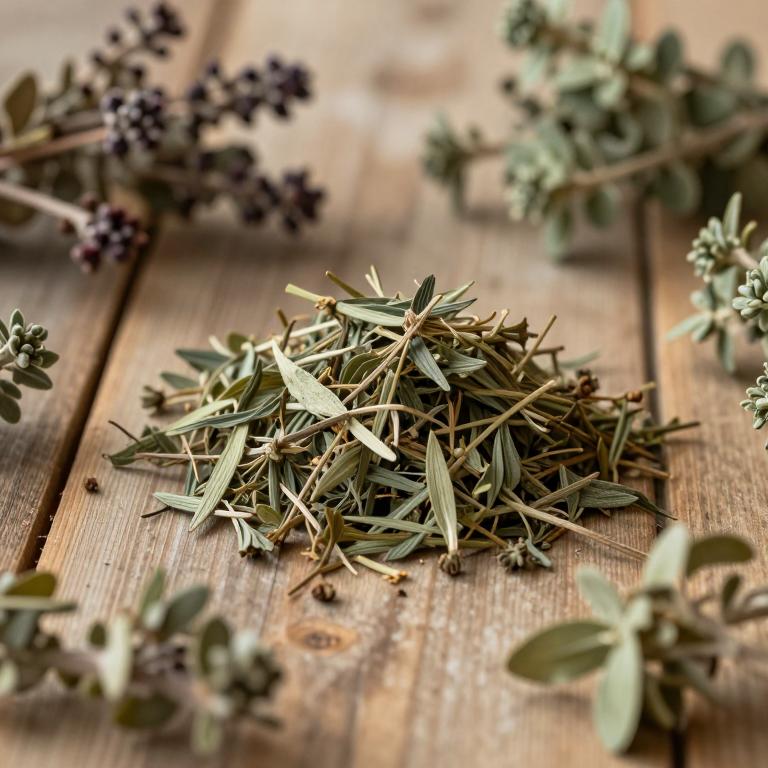
Names and Synonyms
Common Names
- raran
Scientific Names
Accepted name
Myrceugenia obtusaSynonyms
- Eugenia raran
- Myrceugenia obtusa var. polyantha
- Eugenia polyantha
- Eugenia obtusa
- Myrtus raran
- Luma obtusa
- Myrceugenia obtusa var. berteroana
- Myrceugenia obtusa var. raran
Regional and Traditional Names
Spanish:
- Raran
- Rarán
Sources: Wikidata, Catalogue of Life
Taxonomical Classification
This plant belongs to the kingdom Plantae and the phylum Streptophyta, falling under the class Equisetopsida and subclass Magnoliidae. Within the order Myrtales and the family Myrtaceae, it is classified under the genus Myrceugenia. Specifically, this medicinal species is identified as Myrceugenia obtusata.
| Rank | Classification |
|---|---|
| Kingdom | Plantae |
| Phylum | Streptophyta |
| Class | Equisetopsida |
| Subclass | Magnoliidae |
| Order | Myrtales |
| Family | Myrtaceae |
| Genus | Myrceugenia |
Sources: The World Checklist of Vascular Plants (WCVP)
Distribution
This plant, known scientifically as Myrcenogenia obtusa, possesses a very specific and restricted range. Its presence is primarily documented within the southern regions of South America. Specifically, the species is found growing in the central parts of Chile. This localized distribution suggests that the plant is highly adapted to the unique environmental conditions of that area. Consequently, it remains a characteristic element of the central Chilean landscape.
| Region | Area |
|---|---|
| Southern South America | Chile Central |
Sources: The World Checklist of Vascular Plants (WCVP)
Botanical Identification
Ecology
The ecology of Myrceugenia obtusa is characterized by its broad adaptability across diverse altitudinal gradients within its native habitats. This species thrives across a significant vertical distribution, ranging from sea level up to a maximum elevation of 1400 m AMSL. This wide elevational range suggests that the plant is capable of occupying various ecological niches, from lowland tropical environments to mid-elevation montane zones. Such a distribution implies a tolerance for varying temperature regimes, humidity levels, and atmospheric pressures associated with different altitudes, allowing it to persist in diverse forest structures and microclimates throughout its range.
- Elevational range max:
- 1400 m AMSL
- Elevational range min:
- 0 m AMSL
Life history
The life history of Myrceugenia obtusa is characterized by a perennial lifecycle, allowing the individual to persist through multiple growing seasons. In terms of its structural development and growth habit, the plant exhibits a dual classification of life forms depending on its developmental stage and environmental context, functioning both as a phanerophyte, where its buds are borne on elevated branches well above the ground, and as a nanophanerophyte.
- Life form :
- nanophanerophyte
- Life form :
- phanerophyte
- Lifecycle :
- perennial
Morphology
The morphology of Myrceugenia obtusa is characterized by a robust, woody structure, manifesting primarily in growth forms that range from a shrub to a tree. This plant is non-parasitic, functioning as an independent organism within its ecosystem, and it maintains a terrestrial existence rather than being aquatic or epiphytic. It does not exhibit climbing behavior, instead remaining self-supporting through its established woody framework.
- Aquatic :
- terrestrial
- Climber :
- self-supporting
- Epiphyte :
- terrestrial
- Growth form :
- tree
- Growth form :
- shrub
- Parasite :
- independent
- Woodiness :
- woody
Physiology
The physiology of Myrceugenia obtusa is fundamentally defined by its reliance on the C3 photosynthetic pathway, a characteristic typical of most woody angiosperms in its taxonomic group. Through this mechanism, the plant utilizes the enzyme RuBisCO to facilitate the initial fixation of atmospheric carbon dioxide into a three-carbon compound, primarily 3-phosphoglycerate, during the Calvin cycle. This metabolic process occurs within the mesophyll cells, where light-dependent reactions generate the necessary ATP and NADPH to drive the subsequent carbon assimilation. Given its C3 classification, the plant's gas exchange and water-use efficiency are governed by the balance between CO2 uptake and photorespiration, particularly under varying environmental temperatures and light intensities. This physiological framework dictates the plant's energy production, biomass accumulation, and its overall adaptive strategies for resource management within its ecological niche.
- Photosynthetic pathway :
- C3
Sources: Global Inventory of Floras and Traits (GIFT)
Chemicals
Myrceugenia obtusa has 3 reported phytochemicals identified across 0 scientific publications and several other databases. The most consistently reported chemicals include CATECHIN, Gallic acid, RUTIN.
| Chemical | Supporting sources | Consensus |
|---|---|---|
| CATECHIN | 1 supporting sources | ★☆☆☆☆ |
| Gallic acid | 1 supporting sources | ★☆☆☆☆ |
| RUTIN | 1 supporting sources | ★☆☆☆☆ |
CATECHIN
- Pakistan journal of biological sciences : PJBS
Gallic acid
- Pakistan journal of biological sciences : PJBS
RUTIN
- Pakistan journal of biological sciences : PJBS
Preparations
Myrceugenia obtusa has 2 reported preparations identified across 0 scientific publications and several other databases. The most consistently reported preparations include methanol-water (1:1) extracts, methanol-water extracts.
| Preparation | Supporting sources | Consensus |
|---|---|---|
| Methanol-water (1:1) extracts | 1 supporting sources | ★☆☆☆☆ |
| Methanol-water extracts | 1 supporting sources | ★☆☆☆☆ |
Methanol-water (1:1) extracts
- Pakistan journal of biological sciences : PJBS
Methanol-water extracts
- Pakistan journal of biological sciences : PJBS