Mycetia hainanensis
Mycetia hainanensis · Accepted scientific name
Scientific literature: Very Sparse (3 studies) · ★☆☆☆☆
, scientifically known as Mycetiia hainanenensis, is a rare medicinal plant endemic to the tropical forests of Hainan, China. Valued for its unique phytochemical profile, it is increasingly studied for its potential therapeutic properties. This remarkable species offers promising insights into natural pharmacology and the preservation of biodiversity.
- Family
- Not available
- Native range
- Asia-Temperate
- Parts used
- Leaf · Stem
- Common names
- Not available
- Scientific synonyms
- Not available
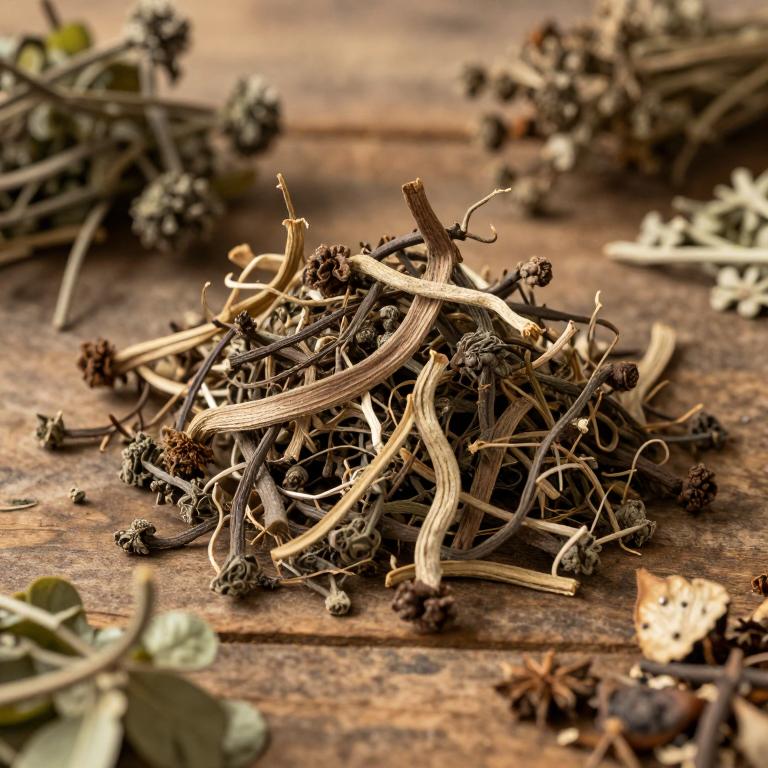
Names and Synonyms
Scientific Names
Accepted name
Mycetia hainanensisDistribution
This plant is a rare medicinal species with a highly restricted range. Its entire natural distribution is confined to a very specific geographic location. Specifically, it is found exclusively within the tropical regions of China. Within this country, the species is endemic only to the island of Hainan. Because of this limited habitat, the plant remains a unique botanical treasure of the island.
| Region | Area |
|---|---|
| China | Hainan |
Sources: The World Checklist of Vascular Plants (WCVP)
Botanical Identification
Life history
The life history of Mycetia hainanensis is characterized by its specific growth habit and structural adaptation to its environment, specifically categorized under the life form of a chamaephyte. This classification indicates that its perennating buds are located close to the soil surface, allowing the plant to persist through seasonal changes by maintaining its vital structures just above or at the ground level. Within the broader ecological spectrum of life forms, it is identified as a chamaephyte, distinguishing its survival strategy from taller phanerophytes or shorter therophytes. This life history pattern enables the plant to navigate its specific niche by balancing structural stability with the ability to recover from environmental stressors through its low-lying bud placement.
- Life form :
- chamaephyte
Morphology
The morphology of Mycetia hainanensis is characterized by its specialized growth habit and ecological positioning. It functions as a self-supporting climber, utilizing its structural form to ascend within its habitat without being an obligatory or facultative parasite, remaining entirely independent in its nutrient acquisition. Although it shares ecological space with various climbing forms, it does not exhibit parasitic tendencies and is classified as a terrestrial plant rather than an obligatory or facultative epiphyte.
- Climber :
- self-supporting
- Epiphyte :
- terrestrial
- Parasite :
- independent
Sources: Global Inventory of Floras and Traits (GIFT)
Plant Parts
Mycetia hainanensis has 2 reported plant parts identified across 2 scientific publications and several other databases that are studied for medicinal purposes. The most consistently reported plant part include leaf, stem.
| Plant part | Supporting sources | Consensus |
|---|---|---|
| Leaf | 1 supporting sources | ★☆☆☆☆ |
| Stem | 1 supporting sources | ★☆☆☆☆ |
Leaf
- Zhongguo Zhong yao za zhi = Zhongguo zhongyao zazhi = China journal of Chinese materia medica
Stem
- Zhongguo Zhong yao za zhi = Zhongguo zhongyao zazhi = China journal of Chinese materia medica
Conditions
Mycetia hainanensis has 1 reported investigations on conditions identified across 2 scientific publications and several other databases. The most consistently reported conditions include rheumatoid arthritis.
| Condition | Supporting sources | Consensus |
|---|---|---|
| Rheumatoid arthritis | 1 supporting sources | ★☆☆☆☆ |
Rheumatoid arthritis
- Zhongguo Zhong yao za zhi = Zhongguo zhongyao zazhi = China journal of Chinese materia medica
Preparations
Mycetia hainanensis has 1 reported preparations identified across 2 scientific publications and several other databases. The most consistently reported preparations include 85% ethanol extract of the stems and leaves.
| Preparation | Supporting sources | Consensus |
|---|---|---|
| 85% ethanol extract of the stems and leaves | 1 supporting sources | ★☆☆☆☆ |
85% ethanol extract of the stems and leaves
- Zhongguo Zhong yao za zhi = Zhongguo zhongyao zazhi = China journal of Chinese materia medica