Murraya
Murraya · Accepted scientific name
Scientific literature: Very Sparse (2 studies) · ★☆☆☆☆
Murraya, scientifically known as Murraya, is a versatile genus of flowering plants prized in traditional medicine. Renowned for its aromatic leaves and fragrant blossoms, various species offer potent antioxidant, antibacterial, and anti-inflammatory properties. These medicinal plants serve as vital natural resources for managing diverse health conditions globally.
- Family
- Rutaceae
- Native range
- Africa
- Parts used
- Leaf
- Common names
- Not available
- Scientific synonyms
- Chalcas · Marsana
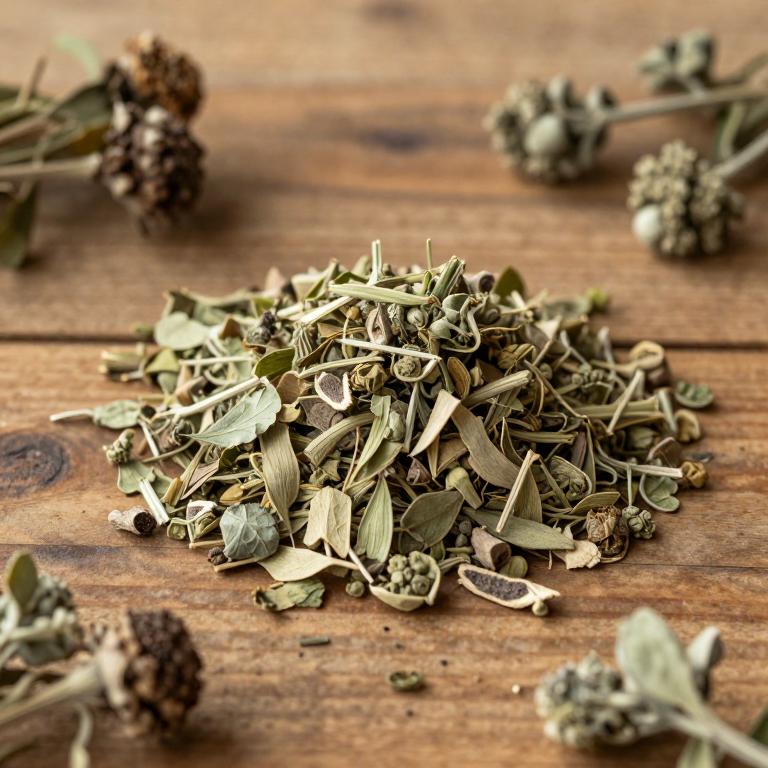
Names and Synonyms
Scientific Names
Accepted name
MurrayaSynonyms
- Chalcas
- Marsana
Regional and Traditional Names
Spanish:
- Chalcas
German:
- Orangenrauten
Sources: Wikidata, Catalogue of Life
Taxonomical Classification
This plant belongs to the kingdom Plantae and the phylum Streptophyta, falling under the class Equisetopsida and subclass Magnoliidae. Within the order Sapindales, it is classified under the family Rutaceae. Finally, the medicinal species is categorized under the genus Murraya.
| Rank | Classification |
|---|---|
| Kingdom | Plantae |
| Phylum | Streptophyta |
| Class | Equisetopsida |
| Subclass | Magnoliidae |
| Order | Sapindales |
| Family | Rutaceae |
| Genus | Murraya |
Sources: The World Checklist of Vascular Plants (WCVP)
Distribution
This plant exhibits a broad geographical range spanning across diverse regions of Asia and the Indian Ocean. In the Western Indian Ocean, it can be found inhabiting the islands of Comoros, Mauritius, and Réunion. Furthermore, its presence extends to the tropical archipelago of the Seychelles. Moving toward the Asian continent, the species is also distributed throughout China. Specifically, it thrives within the South-Central region of China.
| Region | Area |
|---|---|
| Western Indian Ocean | Comoros |
| Western Indian Ocean | Mauritius |
| Western Indian Ocean | Réunion |
| Western Indian Ocean | Seychelles |
| China | China South-Central |
| China | Hainan |
| China | China Southeast |
| Eastern Asia | Nansei-shoto |
| Eastern Asia | Taiwan |
| Indian Subcontinent | Assam |
Sources: The World Checklist of Vascular Plants (WCVP)
Plant Parts
Murraya has 1 reported plant parts identified across 1 scientific publications and several other databases that are studied for medicinal purposes. The most consistently reported plant part include leaf.
| Plant part | Supporting sources | Consensus |
|---|---|---|
| Leaf | 1 supporting sources | ★☆☆☆☆ |
Leaf
- Journal of cellular biochemistry
Chemicals
Murraya has 1 reported phytochemicals identified across 1 scientific publications and several other databases. The most consistently reported chemicals include Coumarins.
| Chemical | Supporting sources | Consensus |
|---|---|---|
| Coumarins | 1 supporting sources | ★☆☆☆☆ |
Coumarins
- Yakugaku zasshi : Journal of the Pharmaceutical Society of Japan
Preparations
Murraya has 1 reported preparations identified across 1 scientific publications and several other databases. The most consistently reported preparations include condiment (curry).
| Preparation | Supporting sources | Consensus |
|---|---|---|
| Condiment (curry) | 1 supporting sources | ★☆☆☆☆ |
Condiment (curry)
- Journal of cellular biochemistry