Muraltia tenuifolia
Muraltia tenuifolia · Accepted scientific name
Scientific literature: Very Extensive (360 studies) · ★★★★★
Muraltia tenuifolia, scientifically known as Muraltia tenuifolia, is a versatile medicinal plant prized in traditional herbalism. Renowned for its diverse therapeutic properties, it is frequently utilized to treat various ailments, including skin conditions and inflammatory issues. This resilient species offers significant pharmacological potential for modern integrative wellness practices.
- Family
- Polygalaceae
- Native range
- Africa
- Parts used
- Root
- Common names
- Not available
- Scientific synonyms
- Heisteria Tenuifolia · Muraltia Tenuifolia Var. Intermedia · 2 more
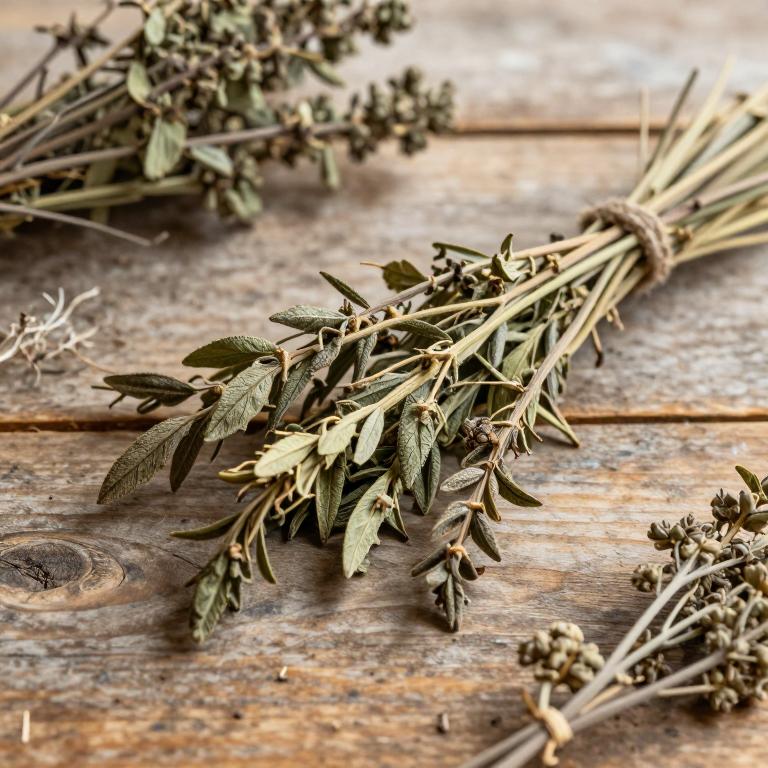
Names and Synonyms
Scientific Names
Accepted name
Muraltia tenuifoliaSynonyms
- Heisteria tenuifolia
- Muraltia tenuifolia var. intermedia
- Muraltia tenuifolia var. major
- Muraltia tenuifolia var. minor
Sources: Wikidata
Taxonomical Classification
This plant, known scientifically as Muraltia tenuifolia, belongs to the kingdom Plantae and the phylum Streptophyta. Within the class Equisetopsida and subclass Magnoliidae, it is classified under the order Fabales and the family Polygalaceae. Finally, its specific taxonomic placement is defined by the genus Muraltia.
| Rank | Classification |
|---|---|
| Kingdom | Plantae |
| Phylum | Streptophyta |
| Class | Equisetopsida |
| Subclass | Magnoliidae |
| Order | Fabales |
| Family | Polygalaceae |
| Genus | Muraltia |
Sources: The World Checklist of Vascular Plants (WCVP)
Distribution
This plant is primarily found within the unique landscapes of Southern Africa. Its geographical presence is specifically concentrated in the Cape Provinces. Within this region, it thrives in the diverse ecosystems characteristic of the area. This localized distribution makes it a significant part of the regional flora. Consequently, understanding its habitat in the Cape Provinces is essential for its study.
| Region | Area |
|---|---|
| Southern Africa | Cape Provinces |
Sources: The World Checklist of Vascular Plants (WCVP)
Botanical Identification
Ecology
The ecology of Muraltia tenuifolia is characterized by its adaptation to diverse topographical gradients, allowing it to inhabit a broad vertical distribution within its native landscape. This species thrives across a significant altitudinal spectrum, ranging from low-lying areas at an elevation of 75 m AMSL to higher montane reaches reaching up to 1400 m AMSL. This wide elevational range suggests a high degree of ecological plasticity, enabling the plant to persist in varying microclimates, temperature regimes, and moisture levels found between these two extremes. Such a distribution indicates that the plant is capable of navigating the environmental shifts associated with increasing altitude, from warmer, potentially more humid lowland habitats to the cooler, more temperate conditions of higher elevations.
- Elevational range max:
- 1400 m AMSL
- Elevational range min:
- 75 m AMSL
Life history
The life history of Muraltia tenuifolia is characterized by its status as a perennial species, allowing it to persist through multiple growing seasons and establish a long-term presence in its natural habitat. As a perennial, the plant undergoes complex developmental stages that extend beyond a single reproductive cycle, often exhibiting a robust growth pattern that enables it to withstand varying environmental conditions over several years. This extended lifecycle facilitates the accumulation of biomass and the potential for repeated flowering and fruiting periods, which are essential for its long-term survival and the successful dispersal of its seeds within its ecological niche.
- Lifecycle :
- perennial
Morphology
The morphology of Muraltia tenuifolia is characterized by its growth habit as a woody subshrub that can also manifest as a shrub. It is a self-supporting plant that does not function as a climber, epiphyte, or parasite, maintaining an independent existence within its habitat. While it can exist in various environments, its primary ecological classification is terrestrial. In terms of stature, the plant is relatively low-growing, reaching a maximum plant height of approximately 0.6 m.
- Aquatic :
- terrestrial
- Climber :
- self-supporting
- Epiphyte :
- terrestrial
- Growth form :
- shrub
- Growth form :
- subshrub
- Parasite :
- independent
- Plant height max:
- 0.6 m
- Woodiness :
- woody
Sources: Global Inventory of Floras and Traits (GIFT)
Plant Parts
Muraltia tenuifolia has 1 reported plant parts identified across 14 scientific publications and several other databases that are studied for medicinal purposes. The most consistently reported plant part include root.
| Plant part | Supporting sources | Consensus |
|---|---|---|
| Root | 14 supporting sources | ★★★★★ |
Root
- Journal of ethnopharmacology
- Natural product communications
- International journal of genomics
- Journal of nanoscience and nanotechnology
- Biomedical chromatography : BMC
View 9 additional sources
- Phytotherapy research : PTR
- Evidence-based complementary and alternative medicine : eCAM
- Journal of separation science
- Journal of natural products
- Plants (Basel, Switzerland)
- Chemical & pharmaceutical bulletin
- Zhong yao cai = Zhongyaocai = Journal of Chinese medicinal materials
- Zhongguo Zhong yao za zhi = Zhongguo zhongyao zazhi = China journal of Chinese materia medica
- Phytomedicine : international journal of phytotherapy and phytopharmacology
Chemicals
Muraltia tenuifolia has 113 reported phytochemicals identified across 14 scientific publications and several other databases. The most consistently reported chemicals include Tenuifolin, Polygalaxanthone III, Saponins, Tenuifoliside A, 3,4,5-TRIMETHOXYCINNAMIC ACID.
| Chemical | Supporting sources | Consensus |
|---|---|---|
| Tenuifolin | 9 supporting sources | ★★★★☆ |
| Polygalaxanthone III | 4 supporting sources | ★★☆☆☆ |
| Saponins | 4 supporting sources | ★★☆☆☆ |
| Tenuifoliside A | 4 supporting sources | ★★☆☆☆ |
| 3,4,5-TRIMETHOXYCINNAMIC ACID | 3 supporting sources | ★★☆☆☆ |
| 3,6'-di-O-sinapoyl-sucrose | 3 supporting sources | ★★☆☆☆ |
| SAPONIN | 3 supporting sources | ★★☆☆☆ |
| Senegenin | 3 supporting sources | ★★☆☆☆ |
| Sibiricose A5 | 3 supporting sources | ★★☆☆☆ |
| 3,6'-Disinapoyl sucrose | 2 supporting sources | ★☆☆☆☆ |
Tenuifolin
- Dr. Duke
- Pharmacology, biochemistry, and behavior
- Phytotherapy research : PTR
- Journal of ethnopharmacology
- Scientific reports
View 4 additional sources
- Journal of natural medicines
- Zhongguo Zhong yao za zhi = Zhongguo zhongyao zazhi = China journal of Chinese materia medica
- Zhong yao cai = Zhongyaocai = Journal of Chinese medicinal materials
- Phytomedicine : international journal of phytotherapy and phytopharmacology
Polygalaxanthone III
- Zhongguo Zhong yao za zhi = Zhongguo zhongyao zazhi = China journal of Chinese materia medica
- Chemical & pharmaceutical bulletin
- Yao xue xue bao = Acta pharmaceutica Sinica
- Zhong yao cai = Zhongyaocai = Journal of Chinese medicinal materials
Saponins
- International journal of genomics
- Journal of pharmaceutical and biomedical analysis
- Journal of ethnopharmacology
- Fitoterapia
Tenuifoliside A
- Phytomedicine : international journal of phytotherapy and phytopharmacology
- Zhong yao cai = Zhongyaocai = Journal of Chinese medicinal materials
- Reviews in the neurosciences
- Zhongguo Zhong yao za zhi = Zhongguo zhongyao zazhi = China journal of Chinese materia medica
3,4,5-TRIMETHOXYCINNAMIC ACID
- Dr. Duke
- Journal of pharmacological sciences
- Biological & pharmaceutical bulletin
3,6'-di-O-sinapoyl-sucrose
- Phytomedicine : international journal of phytotherapy and phytopharmacology
- Reviews in the neurosciences
- Journal of separation science
SAPONIN
- Dr. Duke
- Journal of integrative plant biology
- Journal of natural medicines
Senegenin
- Dr. Duke
- Journal of integrative plant biology
- Zhong yao cai = Zhongyaocai = Journal of Chinese medicinal materials
Sibiricose A5
- Journal of separation science
- Phytomedicine : international journal of phytotherapy and phytopharmacology
- Zhongguo Zhong yao za zhi = Zhongguo zhongyao zazhi = China journal of Chinese materia medica
3,6'-Disinapoyl sucrose
- Phytomedicine : international journal of phytotherapy and phytopharmacology
- Zhongguo Zhong yao za zhi = Zhongguo zhongyao zazhi = China journal of Chinese materia medica
Activities
Muraltia tenuifolia has 165 reported activities identified across 14 scientific publications and several other databases. The most consistently reported activities include Sedative, Antidepressant, Antiarrhythmic, Antioxidant, Anxiolytic.
| Activity | Supporting sources | Consensus |
|---|---|---|
| Sedative | 5 supporting sources | ★★★☆☆ |
| Antidepressant | 4 supporting sources | ★★☆☆☆ |
| Antiarrhythmic | 2 supporting sources | ★☆☆☆☆ |
| Antioxidant | 2 supporting sources | ★☆☆☆☆ |
| Anxiolytic | 2 supporting sources | ★☆☆☆☆ |
| ACE-Inhibitor | 1 supporting sources | ★☆☆☆☆ |
| Analgesic | 1 supporting sources | ★☆☆☆☆ |
| Angiotensin-Receptor-Blocker | 1 supporting sources | ★☆☆☆☆ |
| Anorexic | 1 supporting sources | ★☆☆☆☆ |
| AntiBPH | 1 supporting sources | ★☆☆☆☆ |
Sedative
- Chemical & pharmaceutical bulletin
- Biological & pharmaceutical bulletin
- Journal of ethnopharmacology
- Zhongguo Zhong yao za zhi = Zhongguo zhongyao zazhi = China journal of Chinese materia medica
- Journal of separation science
Antidepressant
- Dr. Duke
- Journal of ethnopharmacology
- Fitoterapia
- Journal of natural products
Antiarrhythmic
- Dr. Duke
- Fitoterapia
Antioxidant
- Dr. Duke
- Fitoterapia
Anxiolytic
- Dr. Duke
- Phytomedicine : international journal of phytotherapy and phytopharmacology
ACE-Inhibitor
- Dr. Duke
Analgesic
- Dr. Duke
Angiotensin-Receptor-Blocker
- Dr. Duke
Anorexic
- Dr. Duke
AntiBPH
- Dr. Duke
Preparations
Muraltia tenuifolia has 25 reported preparations identified across 14 scientific publications and several other databases. The most consistently reported preparations include dried roots, 3,6'-Di-o-sinapoyl-sucrose and tenuifoliside A, EPT, MeOH extract, PAP 9704.
| Preparation | Supporting sources | Consensus |
|---|---|---|
| Dried roots | 2 supporting sources | ★☆☆☆☆ |
| 3,6'-di-o-sinapoyl-sucrose and tenuifoliside a | 1 supporting sources | ★☆☆☆☆ |
| Ept | 1 supporting sources | ★☆☆☆☆ |
| Meoh extract | 1 supporting sources | ★☆☆☆☆ |
| Pap 9704 | 1 supporting sources | ★☆☆☆☆ |
| Pmc-12 | 1 supporting sources | ★☆☆☆☆ |
| Polygala tenuifolia extracts | 1 supporting sources | ★☆☆☆☆ |
| Polygalae radix | 1 supporting sources | ★☆☆☆☆ |
| Shen yuan prescription | 1 supporting sources | ★☆☆☆☆ |
| Yuan-zhi | 1 supporting sources | ★☆☆☆☆ |
Dried roots
- International journal of genomics
- Journal of separation science
3,6'-di-o-sinapoyl-sucrose and tenuifoliside a
- Reviews in the neurosciences
Ept
- Phytomedicine : international journal of phytotherapy and phytopharmacology
Meoh extract
- Natural product communications
Pap 9704
- Biological & pharmaceutical bulletin
Pmc-12
- Neuroscience letters
Polygala tenuifolia extracts
- Journal of ethnopharmacology
Polygalae radix
- Genes & genomics
Shen yuan prescription
- Frontiers in psychiatry
Yuan-zhi
- Biomedical chromatography : BMC