Mucuna pruriens utilis
Mucuna pruriens var. utilis · Accepted scientific name
Scientific literature: Extensive (172 studies) · ★★★★☆
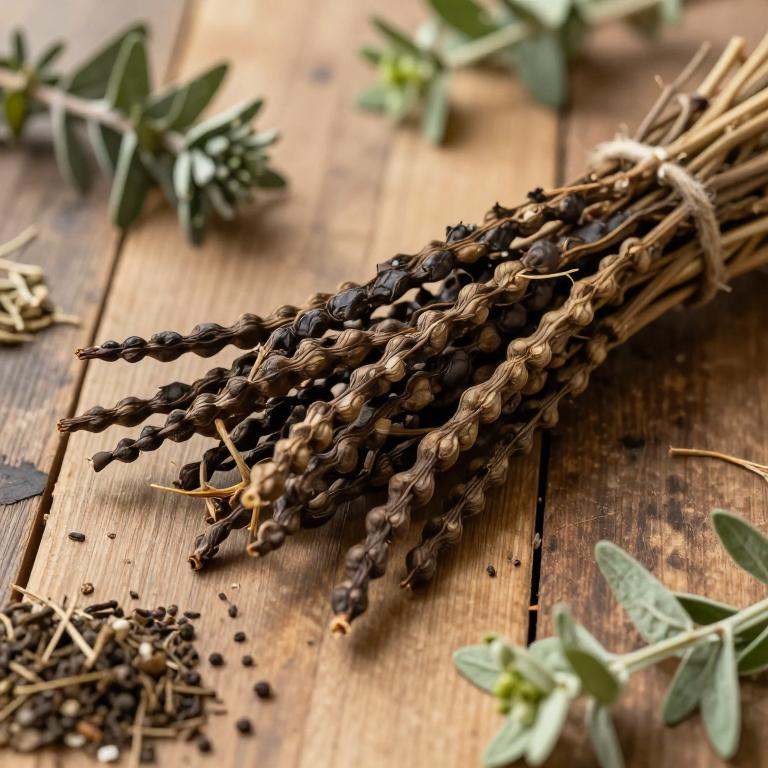
Mucuna pruriens utilis, scientifically known as Mucuna pruriens var. utilis, is a potent medicinal legume celebrated for its high L-Dopa content. Primarily used to manage Parkinson's disease and support neurological health, this versatile plant offers significant therapeutic potential in treating neurodegenerative disorders and enhancing overall cognitive and hormonal balance.
Names and Synonyms
Common Names
- Bengal velvet-bean
- Florida velvet-bean
- Lyon-bean
- Mauritius velvet-bean
- Yokohama velvet-bean
- cowage velvet-bean
- lacuna-bean
- velvet-bean
- cowitch
Scientific Names
Accepted name
Mucuna pruriens var. utilisSynonyms
- Mucuna capitata
- Carpopogon niveus
- Stizolobium deeringianum
- Mucuna pruriens f. capitata
- Mucuna aterrima
- Mucuna deeringiana
- Mucuna pachylobia
- Mucuna pruriens subsp. deeringiana
- Stizolobium capitatum
- Stizolobium utile
- Mucuna pruriens var. capitata
- Mucuna nivea
- Stizolobium niveum
- Hypoestes cochinchinensis
- Stizolobium cochinchinense
- Mucuna cochinchinensis
- Mucuna pruriens f. cochinchinensis
- Carpopogon capitatus
- Mucuna atrocarpa
- Mucuna lyonii
- Mucuna martini
- Mucuna utilis
- Macranthus cochinchinensis
- Stizolobium aterrimum
- Stizolobium cinereum
- Stizolobium microspermum
- Stizolobium pachylobium
Regional and Traditional Names
Spanish:
- pica-pica
- guisante negro
French:
- pois du Bengal
Sources: Wikidata, Catalogue of Life
Taxonomical Classification
This plant belongs to the kingdom Plantae and the phylum Streptophyta, falling under the class Equisetopsida and subclass Magnoliidae. Within the order Fabales, it is classified in the family Fabaceae. It is specifically identified by the genus Mucuna as the variety Mucuna pruriens var. utilis.
| Rank | Classification |
|---|---|
| Kingdom | Plantae |
| Phylum | Streptophyta |
| Class | Equisetopsida |
| Subclass | Magnoliidae |
| Order | Fabales |
| Family | Fabaceae |
| Genus | Mucuna |
Sources: The World Checklist of Vascular Plants (WCVP)
Distribution
This plant, Mucuna pruriens var. utilis, exhibits a specific geographical distribution centered within West Tropical Africa. Its presence is documented across several key nations, including Burkina and Ghana. Furthermore, the species can be found growing within the borders of Guinea. The distribution also extends into the territories of Nigeria and Sierra Leone. Consequently, these specific regions form the primary habitat for this medicinal variety.
| Region | Area |
|---|---|
| West Tropical Africa | Burkina |
| West Tropical Africa | Ghana |
| West Tropical Africa | Guinea |
| West Tropical Africa | Nigeria |
| West Tropical Africa | Sierra Leone |
| West-Central Tropical Africa | Central African Republic |
| West-Central Tropical Africa | DR Congo |
| Northeast Tropical Africa | Ethiopia |
| East Tropical Africa | Kenya |
| East Tropical Africa | Tanzania |
Sources: The World Checklist of Vascular Plants (WCVP)
Plant Parts
Mucuna pruriens var. utilis has 1 reported plant parts identified across 2 scientific publications and several other databases that are studied for medicinal purposes. The most consistently reported plant part include seed.
| Plant part | Supporting sources | Consensus |
|---|---|---|
| Seed | 2 supporting sources | ★☆☆☆☆ |
Seed
- Journal of agricultural and food chemistry
- International journal of food sciences and nutrition
Chemicals
Mucuna pruriens var. utilis has 16 reported phytochemicals identified across 2 scientific publications and several other databases. The most consistently reported chemicals include L-dopa, 2'-Hydroxygenistein, Ash, Phytate, Phytic acid.
| Chemical | Supporting sources | Consensus |
|---|---|---|
| L-dopa | 3 supporting sources | ★★☆☆☆ |
| 2'-Hydroxygenistein | 1 supporting sources | ★☆☆☆☆ |
| Ash | 1 supporting sources | ★☆☆☆☆ |
| Phytate | 1 supporting sources | ★☆☆☆☆ |
| Phytic acid | 1 supporting sources | ★☆☆☆☆ |
| STARCH | 1 supporting sources | ★☆☆☆☆ |
| Saponins | 1 supporting sources | ★☆☆☆☆ |
| TRYPSIN | 1 supporting sources | ★☆☆☆☆ |
| Tannins | 1 supporting sources | ★☆☆☆☆ |
| Trypsin inhibitor | 1 supporting sources | ★☆☆☆☆ |
L-dopa
- Journal of agricultural and food chemistry
- Scientific reports
- International journal of food sciences and nutrition
2'-Hydroxygenistein
- Dr. Duke
Ash
- International journal of food sciences and nutrition
Phytate
- Journal of agricultural and food chemistry
Phytic acid
- Journal of agricultural and food chemistry
STARCH
- Journal of agricultural and food chemistry
Saponins
- Journal of agricultural and food chemistry
TRYPSIN
- International journal of food sciences and nutrition
Tannins
- Journal of agricultural and food chemistry
Trypsin inhibitor
- Journal of agricultural and food chemistry
Activities
Mucuna pruriens var. utilis has 72 reported activities identified across 2 scientific publications and several other databases. The most consistently reported activities include Abortifacient, Aldose-Reductase-Inhibitor, Alpha-Reductase-Inhibitor, Antiaggregant, Antiangiogenic.
| Activity | Supporting sources | Consensus |
|---|---|---|
| Abortifacient | 1 supporting sources | ★☆☆☆☆ |
| Aldose-Reductase-Inhibitor | 1 supporting sources | ★☆☆☆☆ |
| Alpha-Reductase-Inhibitor | 1 supporting sources | ★☆☆☆☆ |
| Antiaggregant | 1 supporting sources | ★☆☆☆☆ |
| Antiangiogenic | 1 supporting sources | ★☆☆☆☆ |
| Antiatherosclerotic | 1 supporting sources | ★☆☆☆☆ |
| Anticancer (Breast) | 1 supporting sources | ★☆☆☆☆ |
| Anticarcinomic (Breast) | 1 supporting sources | ★☆☆☆☆ |
| Anticlimacteric | 1 supporting sources | ★☆☆☆☆ |
| Antiendoccytotic | 1 supporting sources | ★☆☆☆☆ |
Abortifacient
- Dr. Duke
Aldose-Reductase-Inhibitor
- Dr. Duke
Alpha-Reductase-Inhibitor
- Dr. Duke
Antiaggregant
- Dr. Duke
Antiangiogenic
- Dr. Duke
Antiatherosclerotic
- Dr. Duke
Anticancer (Breast)
- Dr. Duke
Anticarcinomic (Breast)
- Dr. Duke
Anticlimacteric
- Dr. Duke
Antiendoccytotic
- Dr. Duke
Conditions
Mucuna pruriens var. utilis has 1 reported investigations on conditions identified across 2 scientific publications and several other databases. The most consistently reported conditions include protein-energy-malnutrition.
| Condition | Supporting sources | Consensus |
|---|---|---|
| Protein-energy-malnutrition | 1 supporting sources | ★☆☆☆☆ |
Protein-energy-malnutrition
- International journal of food sciences and nutrition
Preparations
Mucuna pruriens var. utilis has 13 reported preparations identified across 2 scientific publications and several other databases. The most consistently reported preparations include Cooking, Dehulled seeds, Water soaking followed by dehusking, autoclaving, dehulled samples.
| Preparation | Supporting sources | Consensus |
|---|---|---|
| Cooking | 1 supporting sources | ★☆☆☆☆ |
| Dehulled seeds | 1 supporting sources | ★☆☆☆☆ |
| Water soaking followed by dehusking | 1 supporting sources | ★☆☆☆☆ |
| Autoclaving | 1 supporting sources | ★☆☆☆☆ |
| Dehulled samples | 1 supporting sources | ★☆☆☆☆ |
| Dry heat treatment | 1 supporting sources | ★☆☆☆☆ |
| Dry heating techniques | 1 supporting sources | ★☆☆☆☆ |
| Extracts of mucuna pruriens var. utilis | 1 supporting sources | ★☆☆☆☆ |
| Germination processes | 1 supporting sources | ★☆☆☆☆ |
| Soaking | 1 supporting sources | ★☆☆☆☆ |
Cooking
- Journal of agricultural and food chemistry
Dehulled seeds
- Journal of agricultural and food chemistry
Water soaking followed by dehusking
- Journal of agricultural and food chemistry
Autoclaving
- Journal of agricultural and food chemistry
Dehulled samples
- Journal of agricultural and food chemistry
Dry heat treatment
- Journal of agricultural and food chemistry
Dry heating techniques
- Journal of agricultural and food chemistry
Extracts of mucuna pruriens var. utilis
- Zhong yao cai = Zhongyaocai = Journal of Chinese medicinal materials
Germination processes
- Journal of agricultural and food chemistry
Soaking
- Journal of agricultural and food chemistry