Morus indica
Morus indica · Accepted scientific name
Scientific literature: Very Sparse (1 studies) · ★☆☆☆☆
Morus indica, scientifically known as Morus indica, is a versatile medicinal plant widely recognized in traditional Ayurvedic medicine. Renowned for its antioxidant properties, its leaves, bark, and fruit offer significant therapeutic benefits, including anti-inflammatory, anti-diabetic, and antimicrobial effects, making it a vital resource in holistic healthcare treatments.
- Family
- Not available
- Native range
- Africa
- Parts used
- Leaf
- Common names
- Not available
- Scientific synonyms
- Not available
Names and Synonyms
Scientific Names
Accepted name
Morus indicaDistribution
This plant exhibits a diverse range of habitats across the African continent. In West-Central Tropical Africa, it can be found growing in Rwanda and the DR Congo. Its presence also extends into Northeast Tropical Africa, specifically within the borders of Eritrea and Ethiopia. Furthermore, the species is distributed throughout the Sudan-South Sudan region. This widespread occurrence highlights the plant's adaptability to various tropical environments.
| Region | Area |
|---|---|
| West-Central Tropical Africa | Rwanda |
| West-Central Tropical Africa | DR Congo |
| Northeast Tropical Africa | Eritrea |
| Northeast Tropical Africa | Ethiopia |
| Northeast Tropical Africa | Sudan-South Sudan |
| Southern Africa | Northern Provinces |
| Middle Atlantic Ocean | Ascension |
| Western Indian Ocean | Comoros |
| Western Indian Ocean | Mauritius |
| Western Indian Ocean | Réunion |
Sources: The World Checklist of Vascular Plants (WCVP)
Botanical Identification
Life history
The life history of Morus indica is characterized by a perennial lifecycle, allowing the plant to persist through multiple growing seasons and maintain long-term structural presence in its ecosystem. As a phanerophyte, it exhibits a growth habit where its regenerative buds are located high above the ground on woody stems, facilitating its development into a robust, woody shrub or small tree. This phanerophyte life form ensures that the plant can withstand various environmental stressors while maintaining a significant vertical stature, contributing to its enduring survival and ability to thrive across its natural habitats.
- Life form :
- phanerophyte
- Lifecycle :
- perennial
Morphology
The morphology of Morus indica is characterized by its growth form as a woody tree, which functions as a self-supporting structure rather than a climber or epiphyte. As an independent organism, it does not exhibit parasitic behavior and maintains a terrestrial existence, lacking aquatic or semiaquatic adaptations. The plant typically reaches a height ranging from a minimum of 3 meters to a maximum of 6 meters. Its structural integrity is defined by its woody nature, supporting its development into a robust tree form.
- Aquatic :
- terrestrial
- Climber :
- self-supporting
- Epiphyte :
- terrestrial
- Growth form :
- tree
- Parasite :
- independent
- Plant height max:
- 6 m
- Plant height min:
- 3 m
- Woodiness :
- woody
Physiology
The physiology of Morus indica is characterized by a highly efficient metabolic framework optimized for rapid biomass production and adaptation to diverse environmental conditions. A fundamental aspect of its metabolic function is its photosynthetic pathway, which utilizes the C3 mechanism; this process involves the direct fixation of atmospheric carbon dioxide by the enzyme RuBisCO within the mesophyll cells to produce three-carbon sugar phosphates. This C3 pathway dictates the plant's water-use efficiency and gas exchange dynamics, particularly in relation to stomatal conductance and transpiration rates. Beyond carbon fixation, the plant exhibits complex physiological responses to light intensity and temperature fluctuations, regulating its enzymatic activities to maintain optimal growth. Its physiological vigor is further supported by robust nutrient uptake mechanisms and a well-coordinated hormonal signaling system that facilitates leaf development, seasonal senescence, and structural resilience.
- Photosynthetic pathway :
- C3
Reproduction
The reproduction of Morus indica is characterized by the production of fleshy fruits that serve as the primary vessel for seed dispersal. These fruits are noted for their fleshy texture, which facilitates the protection and distribution of the internal seeds. The seeds themselves are highly uniform in their physical dimensions, exhibiting a consistent seed volume with a maximum, minimum, and mean value of 1.5 mm³. In terms of weight, the seeds demonstrate a singular, stable mass, with the mean, minimum, and maximum seed mass all recorded at 0.00197 g. This precise consistency in seed morphology suggests a specialized reproductive strategy optimized for the plant's ecological niche.
- Fruit dryness :
- fleshy
- Seed mass mean:
- 0.00197 g
- Seed volume max:
- 1.5 mm³
Sources: Global Inventory of Floras and Traits (GIFT)
Plant Parts
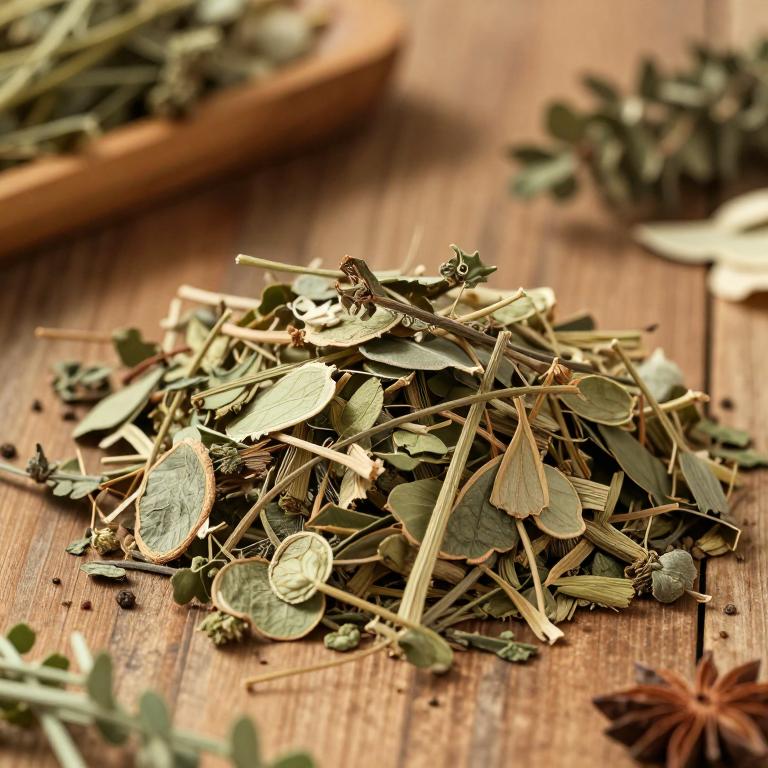
Morus indica has 1 reported plant parts identified across 1 scientific publications and several other databases that are studied for medicinal purposes. The most consistently reported plant part include leaf.
| Plant part | Supporting sources | Consensus |
|---|---|---|
| Leaf | 1 supporting sources | ★☆☆☆☆ |
Leaf
- Indian journal of experimental biology