Moringas
Moringa · Accepted scientific name
Scientific literature: Sparse (63 studies) · ★★☆☆☆
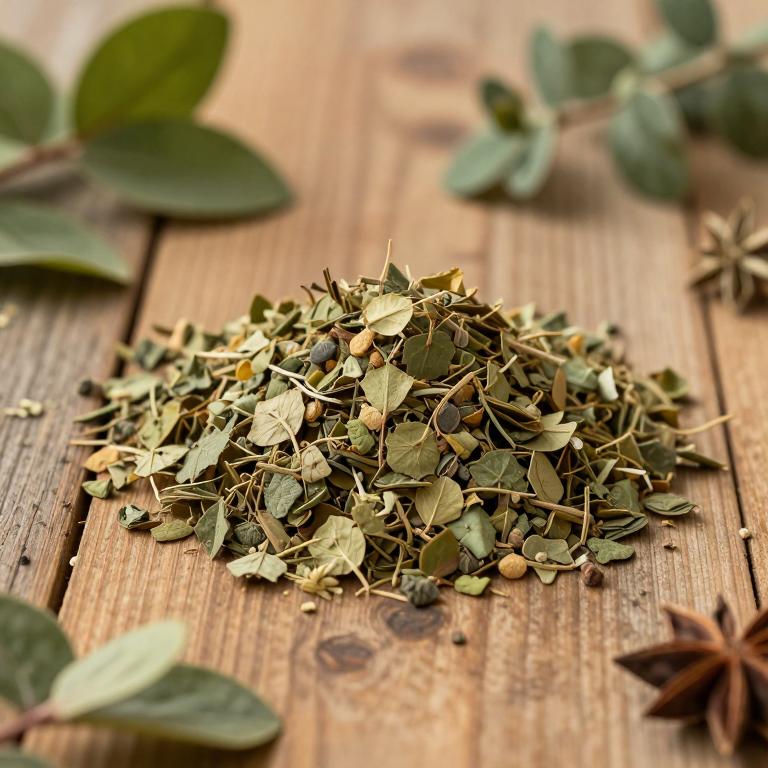
Moringa's, scientifically known as Moringa oleifera, is a nutritional powerhouse often called the "miracle tree." Renowned for its exceptional density of vitamins, minerals, and antioxidants, every part of this plant is edible. It serves as a vital superfood, offering potent anti-inflammatory properties and significant health benefits for holistic wellness.
- Family
- Moringaceae
- Native range
- Africa
- Parts used
- Leaf · Seed
- Common names
- Moringas
- Scientific synonyms
- Hyperanthera · Donaldsonia · 1 more
Names and Synonyms
Common Names
- Moringas
Scientific Names
Accepted name
MoringaSynonyms
- Hyperanthera
- Donaldsonia
- Anoma
Regional and Traditional Names
German:
- Bennußgewächs
- Bennussgewächs
- Bennussgewächse
- Bennußgewächse
- Moringabaum
- Moringabäume
Sources: Wikidata, Catalogue of Life
Taxonomical Classification
This plant belongs to the kingdom Plantae and the phylum Streptophyta, falling under the class Equisetopsida and subclass Magnoliidae. Within the order Brassicales, it is classified under the family Moringaceae. Finally, it is identified by the genus Moringa.
| Rank | Classification |
|---|---|
| Kingdom | Plantae |
| Phylum | Streptophyta |
| Class | Equisetopsida |
| Subclass | Magnoliidae |
| Order | Brassicales |
| Family | Moringaceae |
| Genus | Moringa |
Sources: The World Checklist of Vascular Plants (WCVP)
Distribution
This plant exhibits a diverse presence across several distinct regions in Africa. In Northern Africa, it is found within the borders of both Egypt and Libya. Its distribution extends to the Macaronesia region, specifically in Cape Verde. Furthermore, the plant is established in West Tropical Africa, including the nation of Benin. Finally, its geographical range encompasses the landlocked country of Burkina Faso.
| Region | Area |
|---|---|
| Northern Africa | Egypt |
| Northern Africa | Libya |
| Macaronesia | Cape Verde |
| West Tropical Africa | Benin |
| West Tropical Africa | Burkina |
| West Tropical Africa | Gambia |
| West Tropical Africa | Ghana |
| West Tropical Africa | Guinea-Bissau |
| West Tropical Africa | Guinea |
| West Tropical Africa | Ivory Coast |
Sources: The World Checklist of Vascular Plants (WCVP)
Plant Parts
Moringa has 4 reported plant parts identified across 40 scientific publications and several other databases that are studied for medicinal purposes. The most consistently reported plant part include leaf, seed, flower, stem.
| Plant part | Supporting sources | Consensus |
|---|---|---|
| Leaf | 27 supporting sources | ★★★★★ |
| Seed | 8 supporting sources | ★★★★☆ |
| Flower | 3 supporting sources | ★★☆☆☆ |
| Stem | 2 supporting sources | ★☆☆☆☆ |
Leaf
- BioMed research international
- Chemistry & biodiversity
- Molecules (Basel, Switzerland)
- Mymensingh medical journal : MMJ
- Food chemistry
View 22 additional sources
- Plants (Basel, Switzerland)
- Heliyon
- Food chemistry. Molecular sciences
- Biomedicines
- Saudi journal of biological sciences
- Journal of food biochemistry
- Pharmacognosy research
- Applied radiation and isotopes : including data, instrumentation and methods for use in agriculture, industry and medicine
- TheScientificWorldJournal
- Frontiers in nutrition
- International journal of environmental health research
- Journal of the American College of Nutrition
- Integrative medicine research
- Animals : an open access journal from MDPI
- International journal of molecular sciences
- Food science & nutrition
- Journal of food science and technology
- Journal of public health in Africa
- Plant science : an international journal of experimental plant biology
- PloS one
- Nutrients
- Narra J
Seed
- Food science & nutrition
- Journal of food biochemistry
- International journal of environmental health research
- Food chemistry: X
- Journal of public health in Africa
View 3 additional sources
- Molecules (Basel, Switzerland)
- Nutrients
- BioMed research international
Flower
- Pharmacognosy research
- International journal of environmental health research
- Journal of public health in Africa
Stem
- Plants (Basel, Switzerland)
- International journal of environmental health research
Chemicals
Moringa has 3 reported phytochemicals identified across 40 scientific publications and several other databases. The most consistently reported chemicals include Flavonoids, Glucosides, Glucosinolates.
| Chemical | Supporting sources | Consensus |
|---|---|---|
| Flavonoids | 1 supporting sources | ★☆☆☆☆ |
| Glucosides | 1 supporting sources | ★☆☆☆☆ |
| Glucosinolates | 1 supporting sources | ★☆☆☆☆ |
Flavonoids
- Frontiers in pharmacology
Glucosides
- Frontiers in pharmacology
Glucosinolates
- Frontiers in pharmacology
Activities
Moringa has 3 reported activities identified across 40 scientific publications and several other databases. The most consistently reported activities include Anticancer, Antihyperglycemic, Antioxidant.
| Activity | Supporting sources | Consensus |
|---|---|---|
| Anticancer | 1 supporting sources | ★☆☆☆☆ |
| Antihyperglycemic | 1 supporting sources | ★☆☆☆☆ |
| Antioxidant | 1 supporting sources | ★☆☆☆☆ |
Anticancer
- Frontiers in pharmacology
Antihyperglycemic
- Frontiers in pharmacology
Antioxidant
- Frontiers in pharmacology
Conditions
Moringa has 1 reported investigations on conditions identified across 40 scientific publications and several other databases. The most consistently reported conditions include wounds.
| Condition | Supporting sources | Consensus |
|---|---|---|
| Wounds | 1 supporting sources | ★☆☆☆☆ |
Wounds
- Frontiers in pharmacology
Preparations
Moringa has 30 reported preparations identified across 40 scientific publications and several other databases. The most consistently reported preparations include extract, extracts, AgNPs, Freeze-dried leaves, Moringa MAC 70%.
| Preparation | Supporting sources | Consensus |
|---|---|---|
| Extract | 2 supporting sources | ★☆☆☆☆ |
| Extracts | 2 supporting sources | ★☆☆☆☆ |
| Agnps | 1 supporting sources | ★☆☆☆☆ |
| Freeze-dried leaves | 1 supporting sources | ★☆☆☆☆ |
| Moringa mac 70% | 1 supporting sources | ★☆☆☆☆ |
| Moringa us 70% | 1 supporting sources | ★☆☆☆☆ |
| Moringa pakora | 1 supporting sources | ★☆☆☆☆ |
| Moringa-green tea | 1 supporting sources | ★☆☆☆☆ |
| Moringa-lavender | 1 supporting sources | ★☆☆☆☆ |
| Moringa-saffron | 1 supporting sources | ★☆☆☆☆ |
Extract
- Journal of Indian Society of Periodontology
- Narra J
Extracts
- International journal of environmental health research
- TheScientificWorldJournal
Agnps
- Food science & nutrition
Freeze-dried leaves
- Plants (Basel, Switzerland)
Moringa mac 70%
- Plants (Basel, Switzerland)
Moringa us 70%
- Plants (Basel, Switzerland)
Moringa pakora
- Frontiers in nutrition
Moringa-green tea
- Frontiers in immunology
Moringa-lavender
- Frontiers in immunology
Moringa-saffron
- Frontiers in immunology