cabbagetree
Moringa stenopetala · Accepted scientific name
Scientific literature: Sparse (51 studies) · ★★☆☆☆
Cabbagetree, scientifically known as Moringa stenopepalta, is a highly nutritious medicinal plant native to West Africa. Renowned for its exceptional nutritional profile, it serves as a vital food security resource. Beyond nutrition, it offers significant therapeutic benefits, including antioxidant, anti-inflammatory, and antimicrobial properties, making it invaluable in traditional medicine.
- Family
- Moringaceae
- Native range
- Africa
- Parts used
- Leaf · Root
- Common names
- Cabbagetree
- Scientific synonyms
- Moringa Streptocarpa · Donaldsonia Stenopetala
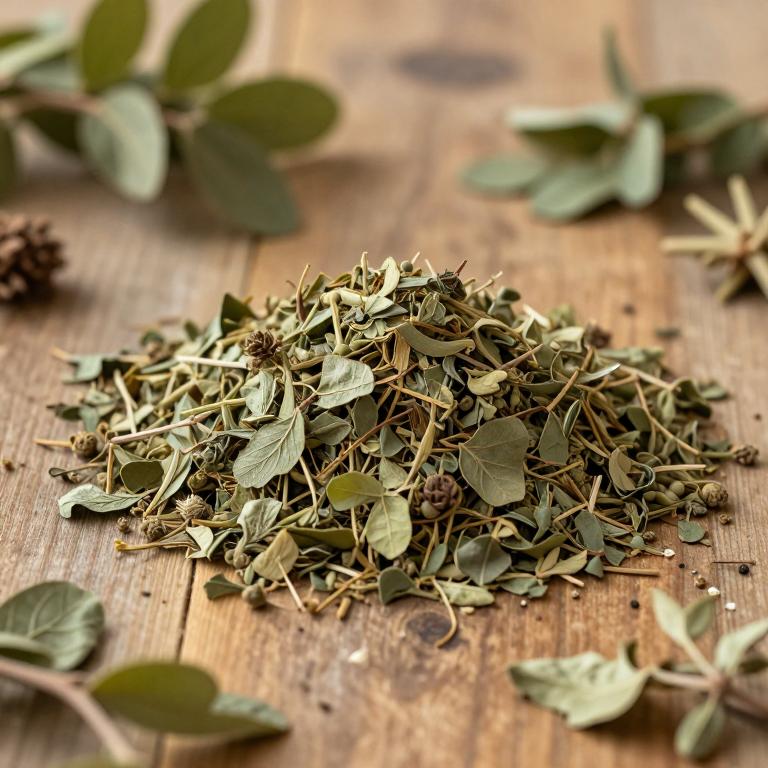
Names and Synonyms
Common Names
- cabbagetree
Scientific Names
Accepted name
Moringa stenopetalaSynonyms
- Moringa streptocarpa
- Donaldsonia stenopetala
Regional and Traditional Names
French:
- moringa éthiopien
Sources: Wikidata, Catalogue of Life
Taxonomical Classification
This plant belongs to the kingdom Plantae and is classified under the phylum Streptophyta and class Equisetopsida. Within the subclass Magnoliidae, it is categorized under the order Brassicales and the family Moringaceae. Finally, it is identified by its genus, Moringa.
| Rank | Classification |
|---|---|
| Kingdom | Plantae |
| Phylum | Streptophyta |
| Class | Equisetopsida |
| Subclass | Magnoliidae |
| Order | Brassicales |
| Family | Moringaceae |
| Genus | Moringa |
Sources: The World Checklist of Vascular Plants (WCVP)
Distribution
This plant is primarily found within the specific regions of Northeast and East Tropical Africa. In the Northeast Tropical Africa zone, its presence is documented in Ethiopia. Moving toward the East Tropical Africa region, the species can also be located in Kenya. These two countries represent the key geographical areas where the plant naturally occurs. Consequently, its distribution is concentrated within these distinct African territories.
| Region | Area |
|---|---|
| Northeast Tropical Africa | Ethiopia |
| East Tropical Africa | Kenya |
Sources: The World Checklist of Vascular Plants (WCVP)
Botanical Identification
Life history
The life history of Moringa stenopeptala is characterized by its nature as a perennial plant, allowing it to persist in its environment over multiple years. Throughout its existence, the species exhibits a deciduous growth habit, meaning it undergoes a seasonal shedding of its leaves.
- Deciduousness :
- deciduous
- Lifecycle :
- perennial
Morphology
The morphology of Moringa stenopepala is characterized by its growth form as a tree, exhibiting a robust and woody structure. This species typically attains a significant stature, reaching a mean plant height of approximately 9 m. Despite its tree-like habit, its climbing nature is classified as self-supporting, allowing it to maintain its structural integrity without the need for external hosts.
- Climber :
- self-supporting
- Growth form :
- tree
- Plant height mean:
- 9 m
- Woodiness :
- woody
Physiology
The physiology of Moringa stenopetala is characterized by a highly efficient metabolic framework adapted to arid and semi-arid environments, primarily driven by its specialized photosynthetic and nutrient acquisition strategies. As a member of the Moringaceae family, it exhibits rapid growth patterns facilitated by a robust vascular system capable of extensive water transport to support its large, bipinnate leaves. Regarding its nutrient cycling capabilities, the plant is not a nitrogen fixer; it lacks the symbiotic relationship with rhizobia or actinomycetes necessary to convert atmospheric nitrogen into bioavailable forms, meaning it relies entirely on the uptake of nitrates and ammonium from the soil substrate. Instead, its physiological strength lies in its high concentration of micronutrients and its ability to maintain osmotic balance under water stress through the accumulation of solutes. The plant's metabolic processes are optimized for the rapid synthesis of proteins and essential amino acids, supported by an efficient transpiration mechanism that manages thermal regulation in high-temperature climates.
- Nitrogen fixer :
- no
Reproduction
Reproduction in Moringa stenopetala occurs through the production of seeds contained within its fruit, which are characterized by a highly uniform weight distribution. Based on morphological data, the seed mass exhibits no variance, with a consistent mean, maximum, and minimum value of 0.51453 g. This precise seed mass of 0.51453 g ensures a standardized level of nutrient provisioning for the developing embryo during the initial stages of germination, contributing to the predictable reproductive success of the species.
- Seed mass mean:
- 0.51453 g
Sources: Global Inventory of Floras and Traits (GIFT)
Plant Parts
Moringa stenopetala has 3 reported plant parts identified across 14 scientific publications and several other databases that are studied for medicinal purposes. The most consistently reported plant part include leaf, root, seed.
| Plant part | Supporting sources | Consensus |
|---|---|---|
| Leaf | 9 supporting sources | ★★★★☆ |
| Root | 3 supporting sources | ★★☆☆☆ |
| Seed | 2 supporting sources | ★☆☆☆☆ |
Leaf
- Nutrition research and practice
- Evidence-based complementary and alternative medicine : eCAM
- Biochemistry research international
- Food technology and biotechnology
- Phytotherapy research : PTR
View 4 additional sources
- BMC complementary and alternative medicine
- Journal of experimental pharmacology
- Natural product communications
- Heliyon
Root
- Evidence-based complementary and alternative medicine : eCAM
- Natural product research
- Phytotherapy research : PTR
Seed
- Natural product communications
- BioMed research international
Chemicals
Moringa stenopetala has 22 reported phytochemicals identified across 14 scientific publications and several other databases. The most consistently reported chemicals include Flavonoids, Tannins, 2-UNDECENAL, CHLOROPHYLL, Carotenoids.
| Chemical | Supporting sources | Consensus |
|---|---|---|
| Flavonoids | 2 supporting sources | ★☆☆☆☆ |
| Tannins | 2 supporting sources | ★☆☆☆☆ |
| 2-UNDECENAL | 1 supporting sources | ★☆☆☆☆ |
| CHLOROPHYLL | 1 supporting sources | ★☆☆☆☆ |
| Carotenoids | 1 supporting sources | ★☆☆☆☆ |
| FE | 1 supporting sources | ★☆☆☆☆ |
| MN | 1 supporting sources | ★☆☆☆☆ |
| MSP 4 | 1 supporting sources | ★☆☆☆☆ |
| MSP-3 | 1 supporting sources | ★☆☆☆☆ |
| NONANAL | 1 supporting sources | ★☆☆☆☆ |
Flavonoids
- Scientific reports
- Journal of experimental pharmacology
Tannins
- Scientific reports
- Journal of experimental pharmacology
2-UNDECENAL
- Scientific reports
CHLOROPHYLL
- Scientific reports
Carotenoids
- Scientific reports
FE
- Scientific reports
MN
- Scientific reports
MSP 4
- Natural product research
MSP-3
- Natural product research
NONANAL
- Scientific reports
Activities
Moringa stenopetala has 6 reported activities identified across 14 scientific publications and several other databases. The most consistently reported activities include Antihypertensive, Antihyperlipidemic, Antioxidant, Cytotoxic, Diuretic.
| Activity | Supporting sources | Consensus |
|---|---|---|
| Antihypertensive | 2 supporting sources | ★☆☆☆☆ |
| Antihyperlipidemic | 1 supporting sources | ★☆☆☆☆ |
| Antioxidant | 1 supporting sources | ★☆☆☆☆ |
| Cytotoxic | 1 supporting sources | ★☆☆☆☆ |
| Diuretic | 1 supporting sources | ★☆☆☆☆ |
| Natriuretic | 1 supporting sources | ★☆☆☆☆ |
Antihypertensive
- Evidence-based complementary and alternative medicine : eCAM
- Frontiers in pharmacology
Antihyperlipidemic
- Frontiers in pharmacology
Antioxidant
- RSC advances
Cytotoxic
- Phytomedicine : international journal of phytotherapy and phytopharmacology
Diuretic
- Journal of experimental pharmacology
Natriuretic
- Journal of experimental pharmacology
Conditions
Moringa stenopetala has 3 reported investigations on conditions identified across 14 scientific publications and several other databases. The most consistently reported conditions include MRSA, diarrhea, hypertension.
| Condition | Supporting sources | Consensus |
|---|---|---|
| Mrsa | 1 supporting sources | ★☆☆☆☆ |
| Diarrhea | 1 supporting sources | ★☆☆☆☆ |
| Hypertension | 1 supporting sources | ★☆☆☆☆ |
Mrsa
- Heliyon
Diarrhea
- Biochemistry research international
Hypertension
- Journal of experimental pharmacology
Preparations
Moringa stenopetala has 20 reported preparations identified across 14 scientific publications and several other databases. The most consistently reported preparations include 80% methanolic leaf extract, Essential oils, aqueous fraction, chloroform fraction, dried leaf powder.
| Preparation | Supporting sources | Consensus |
|---|---|---|
| 80% methanolic leaf extract | 1 supporting sources | ★☆☆☆☆ |
| Essential oils | 1 supporting sources | ★☆☆☆☆ |
| Aqueous fraction | 1 supporting sources | ★☆☆☆☆ |
| Chloroform fraction | 1 supporting sources | ★☆☆☆☆ |
| Dried leaf powder | 1 supporting sources | ★☆☆☆☆ |
| Dried leaves | 1 supporting sources | ★☆☆☆☆ |
| Fine and coarse powder decoction | 1 supporting sources | ★☆☆☆☆ |
| Fresh leaves | 1 supporting sources | ★☆☆☆☆ |
| Hot tea infusion of leaves | 1 supporting sources | ★☆☆☆☆ |
| Leaf extracts | 1 supporting sources | ★☆☆☆☆ |
80% methanolic leaf extract
- Biochemistry research international
Essential oils
- Phytomedicine : international journal of phytotherapy and phytopharmacology
Aqueous fraction
- BMC complementary and alternative medicine
Chloroform fraction
- BMC complementary and alternative medicine
Dried leaf powder
- Nutrition research and practice
Dried leaves
- Natural product communications
Fine and coarse powder decoction
- Journal of experimental pharmacology
Fresh leaves
- Natural product communications
Hot tea infusion of leaves
- Journal of experimental pharmacology
Leaf extracts
- Heliyon