Wild drumstick tree
Moringa peregrina · Accepted scientific name
Scientific literature: Sparse (54 studies) · ★★☆☆☆
Wild drumstick tree, scientifically known as Moringa peregrina, is a rare, slow-growing perennial endemic to the Socotra Archipelago. Renowned for its medicinal properties, this resilient species produces nutrient-dense seeds and leaves used traditionally to treat various ailments, offering significant pharmacological potential and immense ecological value to its unique habitat.
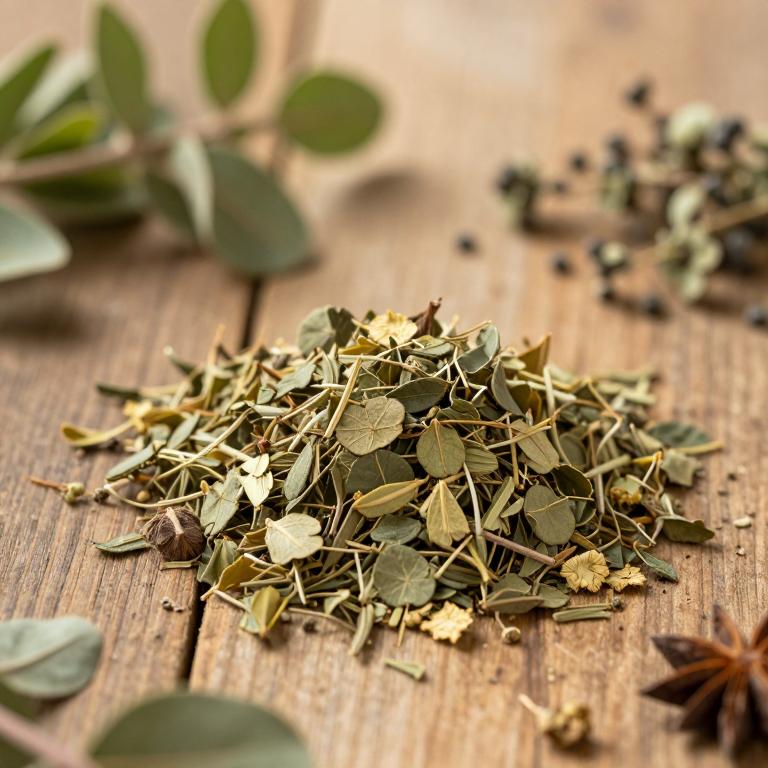
Names and Synonyms
Common Names
- Wild drumstick tree
- Wing Moringa
- bentree
- wispy-needle yasartree
Scientific Names
Accepted name
Moringa peregrinaSynonyms
- Hyperanthera peregrina
- Hyperanthera semidecandra
- Moringa myrepsica
- Hyperanthera arborea
- Moringa aptera
- Hyperanthera monodynama
- Moringa arabica
- Hyperanthera aptera
- Gymnocladus arabica
Regional and Traditional Names
French:
- arbre à noix de ben
- ben blanc
- moringa aptère
Sources: Wikidata, Catalogue of Life
Taxonomical Classification
This plant belongs to the kingdom Plantae and is classified under the phylum Streptophyta and class Equisetopsida. Within the subclass Magnoliidae, it is organized under the order Brassicales and the family Moringaecae. Ultimately, it is identified by the genus Moringa, specifically as the species Moringa peregrina.
| Rank | Classification |
|---|---|
| Kingdom | Plantae |
| Phylum | Streptophyta |
| Class | Equisetopsida |
| Subclass | Magnoliidae |
| Order | Brassicales |
| Family | Moringaceae |
| Genus | Moringa |
Sources: The World Checklist of Vascular Plants (WCVP)
Distribution
This plant exhibits a specific geographical distribution concentrated within the arid regions of the African continent. In Northern Africa, its presence is recorded within the borders of Egypt. Moving toward the Northeast Tropical Africa region, it can be found across several distinct territories. Specifically, its habitat includes the nations of Djibouti, Eritrea, and Ethiopia. Finally, the range of this medicinal species extends further into the Horn of Africa to include Somalia.
| Region | Area |
|---|---|
| Northern Africa | Egypt |
| Northeast Tropical Africa | Djibouti |
| Northeast Tropical Africa | Eritrea |
| Northeast Tropical Africa | Ethiopia |
| Northeast Tropical Africa | Somalia |
| Northeast Tropical Africa | Sudan-South Sudan |
| Western Asia | Lebanon-Syria |
| Western Asia | Palestine |
| Western Asia | Sinai |
| Arabian Peninsula | Gulf States |
Sources: The World Checklist of Vascular Plants (WCVP)
Botanical Identification
Life history
The life history of Moringa peregrina is characterized by its existence as a perennial species, allowing it to persist in its habitat over many years. As part of its seasonal biological cycle, the plant exhibits deciduousness, shedding its foliage in response to environmental cues or seasonal changes.
- Deciduousness :
- deciduous
- Lifecycle :
- perennial
Morphology
The morphology of Moringa peregrina is characterized by its stature as a woody tree that typically reaches an average height of 8 m. As a terrestrial species, it grows in land-based environments and functions as an independent organism rather than a parasite. The plant exhibits a self-supporting growth habit, lacking the climbing mechanisms found in vines, and maintains a robust, woody structure throughout its development.
- Aquatic :
- terrestrial
- Climber :
- self-supporting
- Growth form :
- tree
- Parasite :
- independent
- Plant height mean:
- 8 m
- Woodiness :
- woody
Physiology
The physiology of Moringa peregrina is characterized by its specialized adaptations to arid and semi-arid environments, focusing on efficient water management and nutrient uptake. As a drought-tolerant species, its metabolic processes are geared toward minimizing transpirational loss, often employing physiological mechanisms to maintain cellular turgor during extended dry periods. Regarding its nutrient cycling capabilities, the plant does not function as a nitrogen fixer; it lacks the symbiotic relationship with diazotrophic bacteria, such as Rhizobium, required to convert atmospheric nitrogen into bioavailable forms. Consequently, its nitrogen acquisition is entirely dependent on the uptake of nitrates or ammonium present in the soil through its root system. The plant's photosynthetic efficiency and carbon assimilation are optimized to function under high light intensities and thermal stress, allowing it to sustain growth in nutrient-poor, sandy substrates where other species might struggle.
- Nitrogen fixer :
- no
Reproduction
The reproduction of Moringa peregrina is characterized by a biotic pollination syndrome, primarily mediated by insects. Specifically, the plant relies on bees as key pollinators to facilitate the transfer of pollen, ensuring successful fertilization. Following successful pollination, the plant produces seeds with highly consistent morphological characteristics. The seed mass exhibits a narrow range of variation, with a recorded minimum of 0.49293 g and a maximum of 0.52404 g. On average, the seeds maintain a mass of approximately 0.508485 g, reflecting a specialized reproductive strategy aimed at consistent seed production.
- Pollination syndrome :
- insect
- Pollination syndrome :
- bee
- Pollination syndrome :
- biotic
- Seed mass max:
- 0.52404 g
- Seed mass mean:
- 0.508485 g
- Seed mass min:
- 0.49293 g
Sources: Global Inventory of Floras and Traits (GIFT)
Plant Parts
Moringa peregrina has 3 reported plant parts identified across 4 scientific publications and several other databases that are studied for medicinal purposes. The most consistently reported plant part include leaf, flower, seed.
| Plant part | Supporting sources | Consensus |
|---|---|---|
| Leaf | 2 supporting sources | ★☆☆☆☆ |
| Flower | 1 supporting sources | ★☆☆☆☆ |
| Seed | 1 supporting sources | ★☆☆☆☆ |
Leaf
- BioMed research international
- Plants (Basel, Switzerland)
Flower
- Plants (Basel, Switzerland)
Seed
- Natural product communications
Chemicals
Moringa peregrina has 14 reported phytochemicals identified across 4 scientific publications and several other databases. The most consistently reported chemicals include Flavonoids, myricetin, Antioxidant Activity, CALCIUM, Gallic acid.
| Chemical | Supporting sources | Consensus |
|---|---|---|
| Flavonoids | 2 supporting sources | ★☆☆☆☆ |
| myricetin | 2 supporting sources | ★☆☆☆☆ |
| Antioxidant Activity | 1 supporting sources | ★☆☆☆☆ |
| CALCIUM | 1 supporting sources | ★☆☆☆☆ |
| Gallic acid | 1 supporting sources | ★☆☆☆☆ |
| Lupeol acetate | 1 supporting sources | ★☆☆☆☆ |
| POTASSIUM | 1 supporting sources | ★☆☆☆☆ |
| RUTIN | 1 supporting sources | ★☆☆☆☆ |
| Vitamin A | 1 supporting sources | ★☆☆☆☆ |
| caffeic acid | 1 supporting sources | ★☆☆☆☆ |
Flavonoids
- Natural product communications
- Scientific reports
myricetin
- Journal of molecular neuroscience : MN
- Plants (Basel, Switzerland)
Antioxidant Activity
- Scientific reports
CALCIUM
- Pharmacognosy research
Gallic acid
- Plants (Basel, Switzerland)
Lupeol acetate
- Journal of molecular neuroscience : MN
POTASSIUM
- Pharmacognosy research
RUTIN
- Journal of molecular neuroscience : MN
Vitamin A
- Pharmacognosy research
caffeic acid
- Plants (Basel, Switzerland)
Activities
Moringa peregrina has 8 reported activities identified across 4 scientific publications and several other databases. The most consistently reported activities include Antioxidant, Analgesic, Anticancer, Antimicrobial, Disinfectant.
| Activity | Supporting sources | Consensus |
|---|---|---|
| Antioxidant | 2 supporting sources | ★☆☆☆☆ |
| Analgesic | 1 supporting sources | ★☆☆☆☆ |
| Anticancer | 1 supporting sources | ★☆☆☆☆ |
| Antimicrobial | 1 supporting sources | ★☆☆☆☆ |
| Disinfectant | 1 supporting sources | ★☆☆☆☆ |
| Hypoglycemic | 1 supporting sources | ★☆☆☆☆ |
| Hypolipidemic | 1 supporting sources | ★☆☆☆☆ |
| Stimulant | 1 supporting sources | ★☆☆☆☆ |
Antioxidant
- BioMed research international
- Frontiers in pharmacology
Analgesic
- BioMed research international
Anticancer
- BioMed research international
Antimicrobial
- BioMed research international
Disinfectant
- Frontiers in pharmacology
Hypoglycemic
- BioMed research international
Hypolipidemic
- BioMed research international
Stimulant
- Plants (Basel, Switzerland)
Conditions
Moringa peregrina has 17 reported investigations on conditions identified across 4 scientific publications and several other databases. The most consistently reported conditions include asthma, breast carcinoma, burns, cognitive decline, constipation.
| Condition | Supporting sources | Consensus |
|---|---|---|
| Asthma | 1 supporting sources | ★☆☆☆☆ |
| Breast carcinoma | 1 supporting sources | ★☆☆☆☆ |
| Burns | 1 supporting sources | ★☆☆☆☆ |
| Cognitive decline | 1 supporting sources | ★☆☆☆☆ |
| Constipation | 1 supporting sources | ★☆☆☆☆ |
| Disinfectant | 1 supporting sources | ★☆☆☆☆ |
| Fever | 1 supporting sources | ★☆☆☆☆ |
| Hepatocellular carcinoma | 1 supporting sources | ★☆☆☆☆ |
| Hypertension | 1 supporting sources | ★☆☆☆☆ |
| Labor pain | 1 supporting sources | ★☆☆☆☆ |
Asthma
- Frontiers in pharmacology
Breast carcinoma
- BioMed research international
Burns
- Frontiers in pharmacology
Cognitive decline
- Journal of molecular neuroscience : MN
Constipation
- Frontiers in pharmacology
Disinfectant
- Frontiers in pharmacology
Fever
- Frontiers in pharmacology
Hepatocellular carcinoma
- BioMed research international
Hypertension
- Frontiers in pharmacology
Labor pain
- Frontiers in pharmacology
Preparations
Moringa peregrina has 2 reported preparations identified across 4 scientific publications and several other databases. The most consistently reported preparations include Hydro-alcoholic extracts, Leaves Extracts.
| Preparation | Supporting sources | Consensus |
|---|---|---|
| Hydro-alcoholic extracts | 1 supporting sources | ★☆☆☆☆ |
| Leaves extracts | 1 supporting sources | ★☆☆☆☆ |
Hydro-alcoholic extracts
- Journal of ethnopharmacology
Leaves extracts
- BioMed research international