Moringa concanensis
Moringa concanensis · Accepted scientific name
Scientific literature: Very Sparse (8 studies) · ★☆☆☆☆
Moringa concarensis, scientifically known as Moringa concarensis, is a resilient, multipurpose tree native to the African Sahel. Renowned for its exceptional nutritional profile, it provides essential vitamins and minerals. Beyond its dietary value, this versatile plant is highly prized in traditional medicine for its diverse therapeutic properties.
- Family
- Moringaceae
- Native range
- Asia-Tropical
- Parts used
- Not available
- Common names
- Not available
- Scientific synonyms
- Not available
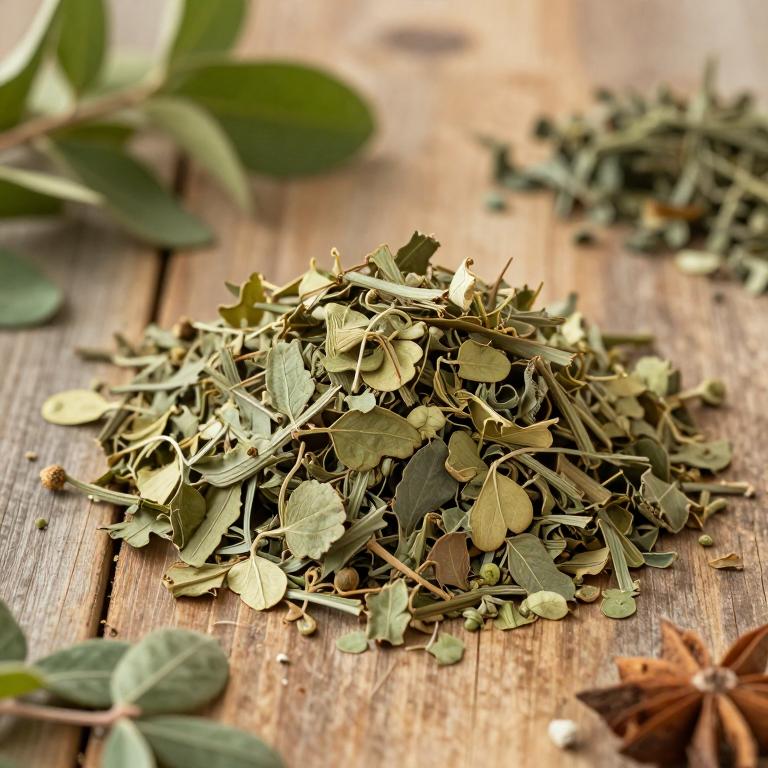
Names and Synonyms
Scientific Names
Accepted name
Moringa concanensisSources: Wikidata
Taxonomical Classification
This plant belongs to the kingdom Plantae and is classified under the phylum Streptophyta within the class Equisetopsida. It falls under the subclass Magnoliidae and the order Brassicales, specifically within the family Moringaceae. Finally, it is categorized under the genus Moringa.
| Rank | Classification |
|---|---|
| Kingdom | Plantae |
| Phylum | Streptophyta |
| Class | Equisetopsida |
| Subclass | Magnoliidae |
| Order | Brassicales |
| Family | Moringaceae |
| Genus | Moringa |
Sources: The World Checklist of Vascular Plants (WCVP)
Distribution
This plant is widely recognized for its presence across several regions within the Indian Subcontinent. Specifically, it can be found growing naturally throughout the various landscapes of India. Its distribution also extends into the neighboring territory of Pakistan. Furthermore, the species is documented to inhabit parts of Bangladesh as well. These locations highlight the significant geographical range this medicinal plant maintains within the subcontinent.
| Region | Area |
|---|---|
| Indian Subcontinent | Bangladesh |
| Indian Subcontinent | India |
| Indian Subcontinent | Pakistan |
Sources: The World Checklist of Vascular Plants (WCVP)
Botanical Identification
Life history
The life history of Moringa concanensis is characterized by its status as a perennial species, allowing it to persist in its environment over multiple years through continuous growth and development. As a long-lived plant, it does not follow the rapid turnover of annuals or the intermediate cycle of biennials; instead, it establishes a stable presence in its habitat, often forming a sturdy, woody structure that supports its biological functions across many growing seasons. This perennial nature enables the plant to endure seasonal variations and invest significant energy into long-term survival, structural stability, and repeated reproductive cycles.
- Lifecycle :
- perennial
Morphology
The morphology of Moringa concarensis is characterized by its distinct growth form as a woody tree, exhibiting a robust and self-supporting structure rather than acting as a climber. As an independent organism, it does not function as a parasite, relying on its own nutrient acquisition. Regarding its habitat and physiological adaptation, the plant is classified as terrestrial, distinguishing it from aquatic or semiaquatic species. Its physical development is defined by a perennial woody habit, which supports its stature as a significant arboreal species within its ecological niche.
- Aquatic :
- terrestrial
- Climber :
- self-supporting
- Growth form :
- tree
- Parasite :
- independent
- Woodiness :
- woody
Sources: Global Inventory of Floras and Traits (GIFT)
Chemicals
Moringa concanensis has 7 reported phytochemicals identified across 0 scientific publications and several other databases. The most consistently reported chemicals include quercetin, Astragalin, BENZYLAMINE, CHLOROGENIC ACID, Flavonoid.
| Chemical | Supporting sources | Consensus |
|---|---|---|
| quercetin | 2 supporting sources | ★☆☆☆☆ |
| Astragalin | 1 supporting sources | ★☆☆☆☆ |
| BENZYLAMINE | 1 supporting sources | ★☆☆☆☆ |
| CHLOROGENIC ACID | 1 supporting sources | ★☆☆☆☆ |
| Flavonoid | 1 supporting sources | ★☆☆☆☆ |
| Isoquercetin | 1 supporting sources | ★☆☆☆☆ |
| caffeic acid | 1 supporting sources | ★☆☆☆☆ |
quercetin
- Evidence-based complementary and alternative medicine : eCAM
- BMC plant biology
Astragalin
- Evidence-based complementary and alternative medicine : eCAM
BENZYLAMINE
- BMC plant biology
CHLOROGENIC ACID
- BMC plant biology
Flavonoid
- Evidence-based complementary and alternative medicine : eCAM
Isoquercetin
- Evidence-based complementary and alternative medicine : eCAM
caffeic acid
- Evidence-based complementary and alternative medicine : eCAM