Moricandia sinaica
Moricandia sinaica · Accepted scientific name
Scientific literature: Very Sparse (24 studies) · ★☆☆☆☆
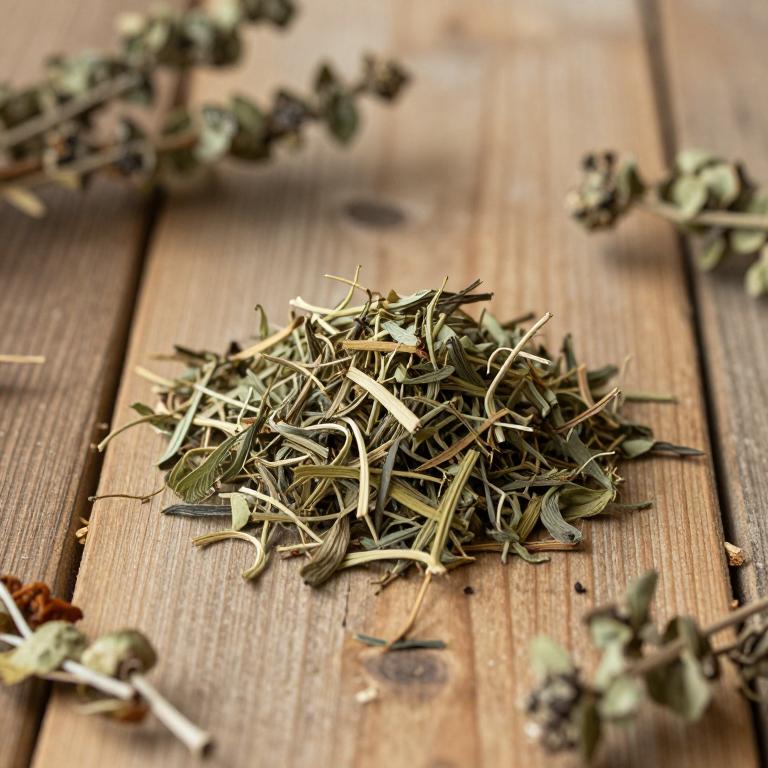
Moriandica sinaica, scientifically known as Moriandica sinaica, is a versatile medicinal shrub native to tropical regions. Renowned for its therapeutic properties, this plant is frequently utilized in traditional medicine to treat skin ailments, inflammation, and various gastrointestinal issues, offering a natural remedy rooted in ancient botanical wisdom.
- Family
- Brassicaceae
- Native range
- Africa
- Parts used
- Leaf
- Common names
- Not available
- Scientific synonyms
- Brassica Sinaica
Names and Synonyms
Scientific Names
Accepted name
Moricandia sinaicaSynonyms
- Brassica sinaica
Sources: Wikidata, Catalogue of Life
Taxonomical Classification
This plant belongs to the kingdom Plantae within the phylum Streptophyta and is classified under the class Equisetopsida. As a member of the subclass Magnoliidae and the order Brassicales, it falls into the family Brassicaceae. Finally, it is taxonomically identified under the genus Moricandia.
| Rank | Classification |
|---|---|
| Kingdom | Plantae |
| Phylum | Streptophyta |
| Class | Equisetopsida |
| Subclass | Magnoliidae |
| Order | Brassicales |
| Family | Brassicaceae |
| Genus | Moricandia |
Sources: The World Checklist of Vascular Plants (WCVP)
Distribution
This plant exhibits a diverse geographical range spanning several distinct regions across Africa and Asia. In Northern Africa, its presence is specifically noted within the country of Egypt. Its distribution extends into Northeast Tropical Africa, where it can be found in Somalia. The species also inhabits parts of Western Asia, including Iran and Palestine. Additionally, this medicinal plant is documented growing in the Sinai region of Western Asia.
| Region | Area |
|---|---|
| Northern Africa | Egypt |
| Northeast Tropical Africa | Somalia |
| Western Asia | Iran |
| Western Asia | Palestine |
| Western Asia | Sinai |
| Arabian Peninsula | Oman |
| Arabian Peninsula | Saudi Arabia |
| Arabian Peninsula | Yemen |
| Indian Subcontinent | Pakistan |
Sources: The World Checklist of Vascular Plants (WCVP)
Botanical Identification
Morphology
The morphology of Moricandia sinaica is characterized by its versatile ecological adaptation, exhibiting a habitat range that spans aquatic, semiaquatic, and terrestrial environments. As a plant, it adopts a subshrub growth form, distinguishing it from purely herbaceous or graminoid species. It functions as an independent organism, lacking any obligatory or facultative parasitic relationship with other plants. Structurally, the plant possesses a woody constitution, providing a sturdy framework that supports its development across its diverse environmental niches.
- Aquatic :
- terrestrial
- Growth form :
- subshrub
- Parasite :
- independent
- Woodiness :
- woody
Sources: Global Inventory of Floras and Traits (GIFT)
Plant Parts
Moricandia sinaica has 1 reported plant parts identified across 1 scientific publications and several other databases that are studied for medicinal purposes. The most consistently reported plant part include leaf.
| Plant part | Supporting sources | Consensus |
|---|---|---|
| Leaf | 1 supporting sources | ★☆☆☆☆ |
Leaf
- PloS one
Chemicals
Moricandia sinaica has 8 reported phytochemicals identified across 1 scientific publications and several other databases. The most consistently reported chemicals include Anthocyanins, Fatty acids, Flavonoids, Monoterpenes, Octacosanol.
| Chemical | Supporting sources | Consensus |
|---|---|---|
| Anthocyanins | 1 supporting sources | ★☆☆☆☆ |
| Fatty acids | 1 supporting sources | ★☆☆☆☆ |
| Flavonoids | 1 supporting sources | ★☆☆☆☆ |
| Monoterpenes | 1 supporting sources | ★☆☆☆☆ |
| Octacosanol | 1 supporting sources | ★☆☆☆☆ |
| Sesquiterpenes | 1 supporting sources | ★☆☆☆☆ |
| n-Pentacosane | 1 supporting sources | ★☆☆☆☆ |
| polyphenols | 1 supporting sources | ★☆☆☆☆ |
Anthocyanins
- PloS one
Fatty acids
- PloS one
Flavonoids
- PloS one
Monoterpenes
- Molecules (Basel, Switzerland)
Octacosanol
- Molecules (Basel, Switzerland)
Sesquiterpenes
- Molecules (Basel, Switzerland)
n-Pentacosane
- Molecules (Basel, Switzerland)
polyphenols
- Molecules (Basel, Switzerland)
Activities
Moricandia sinaica has 7 reported activities identified across 1 scientific publications and several other databases. The most consistently reported activities include Analgesic, Antigenotoxic, Antioxidant, Antipyretic, Cardioprotective.
| Activity | Supporting sources | Consensus |
|---|---|---|
| Analgesic | 1 supporting sources | ★☆☆☆☆ |
| Antigenotoxic | 1 supporting sources | ★☆☆☆☆ |
| Antioxidant | 1 supporting sources | ★☆☆☆☆ |
| Antipyretic | 1 supporting sources | ★☆☆☆☆ |
| Cardioprotective | 1 supporting sources | ★☆☆☆☆ |
| Cytotoxic | 1 supporting sources | ★☆☆☆☆ |
| Nephroprotective | 1 supporting sources | ★☆☆☆☆ |
Analgesic
- Molecules (Basel, Switzerland)
Antigenotoxic
- Molecules (Basel, Switzerland)
Antioxidant
- Molecules (Basel, Switzerland)
Antipyretic
- Molecules (Basel, Switzerland)
Cardioprotective
- Evidence-based complementary and alternative medicine : eCAM
Cytotoxic
- Molecules (Basel, Switzerland)
Nephroprotective
- Evidence-based complementary and alternative medicine : eCAM
Conditions
Moricandia sinaica has 4 reported investigations on conditions identified across 1 scientific publications and several other databases. The most consistently reported conditions include Analgesic, Antipyretic, edema, inflammation.
| Condition | Supporting sources | Consensus |
|---|---|---|
| Analgesic | 1 supporting sources | ★☆☆☆☆ |
| Antipyretic | 1 supporting sources | ★☆☆☆☆ |
| Edema | 1 supporting sources | ★☆☆☆☆ |
| Inflammation | 1 supporting sources | ★☆☆☆☆ |
Analgesic
- Molecules (Basel, Switzerland)
Antipyretic
- Molecules (Basel, Switzerland)
Edema
- Molecules (Basel, Switzerland)
Inflammation
- Molecules (Basel, Switzerland)
Preparations
Moricandia sinaica has 6 reported preparations identified across 1 scientific publications and several other databases. The most consistently reported preparations include methanol extract, aqueous fraction, aqueous fraction of the methanol extract (MS-3), butanol fraction, essential oil.
| Preparation | Supporting sources | Consensus |
|---|---|---|
| Methanol extract | 2 supporting sources | ★☆☆☆☆ |
| Aqueous fraction | 1 supporting sources | ★☆☆☆☆ |
| Aqueous fraction of the methanol extract (ms-3) | 1 supporting sources | ★☆☆☆☆ |
| Butanol fraction | 1 supporting sources | ★☆☆☆☆ |
| Essential oil | 1 supporting sources | ★☆☆☆☆ |
| Lipophilic extract | 1 supporting sources | ★☆☆☆☆ |
Methanol extract
- Evidence-based complementary and alternative medicine : eCAM
- Molecules (Basel, Switzerland)
Aqueous fraction
- Evidence-based complementary and alternative medicine : eCAM
Aqueous fraction of the methanol extract (ms-3)
- Molecules (Basel, Switzerland)
Butanol fraction
- Evidence-based complementary and alternative medicine : eCAM
Essential oil
- Molecules (Basel, Switzerland)
Lipophilic extract
- Molecules (Basel, Switzerland)