Violet Cabbage
Moricandia arvensis · Accepted scientific name
Scientific literature: Very Sparse (6 studies) · ★☆☆☆☆
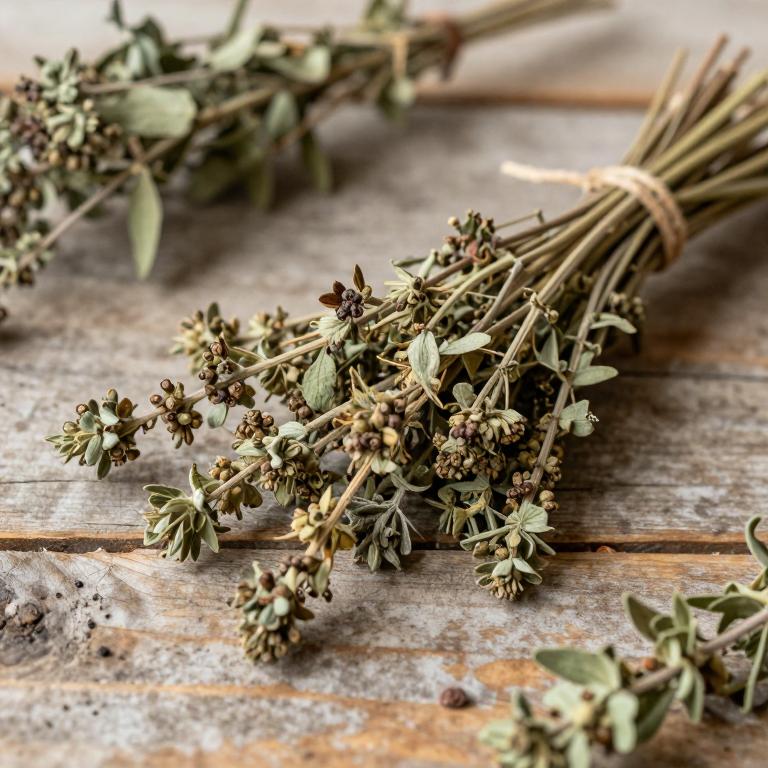
Violet Cabbage, scientifically known as Moriwandia arvensis, is a versatile medicinal herb valued in traditional healing practices. Recognized for its distinct foliage, this plant possesses potent bioactive compounds often utilized to treat inflammation, skin ailments, and digestive issues. It serves as a vital resource in various ethnobotanical applications globally.
- Family
- Brassicaceae
- Native range
- Europe
- Parts used
- Flower
- Common names
- Violet Cabbage · Violet-Cabbage
- Scientific synonyms
- Diplotaxis Arvensis · Turritis Arvensis · 11 more
Names and Synonyms
Common Names
- Violet Cabbage
- violet-cabbage
Scientific Names
Accepted name
Moricandia arvensisSynonyms
- Diplotaxis arvensis
- Turritis arvensis
- Diplotaxis brassiciformis
- Erucastrum decandollii
- Brassica purpurea
- Eruca arvensis
- Moricandia longirostris
- Hesperis arvensis
- Moricandia arvensis var. robusta
- Moricandia arvensis var. fabariifolia
- Moricandia arvensis var. garamantum
- Crantzia frutescens
- Moricandia arvensis var. longirostris
Regional and Traditional Names
Spanish:
- Collejón
German:
- Acker-Morikandie
- Acker-Moricandie
French:
- Moricandie des champs
Sources: Wikidata, Catalogue of Life
Taxonomical Classification
This plant belongs to the kingdom Plantae within the phylum Streptophyta and is classified under the class Equisetopsida and subclass Magnoliidae. It is further organized into the order Brassicales and the family Brassicaceae. Finally, its taxonomic identity is defined by the genus Moricandia, specifically the species Moricandia arvensis.
| Rank | Classification |
|---|---|
| Kingdom | Plantae |
| Phylum | Streptophyta |
| Class | Equisetopsida |
| Subclass | Magnoliidae |
| Order | Brassicales |
| Family | Brassicaceae |
| Genus | Moricandia |
Sources: The World Checklist of Vascular Plants (WCVP)
Distribution
This plant exhibits a specific presence across several regions of the European continent. In Middle Europe, its distribution can be observed within the borders of Germany. Moving toward the Mediterranean, it is found throughout various parts of Southwestern Europe. Specifically, this includes the islands of the Baleares and Corse. Furthermore, its range extends across the mainland territories of France and Portugal.
| Region | Area |
|---|---|
| Middle Europe | Germany |
| Southwestern Europe | Baleares |
| Southwestern Europe | Corse |
| Southwestern Europe | France |
| Southwestern Europe | Portugal |
| Southwestern Europe | Sardegna |
| Southwestern Europe | Spain |
| Southeastern Europe | Greece |
| Southeastern Europe | Italy |
| Southeastern Europe | Sicilia |
Sources: The World Checklist of Vascular Plants (WCVP)
Botanical Identification
Ecology
The ecology of Moricandia arvensis is characterized by its ability to thrive across a broad altitudinal gradient, occupying diverse topographical niches. It is found within an elevational range that begins at sea level (0 m AMSL) and extends up to a maximum altitude of 1100 m AMSL. This wide vertical distribution allows the species to inhabit various environmental conditions, ranging from low-lying coastal or alluvial plains to more temperate mid-elevation terrains. Its presence across these varying elevations suggests a degree of adaptability to different temperature regimes and atmospheric pressures, enabling it to colonize a variety of habitats within its geographical range.
- Elevational range max:
- 1100 m AMSL
- Elevational range min:
- 0 m AMSL
Life history
The life history of Moriandica arvensis is characterized by a perennial lifecycle, allowing the plant to persist across multiple growing seasons. In terms of its biological structure and survival strategy, it is classified as a therophyte, a life form defined by completing its primary developmental stages via seeds that remain dormant during unfavorable conditions. This specific life form is further categorized under the morphological classifications of both therophyte and therophyte, indicating its tendency to die down to a seed stage at the end of each growing period.
- Life form :
- therophyte
- Lifecycle :
- perennial
Morphology
The morphology of Moricandia arvensis is characterized by its growth form as a non-woody herb and forb. This plant typically functions as a self-supporting species, rather than acting as a liana, vine, or obligatory climber. It exhibits a terrestrial habit, existing as an independent organism without parasitic or epiphytic tendencies. In terms of physical stature, the plant maintains a relatively low profile, with a height ranging from a minimum of 0.3 m to a maximum of 0.8 m.
- Aquatic :
- terrestrial
- Climber :
- self-supporting
- Epiphyte :
- terrestrial
- Growth form :
- herb
- Growth form :
- forb
- Parasite :
- independent
- Plant height max:
- 0.8 m
- Plant height min:
- 0.3 m
- Woodiness :
- non-woody
Physiology
The physiology of Moricandia arvensis is characterized by a C3 photosynthetic pathway, a common metabolic adaptation for carbon fixation in many temperate plant species. The plant exhibits notable succulent qualities, which likely aid in moisture retention and osmotic regulation. Its foliage is morphologically defined by an obovate leaf form, with leaf dimensions varying significantly; individual leaves typically measure between 2 cm and 7.5 cm in length, while their width ranges from a minimum of 0.7 cm to a maximum of 5 cm.
- Leaf form :
- obovate
- Leaf length max:
- 7.5 cm
- Leaf length min:
- 2 cm
- Leaf width max:
- 5 cm
- Leaf width min:
- 0.7 cm
- Photosynthetic pathway :
- C3
- Succulence :
- yes
Reproduction
The reproduction of Moricandia arvensis is characterized by a distinct flowering period that typically commences in January and concludes in June, though the timing can be variable. The plant produces violet-colored flowers that measure between 2 cm and 2.2 cm in length. Following pollination, the plant develops fruit in the form of a pod, which ranges in length from 3 cm to a maximum of 7.5 cm and maintains a width between 0.2 cm and 0.3 cm. These fruits are dehiscence-type, meaning they split open to release the seeds. The seeds themselves are quite small, with a mean mass of 0.00082 g, though individual seed weights can vary from a minimum of 0.00022 g to a maximum of 0.00196 g.
- Dehiscence :
- dehiscent
- Flower colour :
- violet
- Flower length max:
- 2.2 cm
- Flower length min:
- 2 cm
- Flowering time :
- Jan
- Flowering time :
- Jun
- Fruit length max:
- 7.5 cm
- Fruit length min:
- 3 cm
- Fruit type :
- pod
- Fruit width max:
- 0.3 cm
- Fruit width min:
- 0.2 cm
- Seed mass max:
- 0.00196 g
- Seed mass mean:
- 0.00082 g
- Seed mass min:
- 0.00022 g
Sources: Global Inventory of Floras and Traits (GIFT)
Plant Parts
Moricandia arvensis has 1 reported plant parts identified across 1 scientific publications and several other databases that are studied for medicinal purposes. The most consistently reported plant part include flower.
| Plant part | Supporting sources | Consensus |
|---|---|---|
| Flower | 1 supporting sources | ★☆☆☆☆ |
Flower
- Journal of natural products
Chemicals
Moricandia arvensis has 2 reported phytochemicals identified across 1 scientific publications and several other databases. The most consistently reported chemicals include Condensed Tannins, Flavonoids.
| Chemical | Supporting sources | Consensus |
|---|---|---|
| Condensed Tannins | 1 supporting sources | ★☆☆☆☆ |
| Flavonoids | 1 supporting sources | ★☆☆☆☆ |
Condensed Tannins
- Chemistry & biodiversity
Flavonoids
- Chemistry & biodiversity
Activities
Moricandia arvensis has 2 reported activities identified across 1 scientific publications and several other databases. The most consistently reported activities include Antioxidant, Antibacterial.
| Activity | Supporting sources | Consensus |
|---|---|---|
| Antioxidant | 2 supporting sources | ★☆☆☆☆ |
| Antibacterial | 1 supporting sources | ★☆☆☆☆ |
Antioxidant
- Journal of natural products
- Chemistry & biodiversity
Antibacterial
- Chemistry & biodiversity
Preparations
Moricandia arvensis has 1 reported preparations identified across 1 scientific publications and several other databases. The most consistently reported preparations include aqueous extract.
| Preparation | Supporting sources | Consensus |
|---|---|---|
| Aqueous extract | 1 supporting sources | ★☆☆☆☆ |
Aqueous extract
- Chemistry & biodiversity