Mora oleifera
Mora oleifera · Accepted scientific name
Scientific literature: Very Sparse (5 studies) · ★☆☆☆☆
Moringa oleifera, scientifically known as Moringa oleifera, is a versatile, nutrient-dense plant often referred to as the "drumstick tree." Renowned for its exceptional medicinal properties, every part of this plant—from leaves to seeds—offers profound health benefits, providing essential vitamins, antioxidants, and anti-inflammatory compounds for holistic wellness.
- Family
- Fabaceae
- Native range
- Southern America
- Parts used
- Not available
- Common names
- Not available
- Scientific synonyms
- Mora Megistosperma · Dimorphandra Megistosperma · 1 more
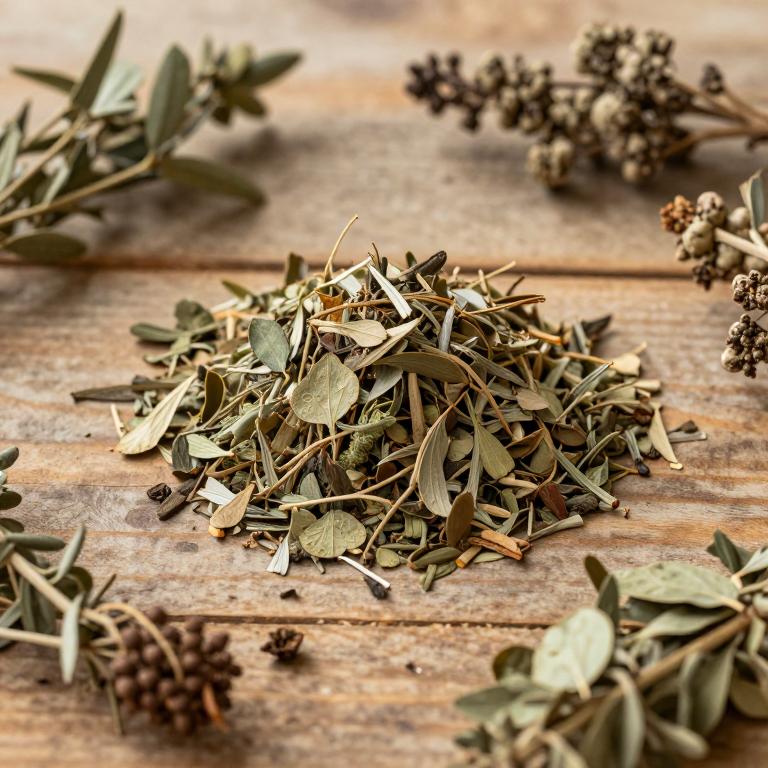
Names and Synonyms
Scientific Names
Accepted name
Mora oleiferaSynonyms
- Mora megistosperma
- Dimorphandra megistosperma
- Dimorphandra oleifera
Regional and Traditional Names
Spanish:
- Mangle Nato
- alcornoque
Sources: Wikidata, Catalogue of Life
Taxonomical Classification
This plant belongs to the kingdom Plantae and is classified under the phylum Streptophyta within the class Equisetopsida. It is further categorized under the subclass Magnoliidae and the order Fabales, falling into the family Fabaceae. Finally, its specific taxonomic placement is within the genus Mora, identifying it as Mora oleifera.
| Rank | Classification |
|---|---|
| Kingdom | Plantae |
| Phylum | Streptophyta |
| Class | Equisetopsida |
| Subclass | Magnoliidae |
| Order | Fabales |
| Family | Fabaceae |
| Genus | Mora |
Sources: The World Checklist of Vascular Plants (WCVP)
Distribution
This plant exhibits a diverse range of habitats across the tropical regions of the Americas. In Central America, its presence is documented within the borders of Costa Rica, Nicaragua, and Panamá. Moving toward the western portion of the continent, its distribution extends into South America. Specifically, it can be found growing in the territories of Colombia. Finally, its geographical reach encompasses the nation of Ecuador as well.
| Region | Area |
|---|---|
| Central America | Costa Rica |
| Central America | Nicaragua |
| Central America | Panamá |
| Western South America | Colombia |
| Western South America | Ecuador |
Sources: The World Checklist of Vascular Plants (WCVP)
Botanical Identification
Ecology
The ecology of Moringa oleifera is characterized by its ability to thrive across a broad altitudinal gradient, typically occupying low-to-mid altitude environments. It is most commonly found within an elevational range spanning from 0 m AMSL to a maximum of 1000 m AMSL. This species is highly adapted to tropical and subtropical climates, demonstrating significant resilience in semi-arid regions where it can tolerate drought and poor soil conditions. It prefers well-drained soils and high light intensity, often acting as a pioneer species in disturbed landscapes or marginal lands where other vegetation might struggle to establish.
- Elevational range max:
- 1000 m AMSL
- Elevational range min:
- 0 m AMSL
Life history
The life history of Moringa oleifera is characterized by its status as a perennial species, though its growth patterns can often appear variable depending on environmental conditions and management practices. As a perennial, the plant is capable of living for many years, establishing a robust woody structure that allows it to persist through multiple growing seasons. While it is biologically long-lived, it is frequently cultivated in a manner that mimics an annual or biennial cycle through regular pruning, harvesting, and regeneration of shoots. Its life cycle begins with seed germination, leading to rapid vegetative growth that allows the plant to quickly establish a deep taproot system, which is essential for its long-term survival and drought resistance. Throughout its existence, the plant undergoes seasonal cycles of flowering and fruiting, contributing to its continuous reproductive potential and its ability to thrive in various tropical and subtropical climates.
- Lifecycle :
- perennial
Morphology
The morphology of Moringa oleifera is characterized by its growth form as a woody tree, which functions as a self-supporting structure rather than a climber, vine, or liana. This terrestrial species grows independently as a non-parasitic organism, maintaining a non-epiphytic habit. In terms of stature, the plant exhibits significant vertical development, with a documented plant height ranging from a maximum of 22 m to a mean height of approximately 35 m.
- Aquatic :
- terrestrial
- Climber :
- self-supporting
- Epiphyte :
- terrestrial
- Growth form :
- tree
- Parasite :
- independent
- Plant height max:
- 22 m
- Plant height mean:
- 35 m
- Woodiness :
- woody
Physiology
The physiology of Moringa oleifera is characterized by its highly efficient metabolic processes and nutrient management strategies. It utilizes the C3 photosynthetic pathway, which involves the direct fixation of carbon dioxide through the Calvin cycle within the mesophyll cells. Unlike nitrogen-fixing plants, Moringa oleifera does not function as a nitrogen fixer; it lacks the symbiotic relationship with diazotrophic bacteria required to convert atmospheric nitrogen into usable forms, relying instead on the uptake of nitrates and ammonium from the soil through its extensive root system. This metabolic profile allows the plant to maintain rapid growth rates and high biomass production in various tropical and subtropical environments, provided that sufficient soil nitrogen is available for assimilation.
- Nitrogen fixer :
- no
- Photosynthetic pathway :
- C3
Reproduction
Reproduction in Moringa oleifera is characterized by a multifaceted approach to seed dissemination involving various dispersal syndromes. While the plant utilizes different mechanisms to ensure the spread of its offspring, its dispersal strategies are notably diverse, encompassing anemochorous, zoochorous, autochorous, and hydrochorous modes, often leaning towards an unspecialized pattern. Specifically, the plant exhibits a hydrochorous dispersal syndrome, allowing seeds to be transported by water currents, which complements its ability to spread through wind (anemochory), animal movement (zoochory), and self-dispersal mechanisms (autochory). This combination of traits ensures that the species can colonize various environments by leveraging both biotic and abiotic vectors for successful propagation.
- Dispersal syndrome :
- hydrochorous
Sources: Global Inventory of Floras and Traits (GIFT)
Chemicals
Mora oleifera has 5 reported phytochemicals identified across 0 scientific publications and several other databases. The most consistently reported chemicals include LUPENONE, Lupeol, STIGMASTEROL, Sitosterol, palmitic acid.
| Chemical | Supporting sources | Consensus |
|---|---|---|
| LUPENONE | 1 supporting sources | ★☆☆☆☆ |
| Lupeol | 1 supporting sources | ★☆☆☆☆ |
| STIGMASTEROL | 1 supporting sources | ★☆☆☆☆ |
| Sitosterol | 1 supporting sources | ★☆☆☆☆ |
| palmitic acid | 1 supporting sources | ★☆☆☆☆ |
LUPENONE
- Pharmaceuticals (Basel, Switzerland)
Lupeol
- Pharmaceuticals (Basel, Switzerland)
STIGMASTEROL
- Pharmaceuticals (Basel, Switzerland)
Sitosterol
- Pharmaceuticals (Basel, Switzerland)
palmitic acid
- Pharmaceuticals (Basel, Switzerland)