Montanoa tomentosa
Montanoa tomentosa · Accepted scientific name
Scientific literature: Very Sparse (25 studies) · ★☆☆☆☆
, scientifically known as Montanoa tomentoza, is a medicinal shrub native to the high-altitude forests of Mexico. Commonly referred to as "tree daisy," this plant is highly valued in traditional medicine for its potent anti-inflammatory and analgesic properties, often utilized to treat various ailments ranging from pain to digestive issues.
- Family
- Asteraceae
- Native range
- Northern America
- Parts used
- Leaf
- Common names
- Not available
- Scientific synonyms
- Eriocoma Tomentosa
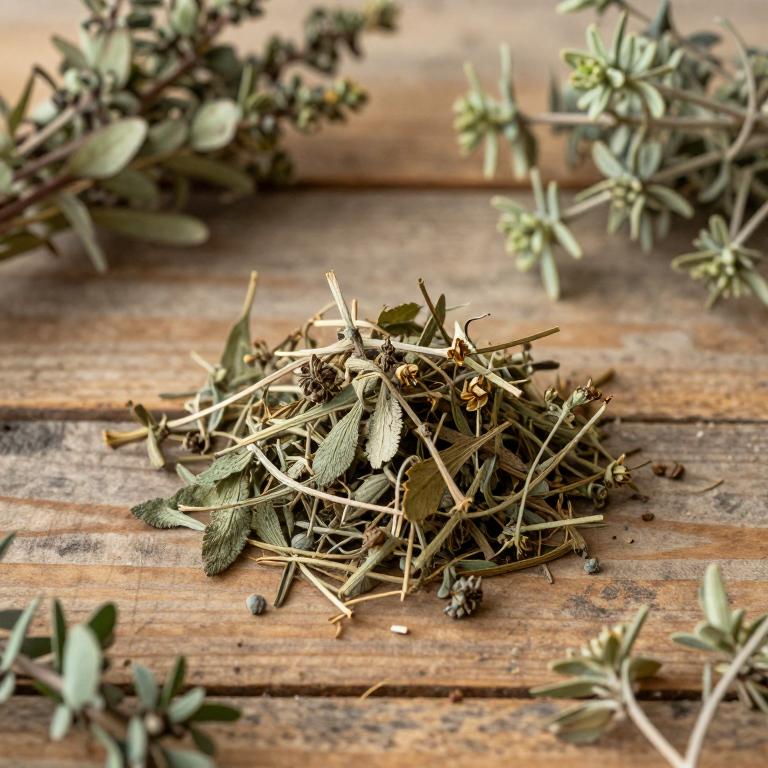
Names and Synonyms
Scientific Names
Accepted name
Montanoa tomentosaSynonyms
- Eriocoma tomentosa
Regional and Traditional Names
Spanish:
- Ciguapacle
- Hierba de la Parida
- Singuapacle
- Sinhuapastle
- Zoapatle
- Zuapatli
Sources: Wikidata, Catalogue of Life
Taxonomical Classification
This plant belongs to the kingdom Plantae and the phylum Streptophyta, falling under the class Equisetopsida and subclass Magnoliidae. Within the order Asterales, it is classified under the family Asteraceae. Finally, its taxonomic identity is defined by the genus Montanoa.
| Rank | Classification |
|---|---|
| Kingdom | Plantae |
| Phylum | Streptophyta |
| Class | Equisetopsida |
| Subclass | Magnoliidae |
| Order | Asterales |
| Family | Asteraceae |
| Genus | Montanoa |
Sources: The World Checklist of Vascular Plants (WCVP)
Distribution
This plant, Montanoa tomentoza, is native to several diverse regions throughout Mexico. Its distribution spans across the central territories of the country, establishing a presence in Mexico Central. Furthermore, it can be found throughout the northeastern landscapes of Mexico Northeast. The species also inhabits the coastal and inland areas of Mexico Gulf. Finally, its range extends into the western regions of Mexico Northwest and Mexico Southwest.
| Region | Area |
|---|---|
| Mexico | Mexico Central |
| Mexico | Mexico Northeast |
| Mexico | Mexico Gulf |
| Mexico | Mexico Northwest |
| Mexico | Mexico Southwest |
| Mexico | Mexico Southeast |
| Central America | Costa Rica |
| Central America | El Salvador |
| Central America | Guatemala |
| Central America | Honduras |
Sources: The World Checklist of Vascular Plants (WCVP)
Botanical Identification
Life history
The life history of Montanoa tomentoza is characterized by its nature as a perennial plant, allowing it to persist through multiple growing seasons rather than completing its cycle within a single year. Throughout its development, the species maintains an evergreen habit, retaining its foliage year-round rather than shedding it seasonally. This combination of a long-lived life cycle and continuous leaf presence defines its ecological strategy and enduring presence in its natural habitat.
- Deciduousness :
- evergreen
- Lifecycle :
- perennial
Morphology
The morphology of Montanoa tomentoza is characterized by its growth form as a woody shrub, reaching an average height of approximately 3 meters. As a terrestrial species, it does not exhibit aquatic or semiaquatic tendencies, nor does it function as an epiphyte, remaining strictly grounded in its habitat. The plant is fundamentally independent, showing no parasitic behavior, and maintains a self-supporting structure rather than acting as a liana, vine, or any other form of climber.
- Aquatic :
- terrestrial
- Climber :
- self-supporting
- Epiphyte :
- terrestrial
- Growth form :
- shrub
- Parasite :
- independent
- Plant height mean:
- 3 m
- Woodiness :
- woody
Physiology
The physiology of Montanoa tomentoza is characterized by specialized metabolic processes adapted to its specific ecological niche, involving complex pathways for photosynthesis and nutrient acquisition. As a member of the Asteraceae family, its physiological framework supports the synthesis of secondary metabolites, often utilized in defensive mechanisms against herbivory. Regarding its nutrient cycling capabilities, the plant does not exhibit the physiological mechanisms required for symbiotic or free-living nitrogen fixation; therefore, it is categorized as a non-nitrogen fixer (trait_1: nitrogen fixer; trait_value: no). Instead, it relies on the uptake of inorganic nitrogen, such as nitrates and ammonium, from the soil through its root system to support protein synthesis and cellular growth. Its physiological activity is further driven by transpiration rates regulated by stomatal conductance and the management of water potential within its tissues to maintain turgor pressure.
- Nitrogen fixer :
- no
Reproduction
Reproduction in Montanoa tomentoza is facilitated through the production of specialized seeds that exhibit a highly consistent physical profile. The reproductive output is characterized by very fine, lightweight seeds, with a documented seed mass mean of 0.00146 g. This mass remains remarkably stable across individual specimens, as evidenced by a narrow range between the minimum seed mass of 0.00144 g and the maximum seed mass of 0.00148 g. This uniformity in seed weight suggests a highly controlled developmental process during seed maturation, ensuring that the reproductive units are optimized for efficient dispersal and establishment within its natural habitat.
- Seed mass max:
- 0.00148 g
- Seed mass mean:
- 0.00146 g
- Seed mass min:
- 0.00144 g
Sources: Global Inventory of Floras and Traits (GIFT)
Plant Parts
Montanoa tomentosa has 1 reported plant parts identified across 1 scientific publications and several other databases that are studied for medicinal purposes. The most consistently reported plant part include leaf.
| Plant part | Supporting sources | Consensus |
|---|---|---|
| Leaf | 1 supporting sources | ★☆☆☆☆ |
Leaf
- Contraception
Chemicals
Montanoa tomentosa has 14 reported phytochemicals identified across 1 scientific publications and several other databases. The most consistently reported chemicals include (-)-Kaur-9(11),16-dien-19-oic acid, BETA-CARYOPHYLLENE, GF, Kaurene, Kaurenoic acid.
| Chemical | Supporting sources | Consensus |
|---|---|---|
| (-)-Kaur-9(11),16-dien-19-oic acid | 1 supporting sources | ★☆☆☆☆ |
| BETA-CARYOPHYLLENE | 1 supporting sources | ★☆☆☆☆ |
| GF | 1 supporting sources | ★☆☆☆☆ |
| Kaurene | 1 supporting sources | ★☆☆☆☆ |
| Kaurenoic acid | 1 supporting sources | ★☆☆☆☆ |
| Montanol | 1 supporting sources | ★☆☆☆☆ |
| Pretomentol | 1 supporting sources | ★☆☆☆☆ |
| Prezoapatanol | 1 supporting sources | ★☆☆☆☆ |
| Tomentosin | 1 supporting sources | ★☆☆☆☆ |
| Tomexanthin | 1 supporting sources | ★☆☆☆☆ |
(-)-Kaur-9(11),16-dien-19-oic acid
- Dr. Duke
BETA-CARYOPHYLLENE
- Dr. Duke
GF
- Journal of plant physiology
Kaurene
- Dr. Duke
Kaurenoic acid
- Dr. Duke
Montanol
- Dr. Duke
Pretomentol
- Dr. Duke
Prezoapatanol
- Dr. Duke
Tomentosin
- Dr. Duke
Tomexanthin
- Dr. Duke
Activities
Montanoa tomentosa has 4 reported activities identified across 1 scientific publications and several other databases. The most consistently reported activities include Antifertility, Antiimplantation, Spasmogenic, Uterotonic.
| Activity | Supporting sources | Consensus |
|---|---|---|
| Antifertility | 1 supporting sources | ★☆☆☆☆ |
| Antiimplantation | 1 supporting sources | ★☆☆☆☆ |
| Spasmogenic | 1 supporting sources | ★☆☆☆☆ |
| Uterotonic | 1 supporting sources | ★☆☆☆☆ |
Antifertility
- Dr. Duke
Antiimplantation
- Dr. Duke
Spasmogenic
- Dr. Duke
Uterotonic
- Journal of plant physiology
Conditions
Montanoa tomentosa has 5 reported investigations on conditions identified across 1 scientific publications and several other databases. The most consistently reported conditions include bleeding, cervical dilatation, contraceptive, oral contraceptive, uterine bleeding.
| Condition | Supporting sources | Consensus |
|---|---|---|
| Bleeding | 1 supporting sources | ★☆☆☆☆ |
| Cervical dilatation | 1 supporting sources | ★☆☆☆☆ |
| Contraceptive | 1 supporting sources | ★☆☆☆☆ |
| Oral contraceptive | 1 supporting sources | ★☆☆☆☆ |
| Uterine bleeding | 1 supporting sources | ★☆☆☆☆ |
Bleeding
- American journal of obstetrics and gynecology
Cervical dilatation
- American journal of obstetrics and gynecology
Contraceptive
- Population (New York, N.Y.)
Oral contraceptive
- Journal of ethnopharmacology
Uterine bleeding
- American journal of obstetrics and gynecology
Preparations
Montanoa tomentosa has 4 reported preparations identified across 1 scientific publications and several other databases. The most consistently reported preparations include Zoapatle aqueous crude extract (ZACE), A tea, aqueous crude extract, zoapatle aqueous crude extract (ZACE).
| Preparation | Supporting sources | Consensus |
|---|---|---|
| Zoapatle aqueous crude extract (zace) | 2 supporting sources | ★☆☆☆☆ |
| A tea | 1 supporting sources | ★☆☆☆☆ |
| Aqueous crude extract | 1 supporting sources | ★☆☆☆☆ |
| Zoapatle aqueous crude extract (zace) | 1 supporting sources | ★☆☆☆☆ |
Zoapatle aqueous crude extract (zace)
- Contraception
- Journal of ethnopharmacology
A tea
- Population (New York, N.Y.)
Aqueous crude extract
- Pharmacology, biochemistry, and behavior
Zoapatle aqueous crude extract (zace)
- Contraception