White's-ginger
Mondia whitei · Accepted scientific name
Scientific literature: Very Sparse (35 studies) · ★☆☆☆☆
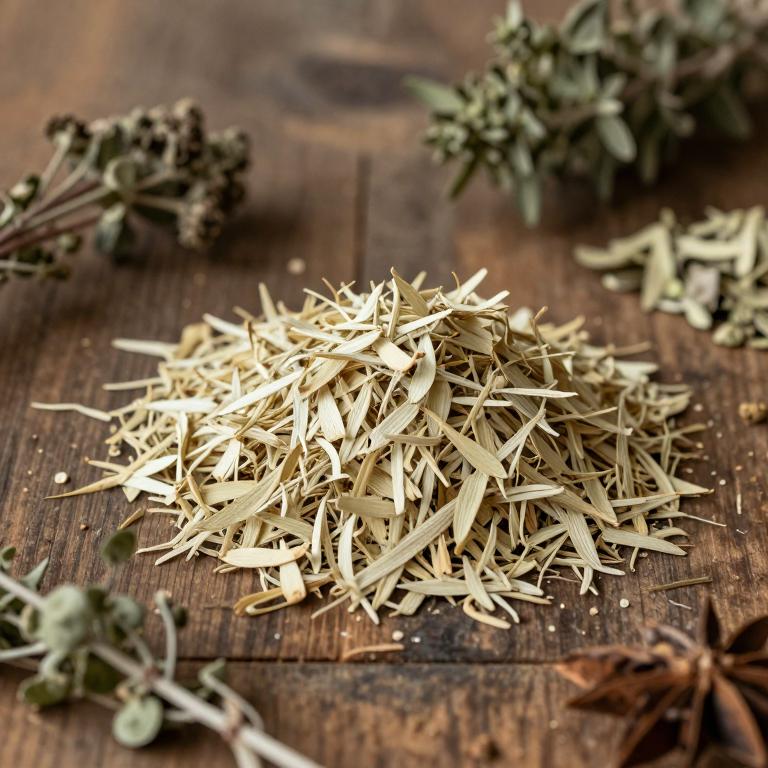
White's-ginger, scientifically known as Mondia whitei, is a versatile medicinal shrub native to the African savannah. Renowned for its aromatic roots, it is traditionally used to enhance libido, treat digestive issues, and boost vitality. This potent botanical holds significant ethnobotanical value and continues to attract modern pharmacological interest.
Names and Synonyms
Common Names
- White's-ginger
- mondia
- tonicroot
- Ginger-Climber
- Gingerbeer-Root
- White's Ginger
Scientific Names
Accepted name
Mondia whiteiSynonyms
- Chlorocodon whitei
- Tacazzea viridis
- Tacazzea amplifolia
- Periploca latifolia
Regional and Traditional Names
Spanish:
- Mondia whiteii
French:
- Mondia whiteii
- la racine
Sources: Wikidata, Catalogue of Life
Taxonomical Classification
This plant belongs to the kingdom Plantae within the phylum Streptophyta and the class Equisetopsida. It is further classified under the subclass Magnoliidae and the order Gentianaales, falling into the family Apocynaceae. Finally, it is categorized under the genus Mondia.
| Rank | Classification |
|---|---|
| Kingdom | Plantae |
| Phylum | Streptophyta |
| Class | Equisetopsida |
| Subclass | Magnoliidae |
| Order | Gentianales |
| Family | Apocynaceae |
| Genus | Mondia |
Sources: The World Checklist of Vascular Plants (WCVP)
Distribution
This plant is widely distributed throughout the West Tropical Africa region. Specifically, its presence has been documented across several distinct nations. It can be found growing in the territories of Benin and Ghana. Additionally, the species is native to Guinea-Bissau and Guinea. Finally, its geographical range extends further south into the Ivory Coast.
| Region | Area |
|---|---|
| West Tropical Africa | Benin |
| West Tropical Africa | Ghana |
| West Tropical Africa | Guinea-Bissau |
| West Tropical Africa | Guinea |
| West Tropical Africa | Ivory Coast |
| West Tropical Africa | Liberia |
| West Tropical Africa | Nigeria |
| West Tropical Africa | Senegal |
| West Tropical Africa | Sierra Leone |
| West-Central Tropical Africa | Burundi |
Sources: The World Checklist of Vascular Plants (WCVP)
Botanical Identification
Ecology
The ecology of Mondia whitei is characterized by its adaptability to diverse tropical environments, typically thriving in various woodland and forest ecosystems across its native range. This species occupies a significant vertical gradient within its habitat, exhibiting a broad altitudinal distribution that allows it to inhabit a variety of ecological niches. Specifically, its elevational range spans from a minimum of 20 m AMSL to a maximum of 1400 m AMSL. This wide distribution enables the plant to persist in both lowland riverine forests and higher-altitude montane woodlands, depending on local moisture availability and soil composition.
- Elevational range max:
- 1400 m AMSL
- Elevational range min:
- 20 m AMSL
Life history
The life history of Mondia whitei is characterized by a perennial lifecycle, allowing the plant to persist in its natural habitat over multiple growing seasons. As a phanerophyte, its regenerative buds are located on aerial parts of the stem, contributing to its structural development and long-term survival within its ecosystem. This phanerophyte life form ensures that the plant can maintain its stature and reproductive capacity throughout its extended lifespan.
- Life form :
- phanerophyte
- Lifecycle :
- perennial
Morphology
The morphology of Mondia whitei is characterized by its growth form as a non-woody herb that functions as an obligatory climbing vine. As a terrestrial species, it does not exhibit epiphytic or aquatic tendencies and operates as an independent organism rather than a parasite. The plant exhibits significant vertical development, with its height typically ranging from a minimum of 3 m to a maximum of 12 m, maintaining an average plant height of approximately 7 m.
- Aquatic :
- terrestrial
- Climber :
- vine
- Climber :
- obligatory
- Epiphyte :
- terrestrial
- Growth form :
- herb
- Parasite :
- independent
- Plant height max:
- 12 m
- Plant height mean:
- 7 m
- Plant height min:
- 3 m
- Woodiness :
- non-woody
Physiology
The physiology of Mondia whitei is characterized by its specialized growth form as a woody climber, which dictates its metabolic strategies for nutrient acquisition and structural development. As a climbing vine, the plant utilizes geotropic and phototropic responses to navigate forest canopies, optimizing its photosynthetic efficiency by positioning its foliage in high-light environments. Its physiological processes are heavily influenced by its root architecture, which features a prominent, fleshy tuberous root system designed for significant starch storage, allowing the plant to maintain metabolic functions during periods of environmental stress or dormancy. Regarding its nutrient cycling capabilities, Mondia whitei is not a nitrogen fixer; it lacks the symbiotic relationship with nitrogen-fixing bacteria (such as Rhizobium) required to convert atmospheric nitrogen into bioavailable forms, meaning it relies entirely on the uptake of nitrates and ammonium from the soil through its root system. The metabolic activity within its tuberous roots is central to its survival, involving complex carbohydrate synthesis and long-term energy sequestration.
- Nitrogen fixer :
- no
Reproduction
The reproduction of Mondia whitei is characterized by a biotic pollination syndrome, relying on living organisms rather than abiotic factors to facilitate the transfer of pollen. This process is primarily driven by insect pollination, where various insect species play a critical role in the reproductive cycle. Specifically, the plant exhibits a specialized interaction with flies, which serve as key pollinators in its reproductive strategy. This reliance on biotic vectors ensures the genetic exchange necessary for the successful development of seeds and the continuation of the species within its natural habitat.
- Pollination syndrome :
- insect
- Pollination syndrome :
- fly
- Pollination syndrome :
- biotic
Sources: Global Inventory of Floras and Traits (GIFT)
Plant Parts
Mondia whitei has 2 reported plant parts identified across 5 scientific publications and several other databases that are studied for medicinal purposes. The most consistently reported plant part include root, fruit.
| Plant part | Supporting sources | Consensus |
|---|---|---|
| Root | 3 supporting sources | ★★☆☆☆ |
| Fruit | 2 supporting sources | ★☆☆☆☆ |
Root
- Phytochemistry
- Journal of ethnopharmacology
- Frontiers in pharmacology
Fruit
- Biochemistry and biophysics reports
- African journal of traditional, complementary, and alternative medicines : AJTCAM
Chemicals
Mondia whitei has 9 reported phytochemicals identified across 5 scientific publications and several other databases. The most consistently reported chemicals include 2-Hydroxy-4-methoxybenzaldehyde, 4-Methoxy-benzaldehyde, 5-Chloropropacin, Antibacterial Agents, Fraxin.
| Chemical | Supporting sources | Consensus |
|---|---|---|
| 2-Hydroxy-4-methoxybenzaldehyde | 2 supporting sources | ★☆☆☆☆ |
| 4-Methoxy-benzaldehyde | 1 supporting sources | ★☆☆☆☆ |
| 5-Chloropropacin | 1 supporting sources | ★☆☆☆☆ |
| Antibacterial Agents | 1 supporting sources | ★☆☆☆☆ |
| Fraxin | 1 supporting sources | ★☆☆☆☆ |
| MONOBUTYL PHTHALATE | 1 supporting sources | ★☆☆☆☆ |
| RUTIN | 1 supporting sources | ★☆☆☆☆ |
| kaempferol | 1 supporting sources | ★☆☆☆☆ |
| quercetin | 1 supporting sources | ★☆☆☆☆ |
2-Hydroxy-4-methoxybenzaldehyde
- Environmental microbiology reports
- Planta medica
4-Methoxy-benzaldehyde
- Environmental microbiology reports
5-Chloropropacin
- Phytochemistry
Antibacterial Agents
- Frontiers in pharmacology
Fraxin
- Environmental microbiology reports
MONOBUTYL PHTHALATE
- Environmental microbiology reports
RUTIN
- Biochemistry and biophysics reports
kaempferol
- Biochemistry and biophysics reports
quercetin
- Biochemistry and biophysics reports
Activities
Mondia whitei has 8 reported activities identified across 5 scientific publications and several other databases. The most consistently reported activities include Antidepressant, Antifertility, Antispermatogenic, Anxiolytic, Aphrodisiac.
| Activity | Supporting sources | Consensus |
|---|---|---|
| Antidepressant | 1 supporting sources | ★☆☆☆☆ |
| Antifertility | 1 supporting sources | ★☆☆☆☆ |
| Antispermatogenic | 1 supporting sources | ★☆☆☆☆ |
| Anxiolytic | 1 supporting sources | ★☆☆☆☆ |
| Aphrodisiac | 1 supporting sources | ★☆☆☆☆ |
| Galactagogue | 1 supporting sources | ★☆☆☆☆ |
| Sedative | 1 supporting sources | ★☆☆☆☆ |
| Tyrosinase-Inhibitor | 1 supporting sources | ★☆☆☆☆ |
Antidepressant
- Journal of dietary supplements
Antifertility
- Phytotherapy research : PTR
Antispermatogenic
- Phytotherapy research : PTR
Anxiolytic
- African journal of traditional, complementary, and alternative medicines : AJTCAM
Aphrodisiac
- Journal of dietary supplements
Galactagogue
- Journal of dietary supplements
Sedative
- African journal of traditional, complementary, and alternative medicines : AJTCAM
Tyrosinase-Inhibitor
- Planta medica
Conditions
Mondia whitei has 10 reported investigations on conditions identified across 5 scientific publications and several other databases. The most consistently reported conditions include Women's health, acetylcholinesterase, anemia, antidepressant, appetite.
| Condition | Supporting sources | Consensus |
|---|---|---|
| Women's health | 1 supporting sources | ★☆☆☆☆ |
| Acetylcholinesterase | 1 supporting sources | ★☆☆☆☆ |
| Anemia | 1 supporting sources | ★☆☆☆☆ |
| Antidepressant | 1 supporting sources | ★☆☆☆☆ |
| Appetite | 1 supporting sources | ★☆☆☆☆ |
| Depression | 1 supporting sources | ★☆☆☆☆ |
| Fever | 1 supporting sources | ★☆☆☆☆ |
| Infertility | 1 supporting sources | ★☆☆☆☆ |
| Libido | 1 supporting sources | ★☆☆☆☆ |
| Pain | 1 supporting sources | ★☆☆☆☆ |
Women's health
- Economic botany
Acetylcholinesterase
- Frontiers in pharmacology
Anemia
- Journal of xenobiotics
Antidepressant
- Journal of dietary supplements
Appetite
- Journal of dietary supplements
Depression
- Journal of ethnopharmacology
Fever
- African journal of traditional, complementary, and alternative medicines : AJTCAM
Infertility
- Evidence-based complementary and alternative medicine : eCAM
Libido
- Journal of dietary supplements
Pain
- African journal of traditional, complementary, and alternative medicines : AJTCAM
Preparations
Mondia whitei has 11 reported preparations identified across 5 scientific publications and several other databases. The most consistently reported preparations include Adventitious Roots, Ex vitro-Grown Somatic Embryogenic-Biomass, Fresh fruits, aqueous or hexane extract, class bitters®.
| Preparation | Supporting sources | Consensus |
|---|---|---|
| Adventitious roots | 1 supporting sources | ★☆☆☆☆ |
| Ex vitro-grown somatic embryogenic-biomass | 1 supporting sources | ★☆☆☆☆ |
| Fresh fruits | 1 supporting sources | ★☆☆☆☆ |
| Aqueous or hexane extract | 1 supporting sources | ★☆☆☆☆ |
| Class bitters® | 1 supporting sources | ★☆☆☆☆ |
| Crude extract | 1 supporting sources | ★☆☆☆☆ |
| Ex vitro biomass | 1 supporting sources | ★☆☆☆☆ |
| Ex vitro-grown plants | 1 supporting sources | ★☆☆☆☆ |
| Extract | 1 supporting sources | ★☆☆☆☆ |
| Extracts | 1 supporting sources | ★☆☆☆☆ |
Adventitious roots
- Frontiers in pharmacology
Ex vitro-grown somatic embryogenic-biomass
- Frontiers in pharmacology
Fresh fruits
- African journal of traditional, complementary, and alternative medicines : AJTCAM
Aqueous or hexane extract
- BMC complementary and alternative medicine
Class bitters®
- Journal of xenobiotics
Crude extract
- African journal of traditional, complementary, and alternative medicines : AJTCAM
Ex vitro biomass
- Frontiers in pharmacology
Ex vitro-grown plants
- Frontiers in pharmacology
Extract
- Virology journal
Extracts
- Journal of biomolecular structure & dynamics