Monarda russeliana
Monarda russeliana · Accepted scientific name
Scientific literature: Extensive (199 studies) · ★★★★☆
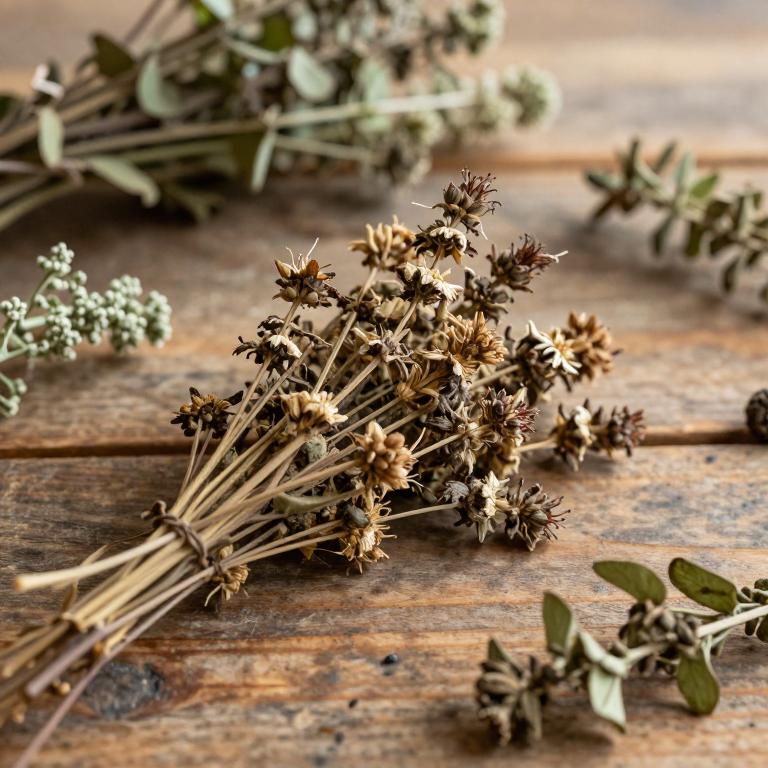
Monarda russeolana, scientifically known as Monarda russeolana, is a resilient perennial native to North American prairies. Often called wild bergamot, this aromatic herb features striking lavender blooms. Renowned for its antimicrobial properties, it is traditionally used in herbal medicine to support respiratory health and soothe digestive discomfort.
- Family
- Not available
- Native range
- Northern America
- Parts used
- Not available
- Common names
- Not available
- Scientific synonyms
- Not available
Names and Synonyms
Scientific Names
Accepted name
Monarda russelianaDistribution
This plant exhibits a specific range across several regions of the United States. In the North-Central U.S.A., its presence is noted in Oklahoma. Moving toward the South-Central U.S.A., it can be found growing in Texas. The species also extends into the Southeastern U.S.A., specifically within the borders of Alabama and Arkansas. Finally, its distribution reaches further into the Southeastern U.S.A. through Kentucky.
| Region | Area |
|---|---|
| North-Central U.S.A. | Oklahoma |
| South-Central U.S.A. | Texas |
| Southeastern U.S.A. | Alabama |
| Southeastern U.S.A. | Arkansas |
| Southeastern U.S.A. | Kentucky |
Sources: The World Checklist of Vascular Plants (WCVP)
Botanical Identification
Life history
The life history of Monarda russeolana is characterized by its status as a perennial plant, allowing it to persist through multiple growing seasons. It functions as a hemicryptophyte, a life form where the perennating buds are located at the soil surface, protected by leaf litter or organic matter during unfavorable periods. This growth habit ensures its survival and ability to re-emerge annually from its established root systems.
- Life form :
- hemicryptophyte
- Lifecycle :
- perennial
Morphology
The morphology of Monarda russeolana is characterized by a growth form primarily classified as an herb and, more specifically, a forb. As a terrestrial species, it does not exhibit aquatic or semiaquatic tendencies, nor does it function as an epiphyte. The plant is strictly non-woody in its structural composition, lacking any woody elements in its stems. Furthermore, it is a self-supporting organism that does not function as a climber, such as a liana or vine, and it maintains an independent life cycle, showing no parasitic behavior.
- Aquatic :
- terrestrial
- Climber :
- self-supporting
- Epiphyte :
- terrestrial
- Growth form :
- herb
- Growth form :
- forb
- Parasite :
- independent
- Woodiness :
- non-woody
Sources: Global Inventory of Floras and Traits (GIFT)
Chemicals
Monarda russeliana has 16 reported phytochemicals identified across 0 scientific publications and several other databases. The most consistently reported chemicals include 1,8-Cineole, 3-OCTANOL, 3-Octyl acetate, ALPHA-PINENE, CARVACROL.
| Chemical | Supporting sources | Consensus |
|---|---|---|
| 1,8-Cineole | 1 supporting sources | ★☆☆☆☆ |
| 3-OCTANOL | 1 supporting sources | ★☆☆☆☆ |
| 3-Octyl acetate | 1 supporting sources | ★☆☆☆☆ |
| ALPHA-PINENE | 1 supporting sources | ★☆☆☆☆ |
| CARVACROL | 1 supporting sources | ★☆☆☆☆ |
| EO | 1 supporting sources | ★☆☆☆☆ |
| GERANIAL | 1 supporting sources | ★☆☆☆☆ |
| Isomenthone | 1 supporting sources | ★☆☆☆☆ |
| LIMONENE | 1 supporting sources | ★☆☆☆☆ |
| LINALYL ACETATE | 1 supporting sources | ★☆☆☆☆ |
1,8-Cineole
- Dr. Duke
3-OCTANOL
- Dr. Duke
3-Octyl acetate
- Dr. Duke
ALPHA-PINENE
- Dr. Duke
CARVACROL
- Dr. Duke
EO
- Dr. Duke
GERANIAL
- Dr. Duke
Isomenthone
- Dr. Duke
LIMONENE
- Dr. Duke
LINALYL ACETATE
- Dr. Duke
Activities
Monarda russeliana has 183 reported activities identified across 0 scientific publications and several other databases. The most consistently reported activities include (-)-Chronotropic, (-)-Inotropic, ACE-Inhibitor, AChE-Inhibitor, Acaricide.
| Activity | Supporting sources | Consensus |
|---|---|---|
| (-)-Chronotropic | 1 supporting sources | ★☆☆☆☆ |
| (-)-Inotropic | 1 supporting sources | ★☆☆☆☆ |
| ACE-Inhibitor | 1 supporting sources | ★☆☆☆☆ |
| AChE-Inhibitor | 1 supporting sources | ★☆☆☆☆ |
| Acaricide | 1 supporting sources | ★☆☆☆☆ |
| Aldose-Reductase-Inhibitor | 1 supporting sources | ★☆☆☆☆ |
| Allelochemic | 1 supporting sources | ★☆☆☆☆ |
| Allelopathic | 1 supporting sources | ★☆☆☆☆ |
| Allergenic | 1 supporting sources | ★☆☆☆☆ |
| Analgesic | 1 supporting sources | ★☆☆☆☆ |
(-)-Chronotropic
- Dr. Duke
(-)-Inotropic
- Dr. Duke
ACE-Inhibitor
- Dr. Duke
AChE-Inhibitor
- Dr. Duke
Acaricide
- Dr. Duke
Aldose-Reductase-Inhibitor
- Dr. Duke
Allelochemic
- Dr. Duke
Allelopathic
- Dr. Duke
Allergenic
- Dr. Duke
Analgesic
- Dr. Duke
Preparations
Monarda russeliana has 1 reported preparations identified across 0 scientific publications and several other databases. The most consistently reported preparations include oil.
| Preparation | Supporting sources | Consensus |
|---|---|---|
| Oil | 1 supporting sources | ★☆☆☆☆ |
Oil
- Life (Basel, Switzerland)