lemon-mint
Monarda citriodora · Accepted scientific name
Scientific literature: Very Extensive (297 studies) · ★★★★★
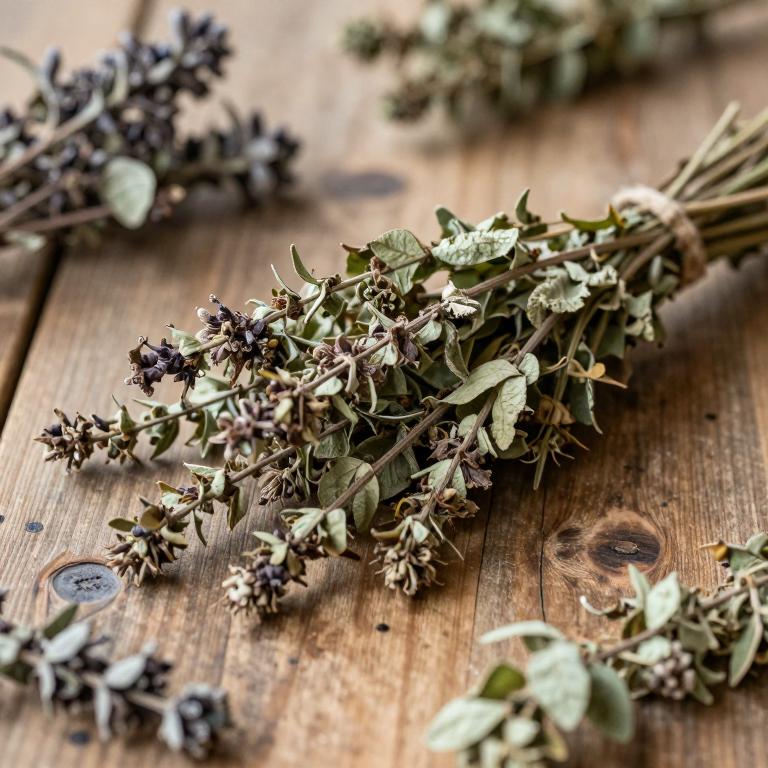
Lemon-mint, scientifically known as Monarda citriodora, is a fragrant perennial cherished for its citrusy aroma and therapeutic properties. Native to North America, this versatile herb is widely used in traditional medicine to support digestive health, soothe respiratory discomfort, and reduce inflammation, making it a valuable addition to natural wellness.
- Family
- Lamiaceae
- Native range
- Northern America
- Parts used
- Leaf
- Common names
- Lemon-Mint · Purple Horsemint · 1 more
- Scientific synonyms
- Not available
Names and Synonyms
Common Names
- lemon-mint
- purple horsemint
- Lemon mint
Scientific Names
Accepted name
Monarda citriodoraRegional and Traditional Names
Spanish:
- orégano
German:
- Zitronen-Monarde
- Präriebergamotte
- Duftende Indianernessel
- Präriegoldmelisse
- Zitronengoldmelisse
- Zitronenmonarde
- Indianerminze
- Duftende Indianernessel
- Indianerminze
- Präriebergamotte
- Präriegoldmelisse
- Zitronen-Monarde
- Zitronengoldmelisse
French:
- Monarde citron
Sources: Wikidata, Catalogue of Life
Taxonomical Classification
This plant, known scientifically as Monarda citriodora, belongs to the kingdom Plantae and the phylum Streptophyta. Within the class Equisetopsida and subclass Magnoliidae, it is classified under the order Lamiales and the family Lamiaceae. Finally, it is categorized under the genus Monarda.
| Rank | Classification |
|---|---|
| Kingdom | Plantae |
| Phylum | Streptophyta |
| Class | Equisetopsida |
| Subclass | Magnoliidae |
| Order | Lamiales |
| Family | Lamiaceae |
| Genus | Monarda |
Sources: The World Checklist of Vascular Plants (WCVP)
Distribution
This plant exhibits a diverse range of locations across the United States. In the North-Central region, it can be found growing in Illinois. It is also widely distributed throughout Kansas and Missouri. Furthermore, its presence extends into Oklahoma within the same central territory. Finally, its geographical reach reaches into the Southwestern U.S.A., specifically in Arizona.
| Region | Area |
|---|---|
| North-Central U.S.A. | Illinois |
| North-Central U.S.A. | Kansas |
| North-Central U.S.A. | Missouri |
| North-Central U.S.A. | Oklahoma |
| Southwestern U.S.A. | Arizona |
| Southwestern U.S.A. | Utah |
| South-Central U.S.A. | New Mexico |
| South-Central U.S.A. | Texas |
| Southeastern U.S.A. | Alabama |
| Southeastern U.S.A. | Arkansas |
Sources: The World Checklist of Vascular Plants (WCVP)
Botanical Identification
Life history
The life history of Monarda citriodora is characterized by a variable lifecycle, as it can manifest as an annual, biennial, or perennial depending on environmental conditions and local climate stability. In terms of its structural life form, the species is classified as a therophyte, a designation that reflects its strategy of completing its life cycle through specialized survival mechanisms. This life history pattern is further detailed through its classification as a therophyte within the broader botanical frameworks of nanophanerophyte, phanerophyte, chamaephyte, hemicryptophyte, geophyte, hydrophyte, helophyte, lithophyte, phanerophyte, chamaephyte, hemicryptophyte, cryptophyte, or therophyte categories, emphasizing its ability to persist and reproduce effectively across shifting seasonal patterns.
- Life form :
- therophyte
- Lifecycle :
- variable
Morphology
The morphology of Monarda citriodora is characterized by its growth form as a non-woody herb and specifically a forb. As a self-supporting plant, it lacks any climber or liana tendencies, maintaining a structured upright habit without the need for external support. It is categorized as an independent organism, meaning it does not function as a parasite, and it is a terrestrial species rather than an aquatic, semiaquatic, or epiphytic one. The plant's physical structure is defined by its non-woody nature, which is consistent with its classification as a herbaceous forb.
- Aquatic :
- terrestrial
- Climber :
- self-supporting
- Epiphyte :
- terrestrial
- Growth form :
- herb
- Growth form :
- forb
- Parasite :
- independent
- Woodiness :
- non-woody
Reproduction
Reproduction in Monarda citriodora is primarily achieved through the production of small, lightweight seeds that facilitate dispersal and the establishment of new individuals. These seeds exhibit specific morphological characteristics regarding their weight, which is critical for their buoyancy and ability to settle in suitable germination sites. Quantitative analysis of the seed mass reveals a mean weight of 0.000445 g. The distribution of seed sizes shows a narrow range, with the maximum recorded seed mass reaching 0.00048 g and the minimum seed mass recorded at 0.00041 g. This consistency in seed mass suggests a highly regulated reproductive strategy aimed at ensuring optimal resource allocation for each offspring during the dispersal phase.
- Seed mass max:
- 0.00048 g
- Seed mass mean:
- 0.000445 g
- Seed mass min:
- 0.00041 g
Sources: Global Inventory of Floras and Traits (GIFT)
Plant Parts
Monarda citriodora has 1 reported plant parts identified across 1 scientific publications and several other databases that are studied for medicinal purposes. The most consistently reported plant part include leaf.
| Plant part | Supporting sources | Consensus |
|---|---|---|
| Leaf | 1 supporting sources | ★☆☆☆☆ |
Leaf
- Planta
Chemicals
Monarda citriodora has 34 reported phytochemicals identified across 1 scientific publications and several other databases. The most consistently reported chemicals include THYMOL, CARVACROL, P-CYMENE, 1,8-Cineole, 3-OCTANOL.
| Chemical | Supporting sources | Consensus |
|---|---|---|
| THYMOL | 3 supporting sources | ★★☆☆☆ |
| CARVACROL | 2 supporting sources | ★☆☆☆☆ |
| P-CYMENE | 2 supporting sources | ★☆☆☆☆ |
| 1,8-Cineole | 1 supporting sources | ★☆☆☆☆ |
| 3-OCTANOL | 1 supporting sources | ★☆☆☆☆ |
| 3-Octyl acetate | 1 supporting sources | ★☆☆☆☆ |
| ALPHA-PINENE | 1 supporting sources | ★☆☆☆☆ |
| Alpha terpinene | 1 supporting sources | ★☆☆☆☆ |
| Apigenin 7-glucoside | 1 supporting sources | ★☆☆☆☆ |
| BETA-CARYOPHYLLENE | 1 supporting sources | ★☆☆☆☆ |
THYMOL
- Dr. Duke
- Frontiers in chemistry
- Planta
CARVACROL
- Dr. Duke
- Planta
P-CYMENE
- Dr. Duke
- Planta
1,8-Cineole
- Dr. Duke
3-OCTANOL
- Dr. Duke
3-Octyl acetate
- Dr. Duke
ALPHA-PINENE
- Dr. Duke
Alpha terpinene
- Dr. Duke
Apigenin 7-glucoside
- Pharmaceutics
BETA-CARYOPHYLLENE
- Dr. Duke
Activities
Monarda citriodora has 226 reported activities identified across 1 scientific publications and several other databases. The most consistently reported activities include (-)-Chronotropic, (-)-Inotropic, ACE-Inhibitor, AChE-Inhibitor, Acaricide.
| Activity | Supporting sources | Consensus |
|---|---|---|
| (-)-Chronotropic | 1 supporting sources | ★☆☆☆☆ |
| (-)-Inotropic | 1 supporting sources | ★☆☆☆☆ |
| ACE-Inhibitor | 1 supporting sources | ★☆☆☆☆ |
| AChE-Inhibitor | 1 supporting sources | ★☆☆☆☆ |
| Acaricide | 1 supporting sources | ★☆☆☆☆ |
| Aldose-Reductase-Inhibitor | 1 supporting sources | ★☆☆☆☆ |
| Allelochemic | 1 supporting sources | ★☆☆☆☆ |
| Allelopathic | 1 supporting sources | ★☆☆☆☆ |
| Allergenic | 1 supporting sources | ★☆☆☆☆ |
| Analgesic | 1 supporting sources | ★☆☆☆☆ |
(-)-Chronotropic
- Dr. Duke
(-)-Inotropic
- Dr. Duke
ACE-Inhibitor
- Dr. Duke
AChE-Inhibitor
- Dr. Duke
Acaricide
- Dr. Duke
Aldose-Reductase-Inhibitor
- Dr. Duke
Allelochemic
- Dr. Duke
Allelopathic
- Dr. Duke
Allergenic
- Dr. Duke
Analgesic
- Dr. Duke
Conditions
Monarda citriodora has 5 reported investigations on conditions identified across 1 scientific publications and several other databases. The most consistently reported conditions include Gram-negative bacteria, Gram-positive bacteria, MRSA, plant diseases, yeasts.
| Condition | Supporting sources | Consensus |
|---|---|---|
| Gram-negative bacteria | 1 supporting sources | ★☆☆☆☆ |
| Gram-positive bacteria | 1 supporting sources | ★☆☆☆☆ |
| Mrsa | 1 supporting sources | ★☆☆☆☆ |
| Plant diseases | 1 supporting sources | ★☆☆☆☆ |
| Yeasts | 1 supporting sources | ★☆☆☆☆ |
Gram-negative bacteria
- Pharmaceutics
Gram-positive bacteria
- Pharmaceutics
Mrsa
- Microbiology spectrum
Plant diseases
- Pharmaceutical biology
Yeasts
- Pharmaceutics