bitter melon
Momordica charantia subsp. charantia · Accepted scientific name
Scientific literature: Very Sparse (1 studies) · ★☆☆☆☆
Bitter melon, scientifically known as Momordica charantia subsp. charantia, is a versatile medicinal plant celebrated for its profound health benefits. Renowned for its distinct bitter flavor, this vine produces nutrient-dense fruit frequently used in traditional medicine to regulate blood sugar, enhance digestion, and support overall metabolic wellness and immunity.
- Family
- Cucurbitaceae
- Native range
- Africa
- Parts used
- Not available
- Common names
- Bitter Melon
- Scientific synonyms
- Momordica Charantia Subsp. Abbreviata · Momordica Charantia F. Muricata · 22 more
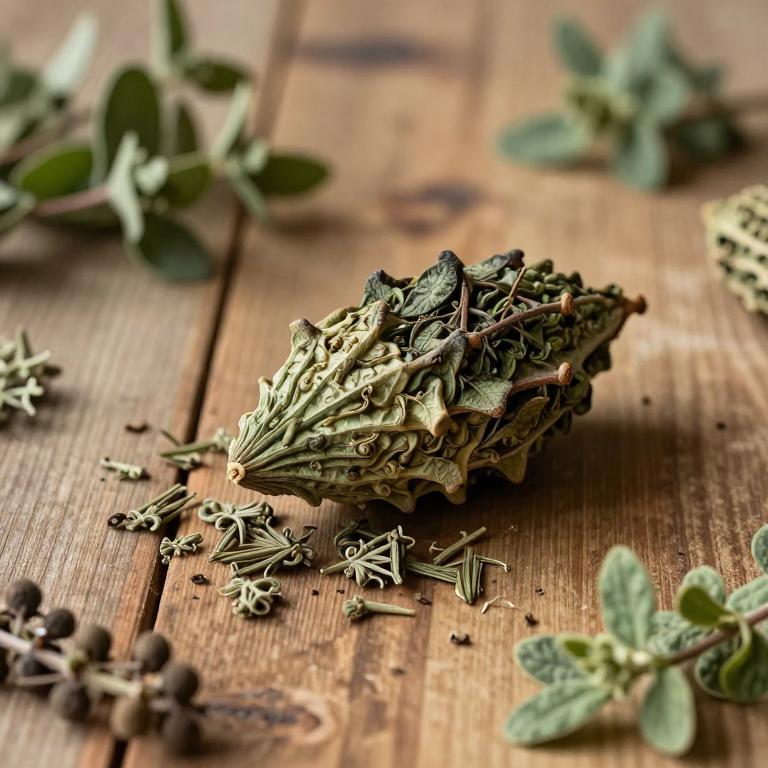
Names and Synonyms
Common Names
- bitter melon
Scientific Names
Accepted name
Momordica charantia subsp. charantiaSynonyms
- Momordica charantia subsp. abbreviata
- Momordica charantia f. muricata
- Momordica charantia f. abbreviata
- Momordica charantia var. muricata
- Momordica charantia var. pavel
- Momordica charantia var. longirostrata
- Momordica charantia var. abbreviata
- Cucumis argyi
- Cucumis intermedius
- Momordica charantia var. pseudobalsamina
- Momordica charantia var. zeylanica
- Momordica jagorana
- Momordica indica
- Momordica muricata
- Momordica senegalensis
- Momordica elegans
- Momordica roxburghiana
- Momordica zeylanica
- Momordica thollonii
- Momordica anthelmintica
- Momordica chinensis
- Momordica papillosa
- Momordica martinicensis
- Sicyos fauriei
Regional and Traditional Names
Spanish:
- Cundeamor
- Pepino cimarrón
German:
- Bittermelone
Sources: Wikidata, Catalogue of Life
Taxonomical Classification
This plant belongs to the kingdom Plantae within the phylum Streptophyta and is classified under the class Equisetopsida and subclass Magnoliidae. It is further organized into the order Cucurbitales and the family Cucurbitaceae. Finally, it is identified by the genus Momordica, specifically as the subspecies charantia.
| Rank | Classification |
|---|---|
| Kingdom | Plantae |
| Phylum | Streptophyta |
| Class | Equisetopsida |
| Subclass | Magnoliidae |
| Order | Cucurbitales |
| Family | Cucurbitaceae |
| Genus | Momordica |
Sources: The World Checklist of Vascular Plants (WCVP)
Distribution
This plant exhibits a specific geographical distribution that spans several regions across the Atlantic and African continents. In the Macaronesian region, its presence is documented in the Cape Verde islands. Moving to the mainland, it is widely distributed throughout West Tropical Africa. Specific records confirm its occurrence in nations such as Benin, Burkina, and the Gambia. Furthermore, the species is also established within the borders of Ghana.
| Region | Area |
|---|---|
| Macaronesia | Cape Verde |
| West Tropical Africa | Benin |
| West Tropical Africa | Burkina |
| West Tropical Africa | Gambia |
| West Tropical Africa | Ghana |
| West Tropical Africa | Guinea-Bissau |
| West Tropical Africa | Guinea |
| West Tropical Africa | Ivory Coast |
| West Tropical Africa | Liberia |
| West Tropical Africa | Mali |
Sources: The World Checklist of Vascular Plants (WCVP)
Activities
Momordica charantia subsp. charantia has 1 reported activities identified across 0 scientific publications and several other databases. The most consistently reported activities include Antioxidant.
| Activity | Supporting sources | Consensus |
|---|---|---|
| Antioxidant | 1 supporting sources | ★☆☆☆☆ |
Antioxidant
- Journal of food biochemistry