African cucumber
Momordica balsamina · Accepted scientific name
Scientific literature: Sparse (93 studies) · ★★☆☆☆
African cucumber, scientifically known as Momoirdica balsamina, is a versatile medicinal plant native to tropical Africa. Renowned for its diverse therapeutic properties, this climbing vine is traditionally used to treat various ailments, including skin infections and digestive issues. Its bioactive compounds offer significant potential for modern pharmacological research and development.
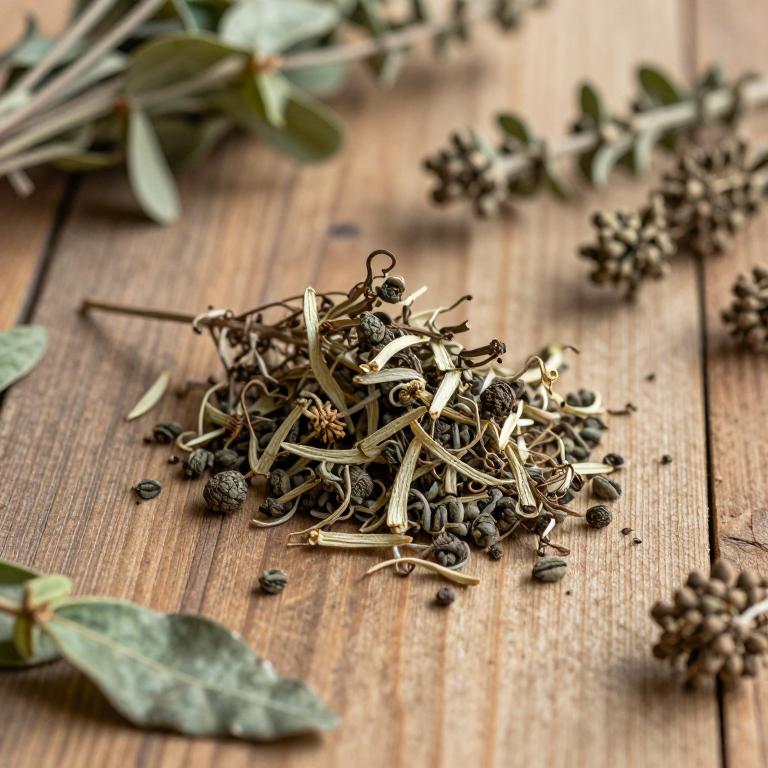
Names and Synonyms
Common Names
- balsam-apple
- African Cucumber
- Balsam Apple
- Balsam Peer
- Bursting Beauty
Scientific Names
Accepted name
Momordica balsaminaSynonyms
- Momordica schinzii
- Momordica huberi
- Momordica involucrata
- Momordica garriepensis
- Nevrosperma cuspidata
Regional and Traditional Names
Spanish:
- balsamina
German:
- Momordica balsamina L.
- Balsamapfel
French:
- pomme de merveille
Sources: Wikidata, Catalogue of Life
Taxonomical Classification
This plant belongs to the kingdom Plantae and the phylum Streptophyta, falling under the class Equisetopsida and subclass Magnoliidae. Within the order Cucurbitaleales, it is classified under the family Cucurbitaceae. Finally, it is identified by its specific genus, Momordica.
| Rank | Classification |
|---|---|
| Kingdom | Plantae |
| Phylum | Streptophyta |
| Class | Equisetopsida |
| Subclass | Magnoliidae |
| Order | Cucurbitales |
| Family | Cucurbitaceae |
| Genus | Momordica |
Sources: The World Checklist of Vascular Plants (WCVP)
Distribution
This plant, Momordica balsamina, exhibits a diverse geographical distribution across several regions in Africa. In Northern Africa, its presence has been documented specifically within Tunisia. Moving southward, the species is found throughout various parts of West Tropical Africa. Specifically, it inhabits the territories of Benin, Burkina, and Mali. Additionally, its range extends to the West Tropical African nation of Mauritania.
| Region | Area |
|---|---|
| Northern Africa | Tunisia |
| West Tropical Africa | Benin |
| West Tropical Africa | Burkina |
| West Tropical Africa | Mali |
| West Tropical Africa | Mauritania |
| West Tropical Africa | Nigeria |
| West Tropical Africa | Niger |
| West Tropical Africa | Senegal |
| West-Central Tropical Africa | Cameroon |
| Northeast Tropical Africa | Chad |
Sources: The World Checklist of Vascular Plants (WCVP)
Botanical Identification
Ecology
The ecology of Momordica balsamina is characterized by a broad altitudinal distribution, occurring across a diverse range of vertical gradients. It can be found at elevations as low as 5 m AMSL, extending up to a maximum elevation of 1465 m AMSL. In terms of its interaction with human environments, the species is noted for being rarely cultivated, suggesting that it primarily thrives in its natural, wild state rather than within managed agricultural landscapes.
- Elevational range max:
- 1465 m AMSL
- Elevational range min:
- 5 m AMSL
- Habitat :
- rarely cultivated
Life history
The life history of Momordica balsamina is characterized by its classification as an annual, meaning it completes its entire biological cycle—from germination and vegetative growth to flowering and seed production—within a single growing season. As a therophyte, its survival strategy relies on the production of seeds that remain dormant during unfavorable periods, allowing the plant to bypass harsh conditions and emerge anew when environmental circumstances become favorable. This lifecycle enables the species to rapidly colonize available habitats, utilizing its transient growth phase to maximize reproductive output before the onset of senescence.
- Life form :
- therophyte
- Lifecycle :
- annual
Morphology
The morphology of Momordica balsamina is characterized by its growth form as a non-woody herb and specifically a forb. It functions as an obligatory vine, utilizing a climbing habit to ascend toward light sources. The plant exhibits a terrestrial lifestyle, existing as an independent organism without parasitic or epiphytic dependencies. In terms of stature, its height is variable, ranging from a minimum of 0.5 m to a maximum of 5 m, with a mean plant height of approximately 5 m.
- Aquatic :
- terrestrial
- Climber :
- vine
- Climber :
- obligatory
- Epiphyte :
- terrestrial
- Growth form :
- herb
- Growth form :
- forb
- Parasite :
- independent
- Plant height mean:
- 5 m
- Plant height min:
- 0.5 m
- Woodiness :
- non-woody
Physiology
The physiology of Momordica balsamina is characterized by specific vegetative growth patterns and nutritional metabolic processes. The leaf morphology exhibits a defined size range, with leaf lengths typically measuring between a minimum of 5 cm and a maximum of 7 cm. In terms of nutrient cycling and soil interaction, the plant does not function as a nitrogen fixer, meaning it lacks the symbiotic relationship with nitrogen-fixing bacteria required to convert atmospheric nitrogen into a usable biological form.
- Leaf length max:
- 7 cm
- Leaf length min:
- 5 cm
- Nitrogen fixer :
- no
Reproduction
The reproduction of Momordica balsamina is centered around the production and dispersal of its seeds, which exhibit specific morphological characteristics essential for its life cycle. The seeds produced by this species demonstrate a measurable variation in weight, reflecting the biological diversity within its reproductive output. Quantitatively, the seed mass shows a mean value of 0.08655625 g. This measurement is bounded by a minimum seed mass of 0.0682 g and reaches a maximum seed mass of 0.1111 g. These specific weight parameters are critical indicators of the plant's reproductive investment and the potential vigor of the resulting progeny.
- Seed mass max:
- 0.1111 g
- Seed mass mean:
- 0.08655625 g
- Seed mass min:
- 0.0682 g
Sources: Global Inventory of Floras and Traits (GIFT)
Plant Parts
Momordica balsamina has 3 reported plant parts identified across 5 scientific publications and several other databases that are studied for medicinal purposes. The most consistently reported plant part include leaf, fruit, seed.
| Plant part | Supporting sources | Consensus |
|---|---|---|
| Leaf | 3 supporting sources | ★★☆☆☆ |
| Fruit | 1 supporting sources | ★☆☆☆☆ |
| Seed | 1 supporting sources | ★☆☆☆☆ |
Leaf
- Current pharmaceutical biotechnology
- Virology journal
- Pakistan journal of biological sciences : PJBS
Fruit
- Current pharmaceutical biotechnology
Seed
- Current pharmaceutical biotechnology
Chemicals
Momordica balsamina has 27 reported phytochemicals identified across 5 scientific publications and several other databases. The most consistently reported chemicals include Balsamin, Balsaminol F, CALCIUM, Flavonoids, Karavilagenin C.
| Chemical | Supporting sources | Consensus |
|---|---|---|
| Balsamin | 2 supporting sources | ★☆☆☆☆ |
| Balsaminol F | 2 supporting sources | ★☆☆☆☆ |
| CALCIUM | 2 supporting sources | ★☆☆☆☆ |
| Flavonoids | 2 supporting sources | ★☆☆☆☆ |
| Karavilagenin C | 2 supporting sources | ★☆☆☆☆ |
| MAGNESIUM | 2 supporting sources | ★☆☆☆☆ |
| Terpenes | 2 supporting sources | ★☆☆☆☆ |
| Anthraquinones | 1 supporting sources | ★☆☆☆☆ |
| BALSAMINOL A | 1 supporting sources | ★☆☆☆☆ |
| BALSAMINOL C | 1 supporting sources | ★☆☆☆☆ |
Balsamin
- Virology journal
- PloS one
Balsaminol F
- Planta medica
- In silico pharmacology
CALCIUM
- Frontiers in pharmacology
- Current pharmaceutical biotechnology
Flavonoids
- Current pharmaceutical biotechnology
- Journal of herbal pharmacotherapy
Karavilagenin C
- Planta medica
- Bioorganic & medicinal chemistry
MAGNESIUM
- Frontiers in pharmacology
- Current pharmaceutical biotechnology
Terpenes
- Current pharmaceutical biotechnology
- Frontiers in plant science
Anthraquinones
- Journal of herbal pharmacotherapy
BALSAMINOL A
- In silico pharmacology
BALSAMINOL C
- In silico pharmacology
Activities
Momordica balsamina has 8 reported activities identified across 5 scientific publications and several other databases. The most consistently reported activities include Abortifacient, Analgesic, Anthelmintic, Antimalarial, Antioxidant.
| Activity | Supporting sources | Consensus |
|---|---|---|
| Abortifacient | 1 supporting sources | ★☆☆☆☆ |
| Analgesic | 1 supporting sources | ★☆☆☆☆ |
| Anthelmintic | 1 supporting sources | ★☆☆☆☆ |
| Antimalarial | 1 supporting sources | ★☆☆☆☆ |
| Antioxidant | 1 supporting sources | ★☆☆☆☆ |
| Antiviral | 1 supporting sources | ★☆☆☆☆ |
| Hepatoprotective | 1 supporting sources | ★☆☆☆☆ |
| Hypoglycemic | 1 supporting sources | ★☆☆☆☆ |
Abortifacient
- Frontiers in pharmacology
Analgesic
- Current pharmaceutical biotechnology
Anthelmintic
- Frontiers in pharmacology
Antimalarial
- European journal of medicinal chemistry
Antioxidant
- Current pharmaceutical biotechnology
Antiviral
- In silico pharmacology
Hepatoprotective
- Current pharmaceutical biotechnology
Hypoglycemic
- Current pharmaceutical biotechnology
Conditions
Momordica balsamina has 19 reported investigations on conditions identified across 5 scientific publications and several other databases. The most consistently reported conditions include HIV, HIV-1, Plasmodium berghei, Plasmodium falciparum, SARS-CoV-2.
| Condition | Supporting sources | Consensus |
|---|---|---|
| Hiv | 1 supporting sources | ★☆☆☆☆ |
| Hiv-1 | 1 supporting sources | ★☆☆☆☆ |
| Plasmodium berghei | 1 supporting sources | ★☆☆☆☆ |
| Plasmodium falciparum | 1 supporting sources | ★☆☆☆☆ |
| Sars-cov-2 | 1 supporting sources | ★☆☆☆☆ |
| Cardiovascular disease | 1 supporting sources | ★☆☆☆☆ |
| Colon cancer | 1 supporting sources | ★☆☆☆☆ |
| Diabetes mellitus | 1 supporting sources | ★☆☆☆☆ |
| Fever | 1 supporting sources | ★☆☆☆☆ |
| Gastric cancer | 1 supporting sources | ★☆☆☆☆ |
Hiv
- Current pharmaceutical biotechnology
Hiv-1
- Virology journal
Plasmodium berghei
- Bioorganic & medicinal chemistry
Plasmodium falciparum
- Bioorganic & medicinal chemistry
Sars-cov-2
- In silico pharmacology
Cardiovascular disease
- Cardiovascular endocrinology & metabolism
Colon cancer
- Planta medica
Diabetes mellitus
- Journal of ethnopharmacology
Fever
- Pharmaceutical biology
Gastric cancer
- Planta medica
Preparations
Momordica balsamina has 10 reported preparations identified across 5 scientific publications and several other databases. The most consistently reported preparations include Water-soluble extracts, a tea, aqueous extracts, crude methanol extract, ethanol extracts.
| Preparation | Supporting sources | Consensus |
|---|---|---|
| Water-soluble extracts | 1 supporting sources | ★☆☆☆☆ |
| A tea | 1 supporting sources | ★☆☆☆☆ |
| Aqueous extracts | 1 supporting sources | ★☆☆☆☆ |
| Crude methanol extract | 1 supporting sources | ★☆☆☆☆ |
| Ethanol extracts | 1 supporting sources | ★☆☆☆☆ |
| Ethyl acetate-soluble fraction of the methanol extract of the aerial parts | 1 supporting sources | ★☆☆☆☆ |
| Extracts | 1 supporting sources | ★☆☆☆☆ |
| Methanol extract of the aerial parts | 1 supporting sources | ★☆☆☆☆ |
| Water extracts | 1 supporting sources | ★☆☆☆☆ |
| Water extracts of the leaves | 1 supporting sources | ★☆☆☆☆ |
Water-soluble extracts
- Virology journal
A tea
- Virology journal
Aqueous extracts
- Journal of herbal pharmacotherapy
Crude methanol extract
- Planta medica
Ethanol extracts
- Journal of herbal pharmacotherapy
Ethyl acetate-soluble fraction of the methanol extract of the aerial parts
- Planta medica
Extracts
- Journal of ethnopharmacology
Methanol extract of the aerial parts
- Planta medica
Water extracts
- Journal of ethnopharmacology
Water extracts of the leaves
- Virology journal