spiny molucca
Moluccella spinosa · Accepted scientific name
Scientific literature: Very Sparse (3 studies) · ★☆☆☆☆
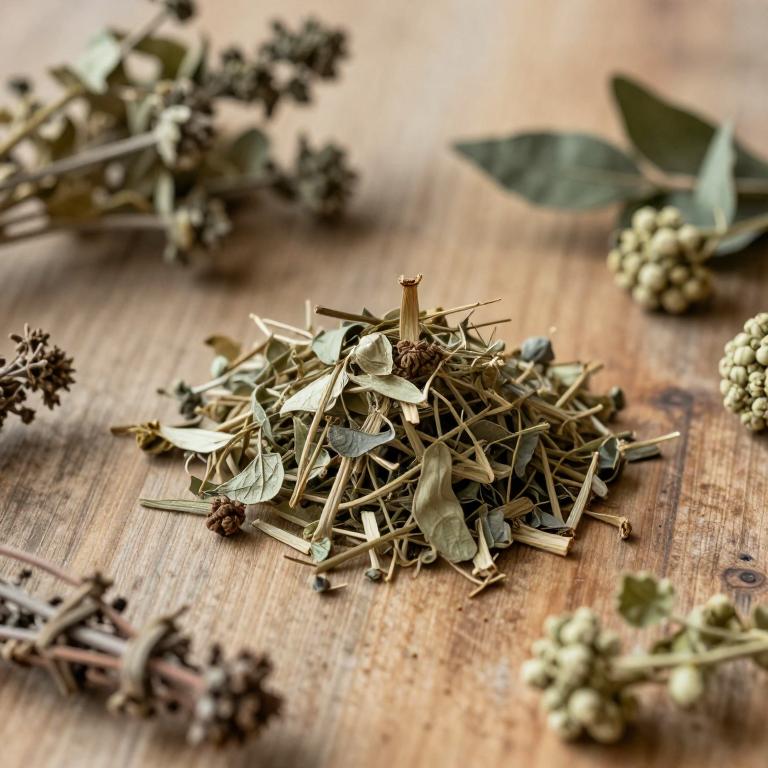
Spiny molucca, scientifically known as Moluccella spinosa, is a distinctive medicinal shrub native to arid regions. Renowned for its unique, thorn-like structures, this resilient plant has long been utilized in traditional medicine. It offers valuable bioactive compounds, providing therapeutic potential for various ailments within holistic healing practices.
- Family
- Lamiaceae
- Native range
- Europe
- Parts used
- Not available
- Common names
- Spiny Molucca
- Scientific synonyms
- Chasmonia Incisa · Molucca Spinosa · 1 more
Names and Synonyms
Common Names
- spiny molucca
Scientific Names
Accepted name
Moluccella spinosaSynonyms
- Chasmonia incisa
- Molucca spinosa
- Moluccella armata
Sources: Wikidata, Catalogue of Life
Taxonomical Classification
This plant belongs to the kingdom Plantae and the phylum Streptophyta, falling under the class Equisetopsida and subclass Magnoliidae. Within the order Lamiales and the family Lamiaceae, it is classified under the genus Moluccella.
| Rank | Classification |
|---|---|
| Kingdom | Plantae |
| Phylum | Streptophyta |
| Class | Equisetopsida |
| Subclass | Magnoliidae |
| Order | Lamiales |
| Family | Lamiaceae |
| Genus | Moluccella |
Sources: The World Checklist of Vascular Plants (WCVP)
Distribution
This plant exhibits a specific distribution pattern primarily concentrated within the Mediterranean region. In Southwestern Europe, its presence is noted across Spain and the Baleares islands. Moving toward Southeastern Europe, the species can be found growing in Greece. It also inhabits parts of Italy, extending its range into the Mediterranean landscape. Furthermore, the plant is specifically documented in the region of Sicilia.
| Region | Area |
|---|---|
| Southwestern Europe | Baleares |
| Southwestern Europe | Spain |
| Southeastern Europe | Greece |
| Southeastern Europe | Italy |
| Southeastern Europe | Sicilia |
| Northern Africa | Algeria |
| Northern Africa | Tunisia |
| Western Asia | Cyprus |
| Western Asia | Lebanon-Syria |
| Western Asia | Palestine |
Sources: The World Checklist of Vascular Plants (WCVP)
Botanical Identification
Life history
The life history of Moluccella spinosa is characterized by a lifecycle that is classified as annual, meaning it completes its entire reproductive cycle from germination to seed production within a single growing season. In terms of its structural growth and survival strategy, the plant functions as a chamaephyte, a life form where the majority of the plant's vegetative organs are located close to the soil surface, often protected by a layer of leaf litter or ground cover during unfavorable conditions. This combination of an annual reproductive strategy and a chamaephyte growth habit allows the species to effectively exploit seasonal resources and rapidly colonize suitable habitats before the onset of environmental stress.
- Life form :
- chamaephyte
- Lifecycle :
- annual
Morphology
The morphology of Moluccella spinosa is characterized by a growth form categorized as a herb, specifically functioning as a non-woody forb. As a terrestrial organism, it does not exhibit aquatic or semiaquatic tendencies, nor does it function as an epiphyte. The plant is an independent species, meaning it is not a parasite, and it maintains a self-supporting structure rather than acting as a climber.
- Aquatic :
- terrestrial
- Climber :
- self-supporting
- Epiphyte :
- terrestrial
- Growth form :
- herb
- Parasite :
- independent
- Woodiness :
- non-woody
Reproduction
The reproduction of Moluccella spinosa is characterized by the production of small seeds that exhibit specific weight variations within their population. The seed mass is relatively light, with a measured mean value of 0.006273333 g. Individual seeds within a sample demonstrate a range of weights, reaching a maximum mass of 0.00747 g and a minimum mass of 0.00545 g.
- Seed mass max:
- 0.00747 g
- Seed mass mean:
- 0.006273333 g
- Seed mass min:
- 0.00545 g
Sources: Global Inventory of Floras and Traits (GIFT)
Chemicals
Moluccella spinosa has 1 reported phytochemicals identified across 0 scientific publications and several other databases. The most consistently reported chemicals include 2-PENTADECANONE.
| Chemical | Supporting sources | Consensus |
|---|---|---|
| 2-PENTADECANONE | 1 supporting sources | ★☆☆☆☆ |
2-PENTADECANONE
- Plants (Basel, Switzerland)
Activities
Moluccella spinosa has 2 reported activities identified across 0 scientific publications and several other databases. The most consistently reported activities include Antifungal, Antimicrobial.
| Activity | Supporting sources | Consensus |
|---|---|---|
| Antifungal | 1 supporting sources | ★☆☆☆☆ |
| Antimicrobial | 1 supporting sources | ★☆☆☆☆ |
Antifungal
- Plants (Basel, Switzerland)
Antimicrobial
- Plants (Basel, Switzerland)