Molucella laevis
Moluccella laevis · Accepted scientific name
Scientific literature: Very Sparse (3 studies) · ★☆☆☆☆
Moluccella laevis, scientifically known as Moluccella laevis, is a distinctive medicinal herb prized for its unique botanical properties. Often recognized by its striking, bell-shaped calyxes, this plant has been utilized in traditional healing practices to address various ailments, offering a fascinating intersection of ornamental beauty and therapeutic potential.
- Family
- Lamiaceae
- Native range
- Europe
- Parts used
- Not available
- Common names
- Bells Of Ireland · Molucca Balm · 2 more
- Scientific synonyms
- Lamium Moluccella · Molucca Laevis
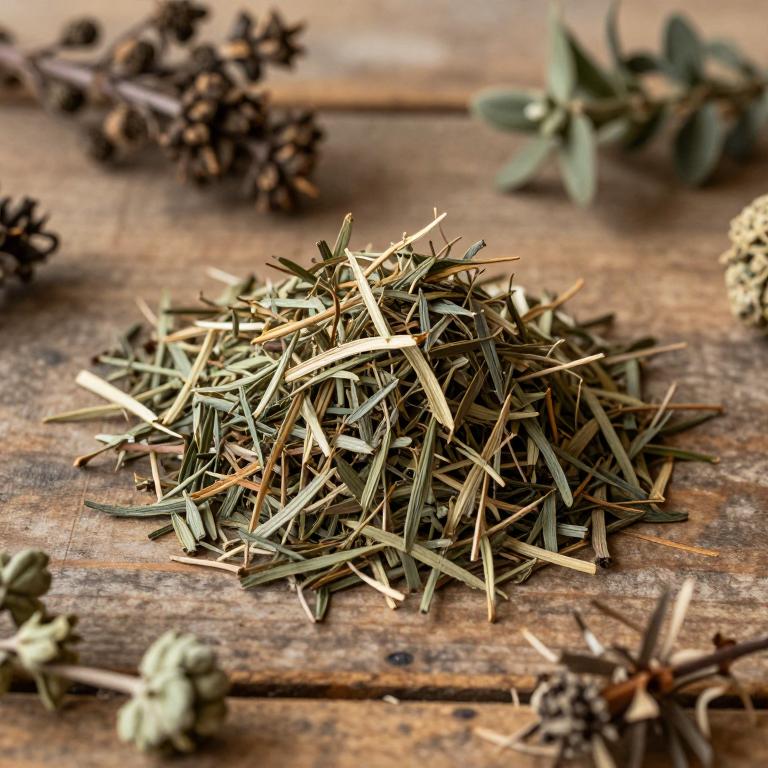
Names and Synonyms
Common Names
- bells of Ireland
- molucca balm
- shellflower
- Bells-of-Ireland
Scientific Names
Accepted name
Moluccella laevisSynonyms
- Lamium moluccella
- Molucca laevis
Regional and Traditional Names
Spanish:
- Campana
German:
- Muschelblume
French:
- mélisse de Constantinople
- mélisse des Moluques
Sources: Wikidata, Catalogue of Life
Taxonomical Classification
This plant belongs to the kingdom Plantae and is classified under the phylum Streptophyta and the class Equisetopsida. Within the subclass Magnoliidae, it is situated in the order Lamiales and the family Lamiaceae. Finally, it is identified by the genus Moluccella.
| Rank | Classification |
|---|---|
| Kingdom | Plantae |
| Phylum | Streptophyta |
| Class | Equisetopsida |
| Subclass | Magnoliidae |
| Order | Lamiales |
| Family | Lamiaceae |
| Genus | Moluccella |
Sources: The World Checklist of Vascular Plants (WCVP)
Distribution
This plant exhibits a diverse geographical distribution spanning several regions across the European continent. In Middle Europe, it can be found growing within the borders of Germany. Its range extends to Southwestern Europe, where it is present in both Portugal and Spain. Moving toward the east, the species is documented in the Krym region. Finally, its distribution reaches into Eastern Europe, specifically throughout South European Russia.
| Region | Area |
|---|---|
| Middle Europe | Germany |
| Southwestern Europe | Portugal |
| Southwestern Europe | Spain |
| Eastern Europe | Krym |
| Eastern Europe | South European Russia |
| Eastern Europe | Ukraine |
| Northern Africa | Morocco |
| Northern Africa | Tunisia |
| East Tropical Africa | Kenya |
| Central Asia | Turkmenistan |
Sources: The World Checklist of Vascular Plants (WCVP)
Botanical Identification
Ecology
The ecology of Moluccella laevis is characterized by its preference for specific altitudinal zones and disturbed environments. This species typically thrives within an elevational range spanning from 500 m AMSL to a maximum of 1000 m AMSL. In terms of its preferred living conditions, it is commonly found colonizing ruderal sites, where it adapts to the varied conditions provided by human-disturbed or wasteland habitats.
- Elevational range max:
- 1000 m AMSL
- Elevational range min:
- 500 m AMSL
- Habitat :
- ruderal sites
Life history
The life history of Moluccella laevis is characterized by its classification as an annual plant, completing its entire reproductive cycle within a single growing season. As a therophyte, it survives the unfavorable periods of its environment primarily through the production of seeds, which remain dormant until conditions become suitable for germination. This life strategy allows the species to rapidly exploit seasonal resources, growing from a seedling to a mature flowering state before the onset of senescence, ensuring the continuation of the species through the dispersal of its progeny.
- Life form :
- therophyte
- Lifecycle :
- annual
Morphology
The morphology of Moluccella laevis is characterized by a growth form categorized as a non-woody herb and specifically a forb. As a self-supporting plant, it does not function as a climber, liana, or vine, and it grows as an independent organism rather than a parasite. The plant maintains a terrestrial habit, lacking aquatic or epiphytic tendencies. In terms of stature, it is a relatively small species with a plant height ranging from a minimum of 0.3 m to a maximum of 1 m.
- Aquatic :
- terrestrial
- Climber :
- self-supporting
- Epiphyte :
- terrestrial
- Growth form :
- herb
- Growth form :
- forb
- Parasite :
- independent
- Plant height max:
- 1 m
- Plant height min:
- 0.3 m
- Woodiness :
- non-woody
Reproduction
The reproduction of Moluccella laevis is characterized by a specific seasonal flowering cycle and distinct seed production metrics. The plant's flowering period is concentrated in July, though its phenology can be variable depending on environmental conditions. Following pollination, the plant produces seeds that exhibit a very small and precise mass distribution. The mean seed mass is recorded at approximately 0.0067125 g, with individual seed weights ranging from a minimum of 0.0045 g to a maximum of 0.00786 g.
- Flowering time :
- Jul
- Seed mass max:
- 0.00786 g
- Seed mass mean:
- 0.0067125 g
- Seed mass min:
- 0.0045 g
Sources: Global Inventory of Floras and Traits (GIFT)
Chemicals
Moluccella laevis has 1 reported phytochemicals identified across 0 scientific publications and several other databases. The most consistently reported chemicals include 2-PENTADECANONE.
| Chemical | Supporting sources | Consensus |
|---|---|---|
| 2-PENTADECANONE | 1 supporting sources | ★☆☆☆☆ |
2-PENTADECANONE
- Plants (Basel, Switzerland)
Activities
Moluccella laevis has 2 reported activities identified across 0 scientific publications and several other databases. The most consistently reported activities include Antifungal, Antimicrobial.
| Activity | Supporting sources | Consensus |
|---|---|---|
| Antifungal | 1 supporting sources | ★☆☆☆☆ |
| Antimicrobial | 1 supporting sources | ★☆☆☆☆ |
Antifungal
- Plants (Basel, Switzerland)
Antimicrobial
- Plants (Basel, Switzerland)