Moltkia coerulea
Moltkia coerulea · Accepted scientific name
Scientific literature: Very Sparse (11 studies) · ★☆☆☆☆
Moltkia coerulea, scientifically known as Moltkia coerulea, is a resilient medicinal shrub native to the arid regions of the Indian subcontinent. Renowned in traditional Ayurvedic practices, this plant offers significant therapeutic potential, particularly for its antioxidant, anti-inflammatory, and antimicrobial properties, making it a valuable subject for pharmacological study.
- Family
- Boraginaceae
- Native range
- Asia-Temperate
- Parts used
- Not available
- Common names
- Not available
- Scientific synonyms
- Onosma Coerulea · Moltkia Punctata · 2 more
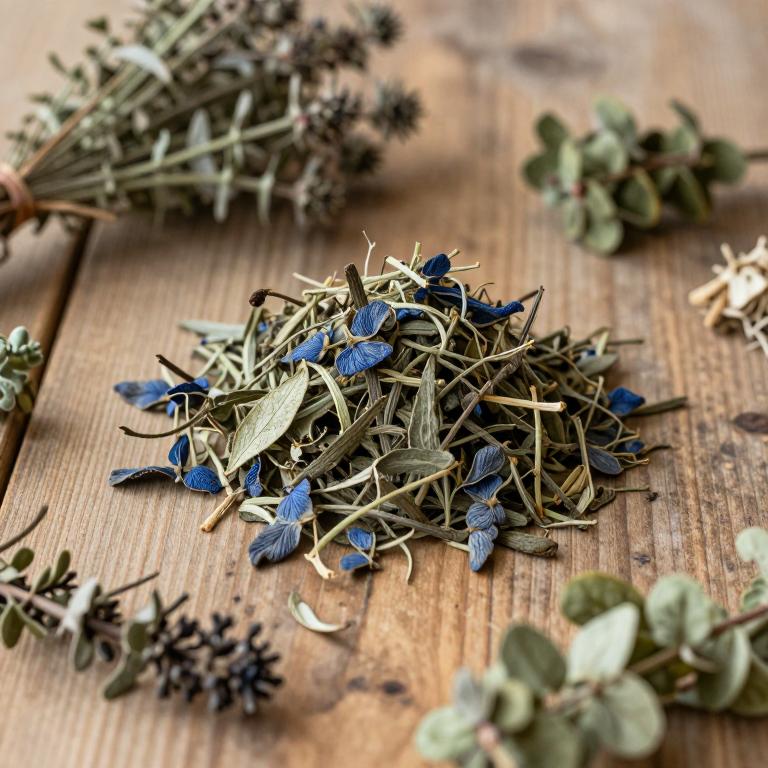
Names and Synonyms
Scientific Names
Accepted name
Moltkia coeruleaSynonyms
- Onosma coerulea
- Moltkia punctata
- Cynoglossum rugosum
- Moltkia anatolica
Regional and Traditional Names
German:
- türkische Moltkie
French:
- Onosma coerulea
- Cynoglossum rugosum
- Lithospermum rugosum
Sources: Wikidata, Catalogue of Life
Taxonomical Classification
This plant belongs to the kingdom Plantae and is classified under the phylum Streptophyta within the class Equisetopsida. Further taxonomic hierarchy places it in the subclass Magnoliidae and the order Boraginales, falling under the family Boraginaceae. Finally, it is categorized within the genus Moltkia, specifically as the species Moltkia coerulea.
| Rank | Classification |
|---|---|
| Kingdom | Plantae |
| Phylum | Streptophyta |
| Class | Equisetopsida |
| Subclass | Magnoliidae |
| Order | Boraginales |
| Family | Boraginaceae |
| Genus | Moltkia |
Sources: The World Checklist of Vascular Plants (WCVP)
Distribution
This plant exhibits a specific geographical range that spans across parts of Western Asia and the Caucasus. Within the Caucasus region, its presence is noted specifically in the Transcaucasus area. Moving into Western Asia, the species can be found growing in the diverse landscapes of Iran. Its distribution also extends to the Levant, specifically covering the regions of Lebanon and Syria. Finally, the plant is well-established within the borders of Türkiye, completing its regional spread.
| Region | Area |
|---|---|
| Caucasus | Transcaucasus |
| Western Asia | Iran |
| Western Asia | Lebanon-Syria |
| Western Asia | Türkiye |
Sources: The World Checklist of Vascular Plants (WCVP)
Botanical Identification
Ecology
The ecology of Moltkiat coerulea is defined by its specialized adaptation to arid and rugged landscapes, where it thrives primarily within desert, mountain, and semidesert environments. This plant is strategically distributed across these zones, demonstrating a high tolerance for the extreme temperature fluctuations and low moisture availability characteristic of such biomes. In its mountain habitats, it often occupies rocky substrates or sloping terrains, while in its desert and semidesert ranges, it occupies niche areas capable of supporting its growth amidst sparse vegetation. Its ability to persist in these demanding ecological settings suggests a robust physiological capacity to manage water scarcity and intense solar radiation typical of its native terrain.
- Habitat :
- desert, mountains, semidesert
Life history
The life history of Moltkiat coerulea is characterized by its status as a perennial plant, meaning it lives for more than two years and undergoes multiple growth cycles throughout its existence. As a long-lived species, it establishes a persistent root system that allows it to survive through various seasonal changes, often returning to bloom in subsequent years. This perennial nature enables the plant to invest energy into structural development and long-term survival rather than focusing solely on a single reproductive event. Throughout its life cycle, it maintains a continuous presence in its habitat, contributing to the stability of its local ecosystem as it undergoes repeated stages of vegetative growth and flowering.
- Lifecycle :
- perennial
Morphology
The morphology of Moltkea coerulea is characterized by a low-growing growth habit, typically manifesting as a shrub or subshrub. This plant maintains a diminutive stature, with a height ranging from a minimum of 0.1 m to a maximum of 0.3 m. It is a terrestrial species, growing directly in the soil rather than as an epiphyte, and functions as an independent organism rather than an obligatory parasite. The woodiness of the plant is described as variable, reflecting its structural development within its specific ecological niche.
- Epiphyte :
- terrestrial
- Growth form :
- shrub
- Growth form :
- subshrub
- Parasite :
- obligatory
- Plant height max:
- 0.3 m
- Plant height min:
- 0.1 m
- Woodiness :
- variable
Reproduction
The reproductive cycle of Moltkea coerulea is characterized by a specific flowering window and highly uniform seed production. The flowering period is concentrated in the month of May, serving as the primary stage for pollination. Following successful fertilization, the plant produces seeds that exhibit remarkable consistency in their physical dimensions. The seed mass is highly stabilized, with a mean, maximum, and minimum value all recorded at exactly 0.022 g, indicating a lack of significant morphological variation in seed weight within the species.
- Flowering time :
- May
- Seed mass mean:
- 0.022 g
Sources: Global Inventory of Floras and Traits (GIFT)
Chemicals
Moltkia coerulea has 4 reported phytochemicals identified across 0 scientific publications and several other databases. The most consistently reported chemicals include CHLOROGENIC ACID, RUTIN, rosmarinic acid, vanillin.
| Chemical | Supporting sources | Consensus |
|---|---|---|
| CHLOROGENIC ACID | 1 supporting sources | ★☆☆☆☆ |
| RUTIN | 1 supporting sources | ★☆☆☆☆ |
| rosmarinic acid | 1 supporting sources | ★☆☆☆☆ |
| vanillin | 1 supporting sources | ★☆☆☆☆ |
CHLOROGENIC ACID
- Turkish journal of medical sciences
RUTIN
- Turkish journal of medical sciences
rosmarinic acid
- Turkish journal of medical sciences
vanillin
- Turkish journal of medical sciences
Activities
Moltkia coerulea has 3 reported activities identified across 0 scientific publications and several other databases. The most consistently reported activities include Antiapoptotic, Antioxidant, Neuroprotective.
| Activity | Supporting sources | Consensus |
|---|---|---|
| Antiapoptotic | 1 supporting sources | ★☆☆☆☆ |
| Antioxidant | 1 supporting sources | ★☆☆☆☆ |
| Neuroprotective | 1 supporting sources | ★☆☆☆☆ |
Antiapoptotic
- Turkish journal of medical sciences
Antioxidant
- Turkish journal of medical sciences
Neuroprotective
- Turkish journal of medical sciences
Conditions
Moltkia coerulea has 2 reported investigations on conditions identified across 0 scientific publications and several other databases. The most consistently reported conditions include apoptosis, neuroinflammation.
| Condition | Supporting sources | Consensus |
|---|---|---|
| Apoptosis | 1 supporting sources | ★☆☆☆☆ |
| Neuroinflammation | 1 supporting sources | ★☆☆☆☆ |
Apoptosis
- Turkish journal of medical sciences
Neuroinflammation
- Turkish journal of medical sciences
Preparations
Moltkia coerulea has 1 reported preparations identified across 0 scientific publications and several other databases. The most consistently reported preparations include Aqueous and methanol extracts.
| Preparation | Supporting sources | Consensus |
|---|---|---|
| Aqueous and methanol extracts | 1 supporting sources | ★☆☆☆☆ |
Aqueous and methanol extracts
- Turkish journal of medical sciences