tropical girdlepod
Mitracarpus hirtus · Accepted scientific name
Scientific literature: Sparse (68 studies) · ★★☆☆☆
Tropical girdlepod, scientifically known as Mitracarpus hirtus, is a distinctive medicinal plant native to various tropical regions. Renowned for its unique climbing habit, it holds significant value in traditional medicine. Researchers continue to explore its bioactive compounds, investigating its potential therapeutic applications for treating diverse inflammatory and systemic conditions.
- Family
- Rubiaceae
- Native range
- Africa
- Parts used
- Leaf
- Common names
- Not available
- Scientific synonyms
- Staurospermum Verticillatum · Spermacoce Villosa · 20 more
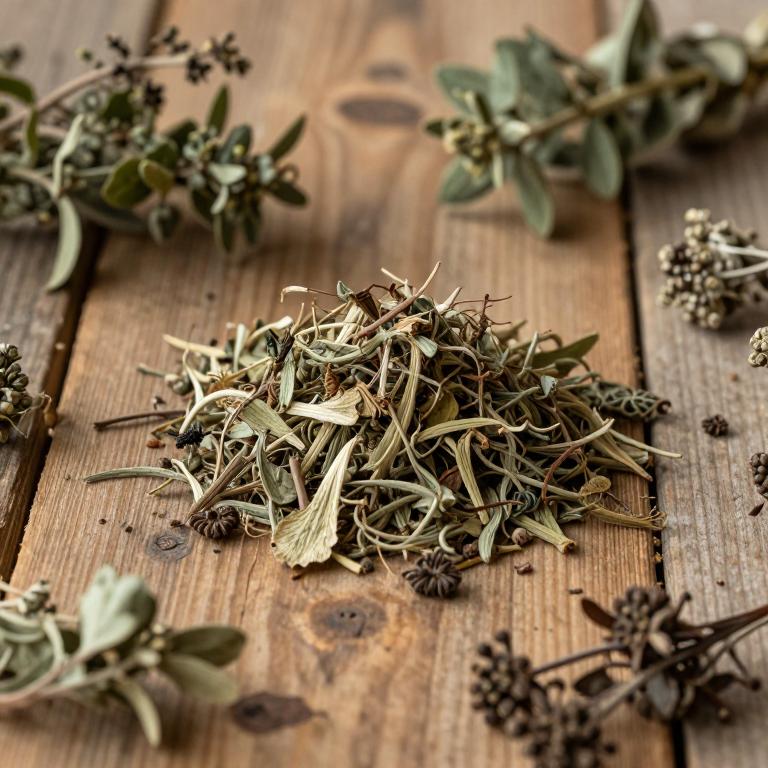
Names and Synonyms
Scientific Names
Accepted name
Mitracarpus hirtusSynonyms
- Staurospermum verticillatum
- Spermacoce villosa
- Mitracarpus torresianus
- Diodia villosa
- Mitracarpus hirtus var. sessilis
- Mitracarpus schizangius var. angustifolius
- Mitracarpus diffusus
- Mitracarpus bakeri
- Mitracarpus verticillatus
- Mitracarpus villosus
- Mitracarpus stylosus
- Mitracarpus pallidus
- Mitracarpus scaber
- Mitracarpus senegalensis
- Mitracarpus simplex
- Borreria remotifolia
- Spermacoce hirta
- Spermacoce declinata
- Spermacoce cephalotes
- Spermacoce stylosa
- Mitracarpus hirtus var. remotiflorus
- Mitracarpus villosus var. glabrior
Sources: Wikidata, Catalogue of Life
Taxonomical Classification
This plant belongs to the kingdom Plantae and the phylum Streptophyta, situated within the class Equisetopsida and subclass Magnoliidae. It is further classified under the order Gentianaales and the family Rubiaceae. Ultimately, its taxonomic identity is defined by its placement in the genus Mitracarpus.
| Rank | Classification |
|---|---|
| Kingdom | Plantae |
| Phylum | Streptophyta |
| Class | Equisetopsida |
| Subclass | Magnoliidae |
| Order | Gentianales |
| Family | Rubiaceae |
| Genus | Mitracarpus |
Sources: The World Checklist of Vascular Plants (WCVP)
Distribution
This plant exhibits a wide geographical distribution spanning both Atlantic islands and the African mainland. In the Macaronesian region, its presence is specifically noted in Cape Verde. Moving to the continent, it is found across several areas of West Tropical Africa. Specifically, its range includes the nations of Benin, Burkina, and Gambia. Finally, the distribution extends further south to include Ghana.
| Region | Area |
|---|---|
| Macaronesia | Cape Verde |
| West Tropical Africa | Benin |
| West Tropical Africa | Burkina |
| West Tropical Africa | Gambia |
| West Tropical Africa | Ghana |
| West Tropical Africa | Guinea-Bissau |
| West Tropical Africa | Guinea |
| West Tropical Africa | Ivory Coast |
| West Tropical Africa | Liberia |
| West Tropical Africa | Mali |
Sources: The World Checklist of Vascular Plants (WCVP)
Botanical Identification
Ecology
The ecology of Mitracarpus hirtus is characterized by a broad altitudinal distribution, ranging from sea level (0 m AMSL) up to elevations of 2000 m AMSL. This species demonstrates significant ecological plasticity, inhabiting diverse environments including anthropogenic areas (Área Antrópica), high-altitude grasslands (Campo de Altitude), and the Cerrado (latu sensu) biome. Additionally, it is found within the Amazonian Savanna (Savaana Amazônica), indicating its ability to thrive across varied soil types and moisture regimes within these distinct South American ecosystems.
- Elevational range max:
- 2000 m AMSL
- Elevational range min:
- 0 m AMSL
- Habitat :
- Área Antrópica, Campo de Altitude, Cerrado (lato sensu), Savana Amazônica
Life history
The life history of Mitracarpus hirtus is characterized by its classification as an annual plant, completing its entire developmental cycle from germination to seed production within a single growing season. In terms of its structural life form, the species is identified as a therophyte, meaning it survives unfavorable environmental conditions primarily in the form of seeds, with the vegetative body dying off completely at the end of its seasonal cycle. This therophytic strategy allows it to rapidly exploit available resources during favorable periods before retreating into a dormant seed state to await the next cycle.
- Life form :
- therophyte
- Lifecycle :
- annual
Morphology
The morphology of Mitracarpus hirtus is characterized by a non-woody, herbaceous growth form, specifically classified as a forb. It is a terrestrial plant that functions as an independent organism, lacking any parasitic tendencies. In terms of its structural habit, it is a self-supporting plant rather than a climber or vine, and it does not exhibit epiphytic behavior. The plant maintains a relatively low stature, with a height ranging from a minimum of 0 m to a maximum of approximately 0.61 m, maintaining a mean height of 0.4 m.
- Aquatic :
- terrestrial
- Climber :
- self-supporting
- Epiphyte :
- terrestrial
- Growth form :
- herb
- Growth form :
- forb
- Parasite :
- independent
- Plant height max:
- 0.609607413 m
- Plant height mean:
- 0.4 m
- Plant height min:
- 0 m
- Woodiness :
- non-woody
Physiology
The physiology of Mitracarpous hirtus is characterized by distinct metabolic and nutritional processes essential for its survival in specific ecological niches. A key aspect of its physiological profile relates to its nutrient acquisition strategies, specifically regarding its ability to interact with atmospheric gases for soil enrichment. In terms of its symbiotic capabilities, the plant is not a nitrogen fixer, meaning it lacks the specialized root nodules containing nitrogen-fixing bacteria required to convert atmospheric nitrogen into ammonia. Consequently, its physiological reliance on nitrogen is strictly dependent on the uptake of nitrates or ammonium ions available within the soil matrix through its root system. This dependence necessitates a robust vascular transport mechanism to move these essential nutrients from the rhizosphere to the photosynthetic tissues to support protein synthesis and chlorophyll production. The plant's metabolic activities are further governed by its photosynthetic efficiency and its ability to manage water potential, ensuring that cellular homeostasis is maintained during varying environmental stresses.
- Nitrogen fixer :
- no
Reproduction
The reproduction of Mitracarpous hirsutus is characterized by the production of exceptionally minute seeds, which play a critical role in its dispersal and establishment strategies. Quantitative analysis of its reproductive output reveals a highly uniform seed size distribution, with a recorded seed mass mean of 0.00012 g. This uniformity is absolute across the observed samples, as both the maximum and minimum seed mass values are identical at 0.00012 g. Such extremely low seed mass suggests a reproductive strategy focused on high-quantity dispersal, likely allowing the plant to utilize wind or water to distribute its progeny across a wide area, ensuring that even with minimal individual energy investment per seed, the species can effectively colonize new habitats.
- Seed mass mean:
- 0.00012 g
Sources: Global Inventory of Floras and Traits (GIFT)
Plant Parts
Mitracarpus hirtus has 1 reported plant parts identified across 3 scientific publications and several other databases that are studied for medicinal purposes. The most consistently reported plant part include leaf.
| Plant part | Supporting sources | Consensus |
|---|---|---|
| Leaf | 3 supporting sources | ★★☆☆☆ |
Leaf
- Journal of ethnopharmacology
- Journal of pharmaceutical and biomedical analysis
- Natural product research
Chemicals
Mitracarpus hirtus has 27 reported phytochemicals identified across 3 scientific publications and several other databases. The most consistently reported chemicals include (Z)-Hexadec-9-enoic acid, (Z)-Octadec-9-enoic acid, 9,12,15-Octadecatrienoic acid, Anthraquinones, Benz[g]isoquinoline-5,10-dione.
| Chemical | Supporting sources | Consensus |
|---|---|---|
| (Z)-Hexadec-9-enoic acid | 1 supporting sources | ★☆☆☆☆ |
| (Z)-Octadec-9-enoic acid | 1 supporting sources | ★☆☆☆☆ |
| 9,12,15-Octadecatrienoic acid | 1 supporting sources | ★☆☆☆☆ |
| Anthraquinones | 1 supporting sources | ★☆☆☆☆ |
| Benz[g]isoquinoline-5,10-dione | 1 supporting sources | ★☆☆☆☆ |
| Benzo[g]isoquinoline-5,10-dione | 1 supporting sources | ★☆☆☆☆ |
| Coumarins | 1 supporting sources | ★☆☆☆☆ |
| DODECANOIC ACID | 1 supporting sources | ★☆☆☆☆ |
| EO | 1 supporting sources | ★☆☆☆☆ |
| Ethyl (Z)-hexadec-9-enoate | 1 supporting sources | ★☆☆☆☆ |
(Z)-Hexadec-9-enoic acid
- Dr. Duke
(Z)-Octadec-9-enoic acid
- Dr. Duke
9,12,15-Octadecatrienoic acid
- Dr. Duke
Anthraquinones
- Journal of natural products
Benz[g]isoquinoline-5,10-dione
- Planta medica
Benzo[g]isoquinoline-5,10-dione
- Journal of natural products
Coumarins
- Natural product research
DODECANOIC ACID
- Dr. Duke
EO
- Dr. Duke
Ethyl (Z)-hexadec-9-enoate
- Dr. Duke
Activities
Mitracarpus hirtus has 25 reported activities identified across 3 scientific publications and several other databases. The most consistently reported activities include Antioxidant, ACE-Inhibitor, Aldose-Reductase-Inhibitor, Allelopathic, Antiacne.
| Activity | Supporting sources | Consensus |
|---|---|---|
| Antioxidant | 2 supporting sources | ★☆☆☆☆ |
| ACE-Inhibitor | 1 supporting sources | ★☆☆☆☆ |
| Aldose-Reductase-Inhibitor | 1 supporting sources | ★☆☆☆☆ |
| Allelopathic | 1 supporting sources | ★☆☆☆☆ |
| Antiacne | 1 supporting sources | ★☆☆☆☆ |
| Antibacterial | 1 supporting sources | ★☆☆☆☆ |
| Anticancer | 1 supporting sources | ★☆☆☆☆ |
| Anticariogenic | 1 supporting sources | ★☆☆☆☆ |
| Antiinflammatory | 1 supporting sources | ★☆☆☆☆ |
| Antimicrobial | 1 supporting sources | ★☆☆☆☆ |
Antioxidant
- Dr. Duke
- Journal of pharmaceutical and biomedical analysis
ACE-Inhibitor
- Dr. Duke
Aldose-Reductase-Inhibitor
- Dr. Duke
Allelopathic
- Dr. Duke
Antiacne
- Dr. Duke
Antibacterial
- Dr. Duke
Anticancer
- Dr. Duke
Anticariogenic
- Dr. Duke
Antiinflammatory
- Dr. Duke
Antimicrobial
- Planta medica
Conditions
Mitracarpus hirtus has 3 reported investigations on conditions identified across 3 scientific publications and several other databases. The most consistently reported conditions include Helicobacter pylori, cancer, eczema.
| Condition | Supporting sources | Consensus |
|---|---|---|
| Helicobacter pylori | 2 supporting sources | ★☆☆☆☆ |
| Cancer | 1 supporting sources | ★☆☆☆☆ |
| Eczema | 1 supporting sources | ★☆☆☆☆ |
Helicobacter pylori
- Journal of natural products
- Natural product research
Cancer
- Natural product research
Eczema
- Natural product research
Preparations
Mitracarpus hirtus has 11 reported preparations identified across 3 scientific publications and several other databases. The most consistently reported preparations include Mitracarpus scaber decoction, Mitracarpus scaber extracts, aqueous extract, crude extracts, dichloromethane extract.
| Preparation | Supporting sources | Consensus |
|---|---|---|
| Mitracarpus scaber decoction | 1 supporting sources | ★☆☆☆☆ |
| Mitracarpus scaber extracts | 1 supporting sources | ★☆☆☆☆ |
| Aqueous extract | 1 supporting sources | ★☆☆☆☆ |
| Crude extracts | 1 supporting sources | ★☆☆☆☆ |
| Dichloromethane extract | 1 supporting sources | ★☆☆☆☆ |
| Ethanolic extract of the aerial parts | 1 supporting sources | ★☆☆☆☆ |
| Ethanolic extracts of leaves | 1 supporting sources | ★☆☆☆☆ |
| Ethyl acetate extract | 1 supporting sources | ★☆☆☆☆ |
| Extracts | 1 supporting sources | ★☆☆☆☆ |
| Extracts obtained in refluxed dichloromethane | 1 supporting sources | ★☆☆☆☆ |
Mitracarpus scaber decoction
- The Journal of pharmacy and pharmacology
Mitracarpus scaber extracts
- The Journal of pharmacy and pharmacology
Aqueous extract
- Journal of pharmaceutical and biomedical analysis
Crude extracts
- Journal of ethnopharmacology
Dichloromethane extract
- Journal of pharmaceutical and biomedical analysis
Ethanolic extract of the aerial parts
- Planta medica
Ethanolic extracts of leaves
- Journal of ethnopharmacology
Ethyl acetate extract
- Journal of pharmaceutical and biomedical analysis
Extracts
- Mycoses
Extracts obtained in refluxed dichloromethane
- Journal of pharmaceutical and biomedical analysis