Mitracarpus frigidus
Mitracarpus frigidus · Accepted scientific name
Scientific literature: Very Sparse (6 studies) · ★☆☆☆☆
Mitracarpus frigidus, is a remarkable medicinal plant valued for its unique therapeutic properties. Native to specific microclimates, this species is renowned in traditional medicine for its cooling effects and ability to treat inflammatory conditions. Its potent bioactive compounds offer promising potential for modern pharmacological research and holistic wellness treatments.
- Family
- Rubiaceae
- Native range
- Southern America
- Parts used
- Not available
- Common names
- Not available
- Scientific synonyms
- Mitracarpus Frigidus Var. Andinus · Mitracarpus Frigidus Var. Fruticosus · 7 more
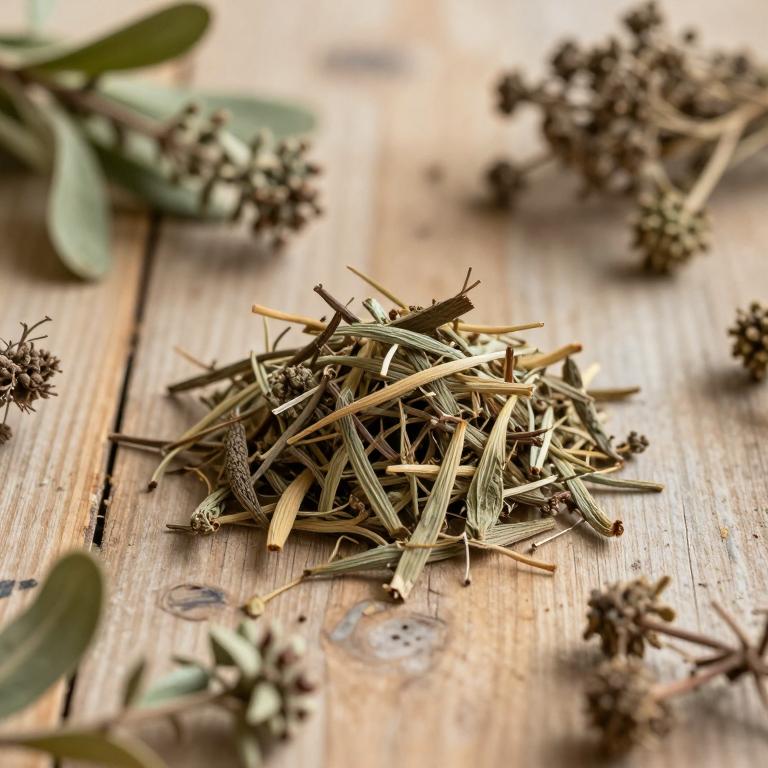
Names and Synonyms
Scientific Names
Accepted name
Mitracarpus frigidusSynonyms
- Mitracarpus frigidus var. andinus
- Mitracarpus frigidus var. fruticosus
- Mitracarpus frigidus var. humboldtianus
- Mitracarpus frigidus var. orinocensis
- Mitracarpus frigidus var. peruvianus
- Mitracarpus fruticosus
- Mitracarpus humboldtianus
- Spermacoce frigida
- Spermacoce discolor
Sources: Wikidata, Catalogue of Life
Taxonomical Classification
This plant belongs to the kingdom Plantae and the phylum Streptophyta, falling under the class Equisetopsida and subclass Magnoliidae. Within the order Gentianaales, it is classified under the family Rubiaceae. Finally, it is identified by the genus Mitracarpus and the specific species name Mitracarpus frigidus.
| Rank | Classification |
|---|---|
| Kingdom | Plantae |
| Phylum | Streptophyta |
| Class | Equisetopsida |
| Subclass | Magnoliidae |
| Order | Gentianales |
| Family | Rubiaceae |
| Genus | Mitracarpus |
Sources: The World Checklist of Vascular Plants (WCVP)
Distribution
This plant exhibits a specific distribution across the northern and western regions of South America. In the northern part of the continent, it is found within the territories of French Guiana, Guyana, and Suriname. Its range also extends into the country of Venezuela, marking a significant presence in Northern South America. Additionally, the species can be located in the western portion of the continent within Colombia. Together, these locations define the primary geographical footprint of Mitracarpus frigidus.
| Region | Area |
|---|---|
| Northern South America | French Guiana |
| Northern South America | Guyana |
| Northern South America | Suriname |
| Northern South America | Venezuela |
| Western South America | Colombia |
| Western South America | Peru |
| Brazil | Brazil West-Central |
| Brazil | Brazil Northeast |
| Brazil | Brazil Southeast |
| Brazil | Brazil North |
Sources: The World Checklist of Vascular Plants (WCVP)
Botanical Identification
Ecology
The ecology of Mitracarpus frigidus is characterized by its presence in specialized high-altitude ecosystems, specifically within the Campo de Altitude and Campo Rupestre habitats. This species exhibits a broad altitudinal distribution, ranging from sea level (0 m AMSL) up to a maximum elevation of 2970 m AMSL. Its ability to inhabit these distinct environments suggests a high degree of adaptability to the varying microclimates and soil compositions found across these diverse elevation gradients, from lowland areas to the high-altitude rocky fields.
- Elevational range max:
- 2970 m AMSL
- Elevational range min:
- 0 m AMSL
- Habitat :
- Campo de Altitude, Campo Rupestre
Life history
The life history of Mitracarpus frigidus is characterized by its classification as a perennial plant, allowing it to persist through multiple growing seasons. In terms of its structural growth habit and survival strategy, it is categorized as a chamaephyte, a life form where the permanent buds are located close to the soil surface, often protected by the substrate or leaf litter. This specific ecological positioning as a chamaephyte ensures its resilience and ability to regenerate within its specialized habitat across its extended lifespan.
- Life form :
- chamaephyte
- Lifecycle :
- perennial
Morphology
The morphology of Mitracarpus frigidus is characterized by its growth form as a non-woody herb, exhibiting a structure that lacks significant lignification. This plant functions as an independent organism, operating without parasitic tendencies toward other species. In terms of its climbing habit, it is classified as a self-supporting climber, possessing the structural integrity to maintain its position without the need for obligatory external support. While its ecological niche allows for various moisture associations, its primary habitat is terrestrial rather than aquatic or semiaquatic. Furthermore, it is categorized as a terrestrial species rather than an epiphyte, meaning it grows directly in the soil rather than inhabiting other plants as a holoepiphyte or hemiepiphyte.
- Aquatic :
- terrestrial
- Climber :
- self-supporting
- Epiphyte :
- terrestrial
- Growth form :
- herb
- Parasite :
- independent
- Woodiness :
- non-woody
Sources: Global Inventory of Floras and Traits (GIFT)
Chemicals
Mitracarpus frigidus has 4 reported phytochemicals identified across 0 scientific publications and several other databases. The most consistently reported chemicals include Psychorubrin, RUTIN, Ursolic acid, kaempferol.
| Chemical | Supporting sources | Consensus |
|---|---|---|
| Psychorubrin | 1 supporting sources | ★☆☆☆☆ |
| RUTIN | 1 supporting sources | ★☆☆☆☆ |
| Ursolic acid | 1 supporting sources | ★☆☆☆☆ |
| kaempferol | 1 supporting sources | ★☆☆☆☆ |
Psychorubrin
- BioMed research international
RUTIN
- BioMed research international
Ursolic acid
- BioMed research international
kaempferol
- BioMed research international
Conditions
Mitracarpus frigidus has 1 reported investigations on conditions identified across 0 scientific publications and several other databases. The most consistently reported conditions include Schistosoma mansoni.
| Condition | Supporting sources | Consensus |
|---|---|---|
| Schistosoma mansoni | 1 supporting sources | ★☆☆☆☆ |
Schistosoma mansoni
- BioMed research international
Preparations
Mitracarpus frigidus has 1 reported preparations identified across 0 scientific publications and several other databases. The most consistently reported preparations include methanolic extract of the aerial parts.
| Preparation | Supporting sources | Consensus |
|---|---|---|
| Methanolic extract of the aerial parts | 1 supporting sources | ★☆☆☆☆ |
Methanolic extract of the aerial parts
- BioMed research international