Forest Moepel
Mimusops obtusifolia · Accepted scientific name
Scientific literature: Very Sparse (3 studies) · ★☆☆☆☆
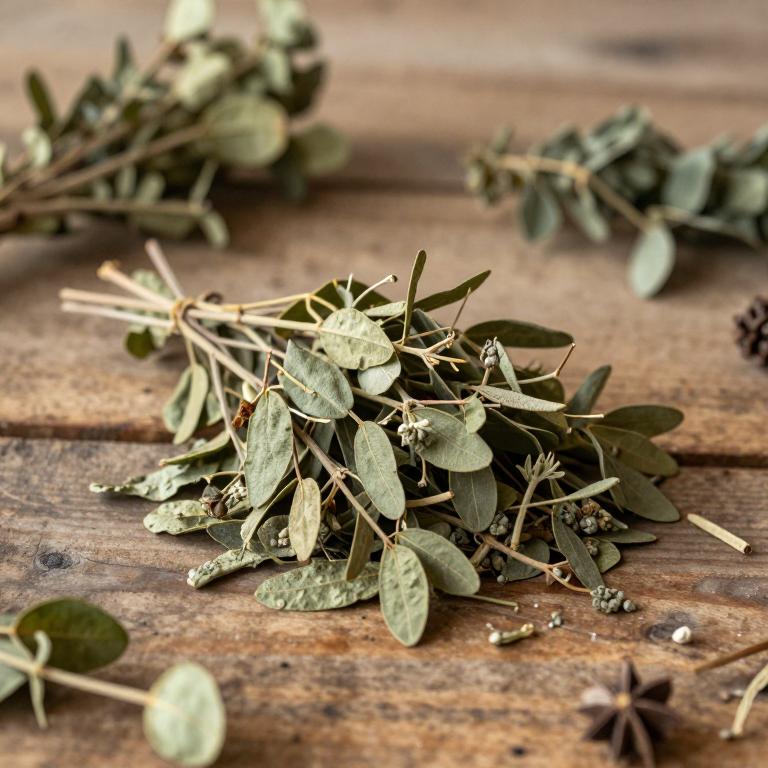
Forest Moepel, scientifically known as Mimusops obtusifolia, is a versatile evergreen tree native to subtropical coastal forests. Renowned for its medicinal properties, various parts of the plant are traditionally used to treat ailments ranging from skin irritations to digestive issues, making it a significant resource in ethnobotanical studies.
Names and Synonyms
Common Names
- Forest Moepel
- Round-Fruited Moepel
- Round-Fruited Red-Milkwood
- round-fruit redmilkwood
Scientific Names
Accepted name
Mimusops obtusifoliaSynonyms
- Kaukenia fructicosa
- Kaukenia kirkii
- Mimusops usambarensis
- Mimusops degan
- Mimusops kilimanensis
- Mimusops fructicosa
- Mimusops busseana
Sources: Wikidata, Catalogue of Life
Taxonomical Classification
This plant belongs to the kingdom Plantae and is classified under the phylum Streptophyta within the class Equisetopsida. As a member of the subclass Magnoliidae and the order Ericales, it is further categorized into the family Sapotaceae. Finally, its specific taxonomic designation falls under the genus Mimusops, identifying it as Mimusops obtusifolia.
| Rank | Classification |
|---|---|
| Kingdom | Plantae |
| Phylum | Streptophyta |
| Class | Equisetopsida |
| Subclass | Magnoliidae |
| Order | Ericales |
| Family | Sapotaceae |
| Genus | Mimusops |
Sources: The World Checklist of Vascular Plants (WCVP)
Distribution
This plant exhibits a widespread presence across several distinct regions of the African continent. In Northeast Tropical Africa, its habitat includes the nation of Somalia. Moving toward East Tropical Africa, the species is found within the borders of Kenya and Tanzania. The distribution extends further into South Tropical Africa, where it occurs in Malawi. Finally, its geographical range reaches into Mozambique, completing its presence in the southern tropical belt.
| Region | Area |
|---|---|
| Northeast Tropical Africa | Somalia |
| East Tropical Africa | Kenya |
| East Tropical Africa | Tanzania |
| South Tropical Africa | Malawi |
| South Tropical Africa | Mozambique |
| South Tropical Africa | Zimbabwe |
| Southern Africa | Northern Provinces |
| Western Indian Ocean | Comoros |
| Western Indian Ocean | Madagascar |
Sources: The World Checklist of Vascular Plants (WCVP)
Botanical Identification
Ecology
The ecology of Mimusops obtusifolia is defined by its specialization in specific coastal and semi-arid transition zones. It is characteristically found within coastal evergreen bushland, often occupying the landward side of dunes or the margins of mangrove ecosystems, where it thrives in the interface between maritime and terrestrial environments. Additionally, the species is well-adapted to dry evergreen bushland, indicating a capacity to tolerate seasonal moisture fluctuations while maintaining a presence in stable, woody shrubland communities.
- Habitat :
- coastal evergreen bushland, landward side of dunes or mangrove, dry evergreen bushland
Life history
The life history of Mimusops obtusifolia is characterized by a perennial lifecycle, allowing the plant to persist through multiple growing seasons. It exhibits a dual classification in terms of its structural growth habit, functioning as both a phanerophyte, with its buds elevated on woody stems, and a nanophanerophyte, reflecting its specific stature within its ecological niche. Furthermore, the plant maintains an evergreen deciduousness, ensuring that its foliage remains functional and present throughout the year without the need for seasonal leaf shedding.
- Deciduousness :
- evergreen
- Life form :
- nanophanerophyte
- Life form :
- phanerophyte
- Lifecycle :
- perennial
Morphology
The morphology of Mimusops obtusifolia is characterized by a woody growth form, primarily manifesting as a tree. It is a terrestrial species that grows independently rather than acting as a parasite or an epiphyte. As a self-supporting plant, it does not function as a climber. In terms of stature, the plant exhibits significant vertical development, with a recorded minimum height of 2 m, a maximum height of 10 m, and a mean plant height of approximately 13.5 m.
- Aquatic :
- terrestrial
- Climber :
- self-supporting
- Epiphyte :
- terrestrial
- Growth form :
- tree
- Parasite :
- independent
- Plant height max:
- 10 m
- Plant height mean:
- 13.5 m
- Plant height min:
- 2 m
- Woodiness :
- woody
Physiology
The physiology of Mimusops obtusifolia is characterized by its metabolic processes and nutrient acquisition strategies, which are integral to its survival in its specific ecological niche. A key aspect of its physiological profile concerns its interaction with soil nutrients, specifically regarding its capacity for atmospheric nutrient assimilation; based on available data, this species is not a nitrogen fixer, meaning it lacks the specialized symbiotic relationship with nitrogen-fixing bacteria required to convert atmospheric nitrogen into a usable form. Consequently, the plant relies on the uptake of nitrates and ammonium present in the soil through its root system to meet its nitrogen requirements for protein synthesis and chlorophyll production. Its physiological functions are further governed by standard photosynthetic pathways, where light energy is converted into chemical energy, driving the growth and maintenance of its vegetative structures.
- Nitrogen fixer :
- no
Reproduction
The reproduction of Mimusops obtusifolia is driven by biotic pollination mechanisms, relying on living organisms to facilitate the transfer of pollen between flowers. This reproductive process is characterized by a diverse pollination syndrome, primarily involving insects as the key vectors for fertilization. Specifically, the plant exhibits a strong affinity for bee-mediated pollination, where these insects play a crucial role in the movement of genetic material. By utilizing these biotic interactions, the plant ensures effective cross-pollination, which is essential for maintaining genetic diversity and successful seed production within its ecosystem.
- Pollination syndrome :
- insect
- Pollination syndrome :
- bee
- Pollination syndrome :
- biotic
Sources: Global Inventory of Floras and Traits (GIFT)
Chemicals
Mimusops obtusifolia has 2 reported phytochemicals identified across 0 scientific publications and several other databases. The most consistently reported chemicals include Sawamilletin, Taraxerol.
| Chemical | Supporting sources | Consensus |
|---|---|---|
| Sawamilletin | 1 supporting sources | ★☆☆☆☆ |
| Taraxerol | 1 supporting sources | ★☆☆☆☆ |
Sawamilletin
- Molecules (Basel, Switzerland)
Taraxerol
- Molecules (Basel, Switzerland)
Conditions
Mimusops obtusifolia has 1 reported investigations on conditions identified across 0 scientific publications and several other databases. The most consistently reported conditions include malaria.
| Condition | Supporting sources | Consensus |
|---|---|---|
| Malaria | 1 supporting sources | ★☆☆☆☆ |
Malaria
- Molecules (Basel, Switzerland)