Jurema
Mimosa tenuiflora · Accepted scientific name
Scientific literature: Sparse (66 studies) · ★★☆☆☆
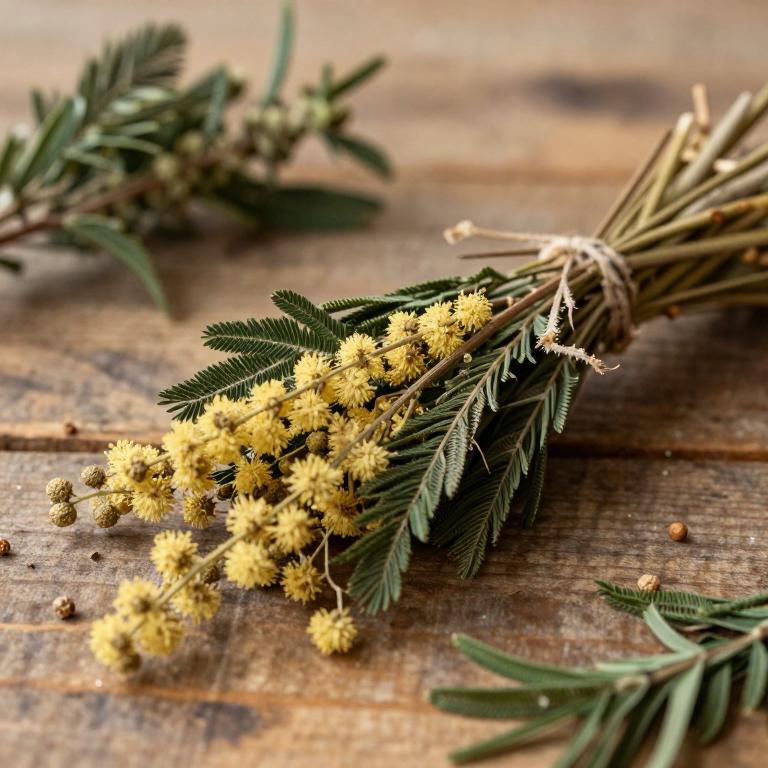
Jurema, scientifically known as Mimosa tenuiflora, is a resilient perennial shrub native to the northeastern regions of Brazil. Renowned for its potent medicinal properties, it is widely utilized in traditional healing and skin treatments due to its high tannin content and remarkable ability to accelerate wound healing and regeneration.
- Family
- Fabaceae
- Native range
- Asia-Tropical
- Parts used
- Leaf · Stem
- Common names
- Not available
- Scientific synonyms
- Mimosa Limana · Mimosa Cabrera · 6 more
Names and Synonyms
Scientific Names
Accepted name
Mimosa tenuifloraSynonyms
- Mimosa limana
- Mimosa cabrera
- Acacia jurema
- Mimosa nigra
- Mimosa hostilis
- Acacia tenuiflora
- Mimosa apodocarpa var. hostilis
- Acacia hostilis
Regional and Traditional Names
Spanish:
- cárbon-colorado
- tepescohuite
Sources: Wikidata, Catalogue of Life
Taxonomical Classification
This plant belongs to the kingdom Plantae and the phylum Streptophyta, specifically categorized under the class Equisetopsida and subclass Magnoliidae. Within the order Fabales, it is a member of the Fabaceae family. Finally, it is classified under the genus Mimosa.
| Rank | Classification |
|---|---|
| Kingdom | Plantae |
| Phylum | Streptophyta |
| Class | Equisetopsida |
| Subclass | Magnoliidae |
| Order | Fabales |
| Family | Fabaceae |
| Genus | Mimosa |
Sources: The World Checklist of Vascular Plants (WCVP)
Distribution
This plant exhibits a wide geographical distribution across several distinct regions. Within the Malesia botanical realm, it can be found in Jawa and Malaya. Its presence also extends to the island of Sumatera. Furthermore, the species is located within Papuasia, specifically in New Guinea. Finally, its range reaches into North America, specifically in Mexico Northeast.
| Region | Area |
|---|---|
| Malesia | Jawa |
| Malesia | Malaya |
| Malesia | Sumatera |
| Papuasia | New Guinea |
| Mexico | Mexico Northeast |
| Mexico | Mexico Southwest |
| Mexico | Mexico Southeast |
| Central America | El Salvador |
| Central America | Honduras |
| Central America | Nicaragua |
Sources: The World Checklist of Vascular Plants (WCVP)
Botanical Identification
Ecology
The ecology of Mimosa tenuiflora is characterized by its ability to thrive within specific semi-arid and seasonal biomes, primarily occupying the Caatinga (stricto sensu) and Cerrado (lato sensu) habitats. This species demonstrates significant adaptability to varying topographical positions, maintaining an elevational range that extends from sea level (0 m AMSL) up to a maximum of 1000 m AMSL. Its presence in these distinct ecosystems reflects a specialized niche suited to the climatic pressures and soil compositions typical of these Brazilian landscapes.
- Elevational range max:
- 1000 m AMSL
- Elevational range min:
- 0 m AMSL
- Habitat :
- Caatinga (stricto sensu), Cerrado (lato sensu)
Life history
The life history of Mimosa tenuiflora is characterized by its status as a perennial species, allowing it to establish long-term presence within its ecosystem through multiple growing seasons. Its developmental pattern is influenced by seasonal changes, as it exhibits deciduousness, shedding its foliage during specific periods of environmental stress or dormancy. This cycle of growth and leaf senescence enables the plant to manage resources effectively throughout its extended lifespan.
- Deciduousness :
- deciduous
- Lifecycle :
- perennial
Morphology
The morphology of Mimosa tenuiflora is characterized by its growth form as a woody tree, reaching a mean plant height of approximately 5 m, though it can attain a maximum height of up to 8 m. As a terrestrial species, it is neither aquatic nor an epiphyte, maintaining a life cycle independent of parasitic relationships. The plant is a self-supporting organism, lacking the climbing habits of lianas or vines, and instead develops a sturdy, woody structure that defines its physical presence in its habitat.
- Aquatic :
- terrestrial
- Climber :
- self-supporting
- Epiphyte :
- terrestrial
- Growth form :
- tree
- Parasite :
- independent
- Plant height max:
- 8 m
- Plant height mean:
- 5 m
- Woodiness :
- woody
Physiology
The physiology of Mimosa tenuiflora is characterized by a C3 photosynthetic pathway, which governs its carbon fixation processes and energy production. The plant exhibits a highly consistent leaf dry matter content (LDMC), with a recorded mean, minimum, and maximum value of 500 mg/g, indicating a stable structural investment in its foliar tissues. Furthermore, Mimosa tenuiflora functions as a nitrogen fixer, facilitating a symbiotic relationship that allows it to convert atmospheric nitrogen into a biologically available form, thereby enhancing its nutrient acquisition capabilities in various soil environments.
- Leaf dry matter content (LDMC) mean:
- 500 mg/g
- Nitrogen fixer :
- yes
- Photosynthetic pathway :
- C3
Reproduction
The reproduction of Mimosa tenuiflora is driven by a biotic pollination syndrome, relying heavily on biological agents to facilitate fertilization. Specifically, the plant utilizes insect-based pollination, with bees identified as a primary pollinator, ensuring the transfer of pollen between flowers. Following successful pollination, the plant produces seeds characterized by a relatively small mass. The seed mass fluctuates within a specific range, with a minimum value of 0.00971 g and a maximum value of 0.01492 g, resulting in a calculated mean seed mass of 0.012315 g.
- Pollination syndrome :
- insect
- Pollination syndrome :
- bee
- Pollination syndrome :
- biotic
- Seed mass max:
- 0.01492 g
- Seed mass mean:
- 0.012315 g
- Seed mass min:
- 0.00971 g
Sources: Global Inventory of Floras and Traits (GIFT)
Plant Parts
Mimosa tenuiflora has 2 reported plant parts identified across 2 scientific publications and several other databases that are studied for medicinal purposes. The most consistently reported plant part include leaf, stem.
| Plant part | Supporting sources | Consensus |
|---|---|---|
| Leaf | 1 supporting sources | ★☆☆☆☆ |
| Stem | 1 supporting sources | ★☆☆☆☆ |
Leaf
- Chemical & pharmaceutical bulletin
Stem
- Planta medica
Chemicals
Mimosa tenuiflora has 22 reported phytochemicals identified across 2 scientific publications and several other databases. The most consistently reported chemicals include Tannins, Flavonoids, Lupeol, Saponins, Tannin.
| Chemical | Supporting sources | Consensus |
|---|---|---|
| Tannins | 3 supporting sources | ★★☆☆☆ |
| Flavonoids | 2 supporting sources | ★☆☆☆☆ |
| Lupeol | 2 supporting sources | ★☆☆☆☆ |
| Saponins | 2 supporting sources | ★☆☆☆☆ |
| Tannin | 2 supporting sources | ★☆☆☆☆ |
| 3-O-beta-d-glucopyranosyl-stigmasterol | 1 supporting sources | ★☆☆☆☆ |
| ANTHOCYANIN | 1 supporting sources | ★☆☆☆☆ |
| Ash | 1 supporting sources | ★☆☆☆☆ |
| BETA-SITOSTEROL | 1 supporting sources | ★☆☆☆☆ |
| CAMPESTEROL | 1 supporting sources | ★☆☆☆☆ |
Tannins
- Archives of microbiology
- Journal of ethnopharmacology
- Revista de biologia tropical
Flavonoids
- Natural product research
- Archives of microbiology
Lupeol
- Journal of ethnopharmacology
- Revista de biologia tropical
Saponins
- Archivos de investigacion medica
- Revista de biologia tropical
Tannin
- Journal of ethnopharmacology
- Archivos de investigacion medica
3-O-beta-d-glucopyranosyl-stigmasterol
- Journal of ethnopharmacology
ANTHOCYANIN
- Natural product research
Ash
- Dr. Duke
BETA-SITOSTEROL
- Journal of ethnopharmacology
CAMPESTEROL
- Journal of ethnopharmacology
Activities
Mimosa tenuiflora has 22 reported activities identified across 2 scientific publications and several other databases. The most consistently reported activities include Angiotensin-Receptor-Blocker, Antibacterial, Anticoagulant, Antidiabetic, Antifungal.
| Activity | Supporting sources | Consensus |
|---|---|---|
| Angiotensin-Receptor-Blocker | 1 supporting sources | ★☆☆☆☆ |
| Antibacterial | 1 supporting sources | ★☆☆☆☆ |
| Anticoagulant | 1 supporting sources | ★☆☆☆☆ |
| Antidiabetic | 1 supporting sources | ★☆☆☆☆ |
| Antifungal | 1 supporting sources | ★☆☆☆☆ |
| Antihypertensive | 1 supporting sources | ★☆☆☆☆ |
| Antimicrobial | 1 supporting sources | ★☆☆☆☆ |
| Antimycotic | 1 supporting sources | ★☆☆☆☆ |
| Antiobesity | 1 supporting sources | ★☆☆☆☆ |
| Antiseptic | 1 supporting sources | ★☆☆☆☆ |
Angiotensin-Receptor-Blocker
- Dr. Duke
Antibacterial
- Revista de investigacion clinica; organo del Hospital de Enfermedades de la Nutricion
Anticoagulant
- International journal of environmental research and public health
Antidiabetic
- Dr. Duke
Antifungal
- Revista da Sociedade Brasileira de Medicina Tropical
Antihypertensive
- Dr. Duke
Antimicrobial
- Revista da Sociedade Brasileira de Medicina Tropical
Antimycotic
- Revista de investigacion clinica; organo del Hospital de Enfermedades de la Nutricion
Antiobesity
- Dr. Duke
Antiseptic
- Animals : an open access journal from MDPI
Conditions
Mimosa tenuiflora has 10 reported investigations on conditions identified across 2 scientific publications and several other databases. The most consistently reported conditions include burns, Depression, Trichinella spiralis, asthma, bronchitis.
| Condition | Supporting sources | Consensus |
|---|---|---|
| Burns | 2 supporting sources | ★☆☆☆☆ |
| Depression | 1 supporting sources | ★☆☆☆☆ |
| Trichinella spiralis | 1 supporting sources | ★☆☆☆☆ |
| Asthma | 1 supporting sources | ★☆☆☆☆ |
| Bronchitis | 1 supporting sources | ★☆☆☆☆ |
| Fever | 1 supporting sources | ★☆☆☆☆ |
| Oral candidiasis | 1 supporting sources | ★☆☆☆☆ |
| Surgical wounds | 1 supporting sources | ★☆☆☆☆ |
| Venous ulcer | 1 supporting sources | ★☆☆☆☆ |
| Venous ulcers | 1 supporting sources | ★☆☆☆☆ |
Burns
- Revista de investigacion clinica; organo del Hospital de Enfermedades de la Nutricion
- Revista de biologia tropical
Depression
- International journal of molecular sciences
Trichinella spiralis
- Plants (Basel, Switzerland)
Asthma
- Journal of ethnopharmacology
Bronchitis
- Journal of ethnopharmacology
Fever
- Journal of ethnopharmacology
Oral candidiasis
- Revista da Sociedade Brasileira de Medicina Tropical
Surgical wounds
- Animals : an open access journal from MDPI
Venous ulcer
- International wound journal
Venous ulcers
- International wound journal
Preparations
Mimosa tenuiflora has 17 reported preparations identified across 2 scientific publications and several other databases. The most consistently reported preparations include methanol extracts, Pyroligneous Extract, bark, bark tea, capsules.
| Preparation | Supporting sources | Consensus |
|---|---|---|
| Methanol extracts | 2 supporting sources | ★☆☆☆☆ |
| Pyroligneous extract | 1 supporting sources | ★☆☆☆☆ |
| Bark | 1 supporting sources | ★☆☆☆☆ |
| Bark tea | 1 supporting sources | ★☆☆☆☆ |
| Capsules | 1 supporting sources | ★☆☆☆☆ |
| Creams | 1 supporting sources | ★☆☆☆☆ |
| Ethanolic extracts | 1 supporting sources | ★☆☆☆☆ |
| Extracts | 1 supporting sources | ★☆☆☆☆ |
| Hydrogel | 1 supporting sources | ★☆☆☆☆ |
| Jurema preta | 1 supporting sources | ★☆☆☆☆ |
Methanol extracts
- Plants (Basel, Switzerland)
- Life (Basel, Switzerland)
Pyroligneous extract
- Animals : an open access journal from MDPI
Bark
- Phytochemistry
Bark tea
- Revista de biologia tropical
Capsules
- Revista de biologia tropical
Creams
- Revista de biologia tropical
Ethanolic extracts
- International journal of environmental research and public health
Extracts
- Archives of microbiology
Hydrogel
- International wound journal
Jurema preta
- Planta medica