Mimosa scabrella
Mimosa scabrella · Accepted scientific name
Scientific literature: Very Sparse (2 studies) · ★☆☆☆☆
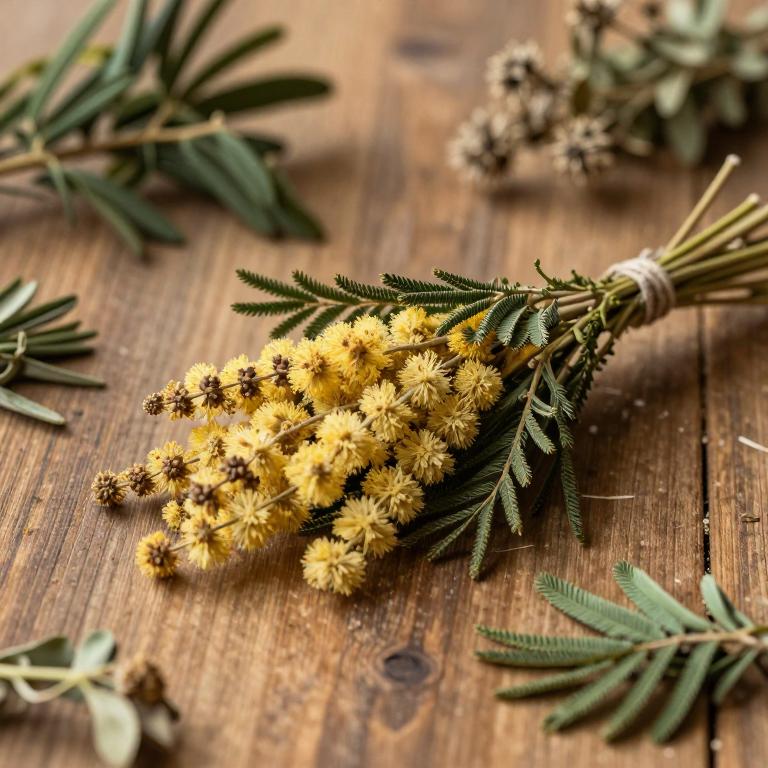
Mimosa scabrella, scientifically known as Mimosa scabrella, is a resilient shrub native to various tropical regions. Renowned for its medicinal properties, this plant is traditionally utilized in folk medicine to treat inflammation and skin ailments. Its unique botanical characteristics make it a significant subject in ethnobotanical studies and pharmacology.
- Family
- Fabaceae
- Native range
- Africa
- Parts used
- Seed
- Common names
- Not available
- Scientific synonyms
- Mimosa Bracaatinga Var. Aspericarpa · Mimosa Scabrella Var. Aspericarpa · 2 more
Names and Synonyms
Scientific Names
Accepted name
Mimosa scabrellaSynonyms
- Mimosa bracaatinga var. aspericarpa
- Mimosa scabrella var. aspericarpa
- Mimosa bracaatinga f. paucijuga
- Mimosa bracaatinga
Sources: Wikidata, Catalogue of Life
Taxonomical Classification
This plant belongs to the kingdom Plantae within the phylum Streptophyta and the class Equisetopsida. It is further classified under the subclass Magnoliidae and the order Fabales, falling into the family Fabaceae. Ultimately, its taxonomic identity is defined by the genus Mimosa, specifically as the species Mimosa scabrella.
| Rank | Classification |
|---|---|
| Kingdom | Plantae |
| Phylum | Streptophyta |
| Class | Equisetopsida |
| Subclass | Magnoliidae |
| Order | Fabales |
| Family | Fabaceae |
| Genus | Mimosa |
Sources: The World Checklist of Vascular Plants (WCVP)
Distribution
This plant exhibits a wide and diverse geographical distribution spanning multiple continents. In East Tropical Africa, its presence is documented in both Tanzania and Uganda. Moving toward the southern regions, it can also be found throughout South Tropical Africa, specifically in Angola and Zimbabwe. Furthermore, the species extends into the Papuasia region, where it is located in New Guinea. This varied range highlights the plant's ability to inhabit distinct ecological zones across the globe.
| Region | Area |
|---|---|
| East Tropical Africa | Tanzania |
| East Tropical Africa | Uganda |
| South Tropical Africa | Angola |
| South Tropical Africa | Zimbabwe |
| Papuasia | New Guinea |
| Central America | Honduras |
| Caribbean | Jamaica |
| Northern South America | Venezuela |
| Western South America | Colombia |
| Brazil | Brazil Southeast |
Sources: The World Checklist of Vascular Plants (WCVP)
Botanical Identification
Ecology
The ecology of Mimosa scabrella is characterized by its presence across diverse environmental settings, ranging from undisturbed natural ecosystems to human-altered landscapes. It thrives within various forest types, specifically inhabiting Floresta Ombrófila (Rainforest) and Floresta Ombrófila Mista (Mixed Ombrophilous Forest), as well as Área Antrópica (Anthropic Areas), indicating a degree of adaptability to disturbed or modified environments. This species occupies a significant altitudinal gradient, establishing itself at elevations starting from 700 m AMSL and extending up to a maximum of 1900 m AMSL.
- Elevational range max:
- 1900 m AMSL
- Elevational range min:
- 700 m AMSL
- Habitat :
- Área Antrópica, Floresta Ombrófila (= Floresta Pluvial), Floresta Ombrófila Mista
Life history
The life history of Mimosa scabrella is characterized by its nature as a perennial plant, allowing it to persist through multiple growing seasons rather than completing its cycle within a single year. As a perennial species, it maintains a long-term presence in its ecosystem, often developing established root systems that support regrowth after seasonal changes. This perennial lifecycle enables the plant to invest energy into structural longevity and repeated reproductive efforts over time, contributing to its stability within its natural habitat.
- Lifecycle :
- perennial
Morphology
The morphology of Mimosa scabrella is characterized by its growth form as a woody tree, capable of reaching significant dimensions in a natural habitat. The plant typically exhibits a height ranging from a minimum of 8 m up to a mean height of 10 m. As a terrestrial species, it does not function as an epiphyte, nor does it exhibit aquatic or semiaquatic characteristics. The plant is an independent organism, meaning it does not act as a parasite, and it maintains a self-supporting structure rather than growing as a liana, vine, or other type of climber. Its structural integrity is defined by its woody nature, allowing it to stand firmly as a self-supporting tree.
- Aquatic :
- terrestrial
- Climber :
- self-supporting
- Epiphyte :
- terrestrial
- Growth form :
- tree
- Parasite :
- independent
- Plant height max:
- 8 m
- Plant height mean:
- 10 m
- Woodiness :
- woody
Physiology
The physiology of Mimosa scabrella is characterized by a C3 photosynthetic pathway, which involves the direct fixation of carbon dioxide through the Calvin cycle within the mesophyll cells. In addition to its carbon assimilation processes, the plant exhibits specialized metabolic capabilities through its role as a nitrogen fixer. By engaging in symbiotic relationships with nitrogen-fixing bacteria, typically housed within root nodules, the plant is able to convert atmospheric nitrogen into a bioavailable form, thereby enhancing its nutrient uptake and supporting growth in nitrogen-limited environments.
- Nitrogen fixer :
- yes
- Photosynthetic pathway :
- C3
Reproduction
The reproduction of Mimosa scabrella is driven by a biotic pollination syndrome, primarily facilitated through insect interactions. Specifically, the plant relies on bees as key pollinators to ensure successful fertilization. Following the pollination process, the plant produces seeds characterized by a highly uniform mass; both the minimum, maximum, and mean seed mass are recorded at 0.00978 g, indicating a consistent seed size across the population.
- Pollination syndrome :
- insect
- Pollination syndrome :
- bee
- Pollination syndrome :
- biotic
- Seed mass mean:
- 0.00978 g
Sources: Global Inventory of Floras and Traits (GIFT)
Plant Parts
Mimosa scabrella has 1 reported plant parts identified across 1 scientific publications and several other databases that are studied for medicinal purposes. The most consistently reported plant part include seed.
| Plant part | Supporting sources | Consensus |
|---|---|---|
| Seed | 1 supporting sources | ★☆☆☆☆ |
Seed
- International journal of biological macromolecules
Chemicals
Mimosa scabrella has 1 reported phytochemicals identified across 1 scientific publications and several other databases. The most consistently reported chemicals include Galactomannan.
| Chemical | Supporting sources | Consensus |
|---|---|---|
| Galactomannan | 1 supporting sources | ★☆☆☆☆ |
Galactomannan
- International journal of biological macromolecules
Preparations
Mimosa scabrella has 1 reported preparations identified across 1 scientific publications and several other databases. The most consistently reported preparations include Seeds.
| Preparation | Supporting sources | Consensus |
|---|---|---|
| Seeds | 1 supporting sources | ★☆☆☆☆ |
Seeds
- International journal of biological macromolecules