Himalayan Mimosa
Mimosa rubicaulis · Accepted scientific name
Scientific literature: Very Sparse (6 studies) · ★☆☆☆☆
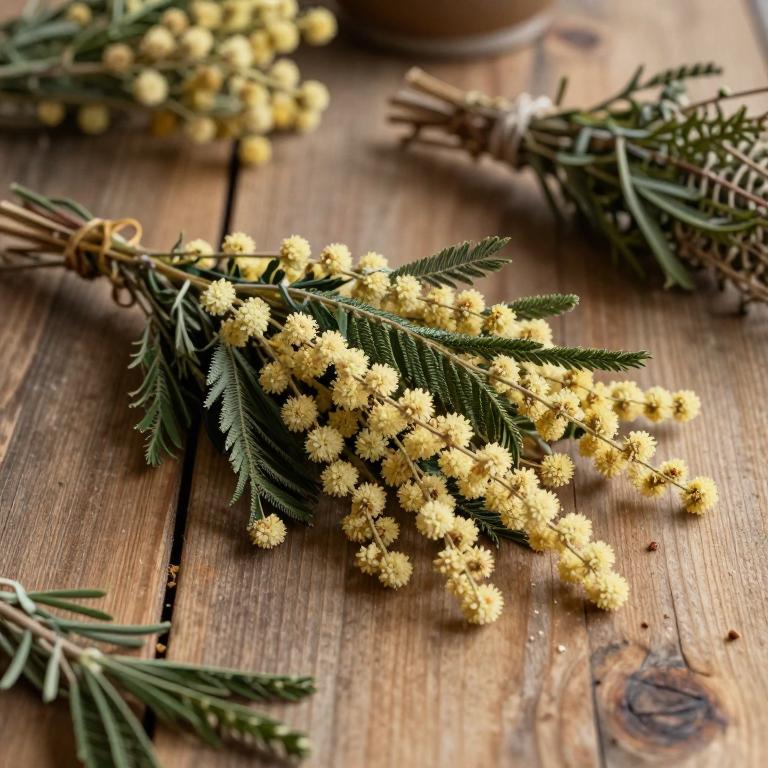
Himalayan Mimosa, scientifically known as Mimosa rubicaulis, is a climbing shrub native to the subtropical regions of Asia. Renowned for its delicate, feathery foliage and vibrant pink blooms, this plant holds significant value in traditional medicine, where its various parts are utilized for their potent healing and therapeutic properties.
- Family
- Fabaceae
- Native range
- Africa
- Parts used
- Leaf · Root
- Common names
- South-Indian Mimosa
- Scientific synonyms
- Not available
Names and Synonyms
Common Names
- South-Indian Mimosa
Scientific Names
Accepted name
Mimosa rubicaulisSources: Wikidata, Catalogue of Life
Taxonomical Classification
This plant belongs to the kingdom Plantae and the phylum Streptophyta, specifically falling under the class Equisetopsida and subclass Magnoliidae. Within the order Fabales, it is classified under the family Fabaceae and the genus Mimosa. As a member of the Mimosa genus, Mimosa rubicaulis represents a specific lineage of medicinal flora within this complex taxonomic hierarchy.
| Rank | Classification |
|---|---|
| Kingdom | Plantae |
| Phylum | Streptophyta |
| Class | Equisetopsida |
| Subclass | Magnoliidae |
| Order | Fabales |
| Family | Fabaceae |
| Genus | Mimosa |
Sources: The World Checklist of Vascular Plants (WCVP)
Distribution
This plant exhibits a diverse geographical distribution across both African and Asian continents. In West Tropical Africa, its presence has been documented specifically in Sierra Leone. Within the Indian Subcontinent, it can be found in several distinct regions including India and Bangladesh. Furthermore, the species is known to inhabit the Assam region of the subcontinent. Finally, its range extends into the Eastern Himalaya, showcasing its adaptability to varying elevations.
| Region | Area |
|---|---|
| West Tropical Africa | Sierra Leone |
| Indian Subcontinent | Assam |
| Indian Subcontinent | Bangladesh |
| Indian Subcontinent | East Himalaya |
| Indian Subcontinent | India |
| Indian Subcontinent | Nepal |
| Indian Subcontinent | Pakistan |
| Indian Subcontinent | West Himalaya |
| Indo-China | Myanmar |
Sources: The World Checklist of Vascular Plants (WCVP)
Botanical Identification
Ecology
The ecology of Mimosa rubicaulis is characterized by its adaptability to specific altitudinal gradients within its native habitats. This species typically flourishes within an elevational range that begins at 200 m AMSL and extends up to a maximum of 800 m AMSL. By occupying this mid-to-low altitude niche, the plant thrives in environmental conditions shaped by these specific vertical zones, which influence the temperature, humidity, and soil compositions it encounters. Its distribution is closely tied to these altitudinal constraints, defining the ecological boundaries where it can successfully compete and establish itself within its community.
- Elevational range max:
- 800 m AMSL
- Elevational range min:
- 200 m AMSL
Life history
The life history of Mimosa rubicaulis is characterized by its status as a perennial species, allowing it to persist in its environment over multiple growing seasons. As a long-lived plant, it does not complete its life cycle within a single year or two but instead establishes a sustained presence through continuous growth and periodic reproductive cycles. This perennial nature enables the plant to develop robust structural components that can withstand seasonal fluctuations, facilitating long-term survival and the ability to reproduce across various stages of its existence.
- Lifecycle :
- perennial
Morphology
The morphology of Mimosa rubicaulis is characterized by a woody growth form that functions primarily as a shrub. This species is a terrestrial plant, avoiding aquatic or semiaquatic habitats, and it maintains an independent life cycle without acting as a parasite or an epiphyte. While it possesses a robust, woody structure, it is classified as a self-supporting climber, meaning it does not rely on other structures for obligatory support but can extend its growth through climbing mechanisms.
- Aquatic :
- terrestrial
- Climber :
- self-supporting
- Epiphyte :
- terrestrial
- Growth form :
- shrub
- Parasite :
- independent
- Woodiness :
- woody
Physiology
The physiology of Mimosa rubicaulis is characterized by a metabolic framework governed by a C3 photosynthetic pathway, which dictates how the plant captures carbon dioxide and converts it into chemical energy. As a C3 plant, the initial fixation of CO2 occurs via the enzyme RuBisCO within the mesophyll cells, leading to the direct production of a three-carbon compound, 3-phosphoglycerate. This pathway is typical for many woody legumes, allowing the plant to optimize carbon assimilation under moderate environmental conditions. The efficiency of its physiological processes is closely linked to its leaf anatomy and stomatal conductance, which regulate gas exchange and transpiration to maintain water balance while supporting the metabolic demands of its growth cycles.
- Photosynthetic pathway :
- C3
Reproduction
Reproduction in Mimosa rubicaulis is characterized by the production of specialized seeds that serve as the primary mechanism for propagation and dispersal. The reproductive output of this species is defined by a highly consistent seed morphology, as evidenced by the specific biometric data recorded for its progeny. The seeds exhibit a uniform size profile, with a recorded seed mass mean of 0.0054 g. This consistency is absolute across the observed sample, as both the maximum (Seed_mass_max) and minimum (Seed_mass_min) values are identical at 0.0054 g. This lack of variance in seed mass suggests a highly stabilized reproductive strategy, ensuring that each seed produced carries a predictable amount of nutrient reserves to support initial germination and seedling establishment.
- Seed mass mean:
- 0.0054 g
Sources: Global Inventory of Floras and Traits (GIFT)
Plant Parts
Mimosa rubicaulis has 3 reported plant parts identified across 3 scientific publications and several other databases that are studied for medicinal purposes. The most consistently reported plant part include leaf, root, stem.
| Plant part | Supporting sources | Consensus |
|---|---|---|
| Leaf | 1 supporting sources | ★☆☆☆☆ |
| Root | 1 supporting sources | ★☆☆☆☆ |
| Stem | 1 supporting sources | ★☆☆☆☆ |
Leaf
- Evidence-based complementary and alternative medicine : eCAM
Root
- Evidence-based complementary and alternative medicine : eCAM
Stem
- Evidence-based complementary and alternative medicine : eCAM
Activities
Mimosa rubicaulis has 2 reported activities identified across 3 scientific publications and several other databases. The most consistently reported activities include Antibacterial, Antioxidant.
| Activity | Supporting sources | Consensus |
|---|---|---|
| Antibacterial | 1 supporting sources | ★☆☆☆☆ |
| Antioxidant | 1 supporting sources | ★☆☆☆☆ |
Antibacterial
- Evidence-based complementary and alternative medicine : eCAM
Antioxidant
- Evidence-based complementary and alternative medicine : eCAM
Conditions
Mimosa rubicaulis has 1 reported investigations on conditions identified across 3 scientific publications and several other databases. The most consistently reported conditions include wound healing.
| Condition | Supporting sources | Consensus |
|---|---|---|
| Wound healing | 1 supporting sources | ★☆☆☆☆ |
Wound healing
- Evidence-based complementary and alternative medicine : eCAM
Preparations
Mimosa rubicaulis has 1 reported preparations identified across 3 scientific publications and several other databases. The most consistently reported preparations include Extractions.
| Preparation | Supporting sources | Consensus |
|---|---|---|
| Extractions | 1 supporting sources | ★☆☆☆☆ |
Extractions
- Evidence-based complementary and alternative medicine : eCAM