Mimosa caesalpiniaefolia
Mimosa caesalpiniifolia · Accepted scientific name
Scientific literature: Very Sparse (19 studies) · ★☆☆☆☆
Mimosa caesalpiniifolia, scientifically known as Mimosa caesalpiniifolia, is a versatile medicinal shrub widely recognized for its therapeutic potential. Renowned in traditional medicine, it possesses significant anti-inflammatory, antimicrobial, and antioxidant properties. Often used to treat skin ailments and respiratory issues, this resilient plant offers valuable biochemical compounds for healing.
- Family
- Fabaceae
- Native range
- Africa
- Parts used
- Leaf · Stem
- Common names
- Not available
- Scientific synonyms
- Not available
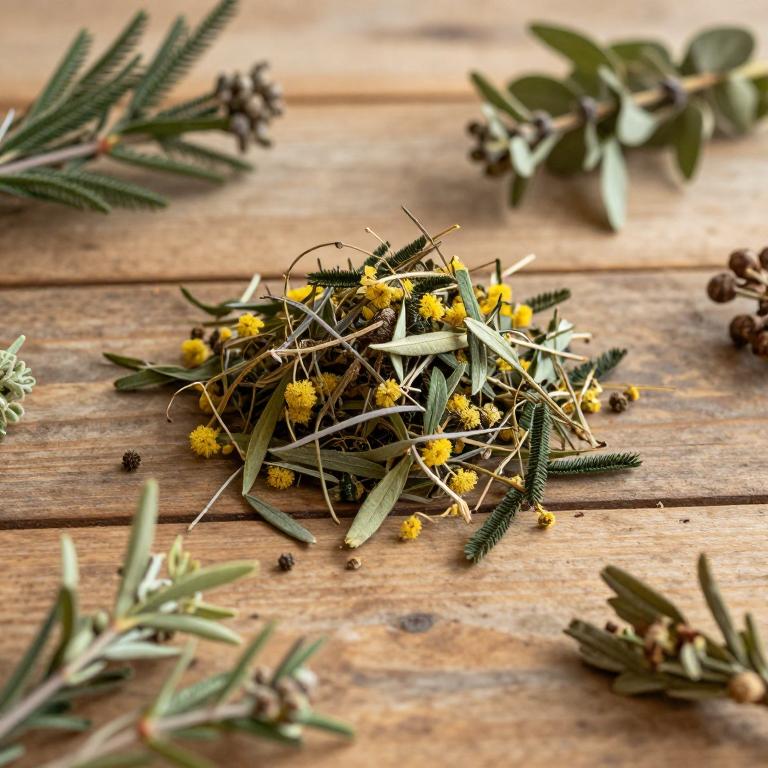
Names and Synonyms
Scientific Names
Accepted name
Mimosa caesalpiniifoliaRegional and Traditional Names
Spanish:
- Mimosa caesalpiniaefolia
- Sabiá
German:
- Mimosa caesalpiniaefolia
French:
- Mimosa caesalpiniaefolia
Sources: Wikidata, Catalogue of Life
Taxonomical Classification
This plant belongs to the kingdom Plantae and the phylum Streptophyta, falling under the class Equisetopsida and subclass Magnoliidae. Within the order Fabales, it is classified under the family Fabaceae and is specifically identified by the genus Mimosa.
| Rank | Classification |
|---|---|
| Kingdom | Plantae |
| Phylum | Streptophyta |
| Class | Equisetopsida |
| Subclass | Magnoliidae |
| Order | Fabales |
| Family | Fabaceae |
| Genus | Mimosa |
Sources: The World Checklist of Vascular Plants (WCVP)
Distribution
This plant exhibits a widespread distribution across several distinct tropical regions. In West Tropical Africa, its presence is specifically noted within the Ivory Coast. The species also occupies a significant range throughout Brazil, spanning the North and Northeast territories. Furthermore, it can be found extending into the West-Central and Southeast regions of Brazil. These diverse locations highlight the plant's adaptability to various tropical environments.
| Region | Area |
|---|---|
| West Tropical Africa | Ivory Coast |
| Brazil | Brazil West-Central |
| Brazil | Brazil Northeast |
| Brazil | Brazil Southeast |
| Brazil | Brazil North |
| Brazil | Brazil South |
Sources: The World Checklist of Vascular Plants (WCVP)
Botanical Identification
Ecology
The ecology of Mimosa caesalpiniifolia is characterized by its broad adaptability across diverse Brazilian biomes, allowing it to thrive in environments with varying moisture availability and vegetation structures. It is prominently distributed within the Caatinga (strictu sensu), where it must endure semi-arid conditions and seasonal droughts, as well as throughout the Cerrado (lato sensu), occupying various successional stages of this tropical savanna. Furthermore, its ecological range extends into the Floresta Ombrófila (also known as Floresta Pluvial), indicating a significant capacity to inhabit humid, high-precipitation rainforest environments. This wide distributional range suggests a resilient physiological profile capable of navigating the transition from xeric, open shrublands to dense, moisture-rich forest ecosystems.
- Habitat :
- Caatinga (stricto sensu), Cerrado (lato sensu), Floresta Ombrófila (= Floresta Pluvial)
Life history
The life history of Mimosa caesalpiniifolia is characterized by its nature as a perennial plant, allowing it to persist through multiple growing seasons and establish a long-term presence in its environment. Throughout its developmental stages, the species exhibits a deciduous growth habit, meaning it undergoes a seasonal shedding of its foliage, typically in response to environmental stressors such as drought or changes in temperature. This cycle of growth and dormancy ensures its survival and adaptability within its native ecological niches.
- Deciduousness :
- deciduous
- Lifecycle :
- perennial
Morphology
The morphology of Mimosa caesalpiniifolia is characterized by its robust growth form as a woody tree, which reaches an average height of 6.5 m and can grow to a maximum height of 8 m. As a terrestrial species, it does not exhibit aquatic or epiphytic tendencies, maintaining an independent existence rather than acting as a parasite or a hemi-epiphyte. Although it possesses self-supporting structural qualities, it does not function as an obligatory or facultative climber, liana, or vine, instead relying on its woody stature for stability.
- Aquatic :
- terrestrial
- Climber :
- self-supporting
- Epiphyte :
- terrestrial
- Growth form :
- tree
- Parasite :
- independent
- Plant height max:
- 8 m
- Plant height mean:
- 6.5 m
- Woodiness :
- woody
Physiology
The physiology of Mimosa caesalpiniifolia is characterized by a highly efficient symbiotic relationship with soil-borne bacteria, most notably within the genera Rhizobium or Bradyrhizobium, which facilitates its role as a nitrogen fixer. Through the development of specialized root nodules, the plant engages in biological nitrogen fixation, a process where atmospheric nitrogen ($N_2$) is converted into ammonia ($NH_3$), a form usable for plant protein synthesis and metabolic functions. This nitrogen fixation capability is a critical physiological adaptation that allows the species to thrive in nutrient-poor or nitrogen-deficient soils, providing a competitive advantage in diverse ecosystems. The metabolic demand for this process is supported by a steady supply of carbohydrates produced via photosynthesis, which are transported to the root nodules to fuel the energy-intensive nitrogenase enzyme activity. Consequently, the plant exhibits a positive nitrogen balance that promotes vigorous vegetative growth and efficient nutrient cycling within its immediate environment.
- Nitrogen fixer :
- yes
Reproduction
The reproduction of Mimosa caesalpiniifolia is driven by a biotic pollination syndrome, relying on living organisms rather than abiotic factors to facilitate the transfer of pollen. This process is characterized by a diverse range of interactions, primarily utilizing insects as the main vectors for genetic exchange. Specifically, the plant exhibits a strong affinity for bee pollination, where these insects play a crucial role in transporting pollen between flowers. This multifaceted approach to pollination ensures successful fertilization and the subsequent production of seeds, maintaining the reproductive cycle through these vital biotic connections.
- Pollination syndrome :
- insect
- Pollination syndrome :
- bee
- Pollination syndrome :
- biotic
Sources: Global Inventory of Floras and Traits (GIFT)
Plant Parts
Mimosa caesalpiniifolia has 2 reported plant parts identified across 3 scientific publications and several other databases that are studied for medicinal purposes. The most consistently reported plant part include leaf, stem.
| Plant part | Supporting sources | Consensus |
|---|---|---|
| Leaf | 2 supporting sources | ★☆☆☆☆ |
| Stem | 1 supporting sources | ★☆☆☆☆ |
Leaf
- Journal of ethnopharmacology
- Pharmacognosy magazine
Stem
- Journal of toxicology and environmental health. Part A
Chemicals
Mimosa caesalpiniifolia has 5 reported phytochemicals identified across 3 scientific publications and several other databases. The most consistently reported chemicals include CATECHIN, Flavonoids, Glycosides, Tannins, betulinic acid.
| Chemical | Supporting sources | Consensus |
|---|---|---|
| CATECHIN | 1 supporting sources | ★☆☆☆☆ |
| Flavonoids | 1 supporting sources | ★☆☆☆☆ |
| Glycosides | 1 supporting sources | ★☆☆☆☆ |
| Tannins | 1 supporting sources | ★☆☆☆☆ |
| betulinic acid | 1 supporting sources | ★☆☆☆☆ |
CATECHIN
- Journal of ethnopharmacology
Flavonoids
- Journal of ethnopharmacology
Glycosides
- Journal of ethnopharmacology
Tannins
- Journal of ethnopharmacology
betulinic acid
- Journal of toxicology and environmental health. Part A
Activities
Mimosa caesalpiniifolia has 5 reported activities identified across 3 scientific publications and several other databases. The most consistently reported activities include Antidepressant, Antiproliferative, Cytotoxic, Genotoxic, Vasorelaxant.
| Activity | Supporting sources | Consensus |
|---|---|---|
| Antidepressant | 1 supporting sources | ★☆☆☆☆ |
| Antiproliferative | 1 supporting sources | ★☆☆☆☆ |
| Cytotoxic | 1 supporting sources | ★☆☆☆☆ |
| Genotoxic | 1 supporting sources | ★☆☆☆☆ |
| Vasorelaxant | 1 supporting sources | ★☆☆☆☆ |
Antidepressant
- Journal of ethnopharmacology
Antiproliferative
- Journal of toxicology and environmental health. Part A
Cytotoxic
- Journal of toxicology and environmental health. Part A
Genotoxic
- Journal of toxicology and environmental health. Part A
Vasorelaxant
- Journal of ethnopharmacology
Conditions
Mimosa caesalpiniifolia has 5 reported investigations on conditions identified across 3 scientific publications and several other databases. The most consistently reported conditions include antidepressant, bronchitis, hypertension, inflammation, tumor cell lines.
| Condition | Supporting sources | Consensus |
|---|---|---|
| Antidepressant | 1 supporting sources | ★☆☆☆☆ |
| Bronchitis | 1 supporting sources | ★☆☆☆☆ |
| Hypertension | 1 supporting sources | ★☆☆☆☆ |
| Inflammation | 1 supporting sources | ★☆☆☆☆ |
| Tumor cell lines | 1 supporting sources | ★☆☆☆☆ |
Antidepressant
- Journal of ethnopharmacology
Bronchitis
- Journal of ethnopharmacology
Hypertension
- Journal of ethnopharmacology
Inflammation
- Journal of ethnopharmacology
Tumor cell lines
- Journal of toxicology and environmental health. Part A
Preparations
Mimosa caesalpiniifolia has 5 reported preparations identified across 3 scientific publications and several other databases. The most consistently reported preparations include M. caesalpiniifolia leaves extract, dry extract, ethyl acetate fraction, fraction of ethyl acetate, tea/flowers.
| Preparation | Supporting sources | Consensus |
|---|---|---|
| M. caesalpiniifolia leaves extract | 1 supporting sources | ★☆☆☆☆ |
| Dry extract | 1 supporting sources | ★☆☆☆☆ |
| Ethyl acetate fraction | 1 supporting sources | ★☆☆☆☆ |
| Fraction of ethyl acetate | 1 supporting sources | ★☆☆☆☆ |
| Tea/flowers | 1 supporting sources | ★☆☆☆☆ |
M. caesalpiniifolia leaves extract
- Pharmacognosy magazine
Dry extract
- Journal of ethnopharmacology
Ethyl acetate fraction
- Journal of ethnopharmacology
Fraction of ethyl acetate
- Journal of ethnopharmacology
Tea/flowers
- Journal of ethnopharmacology