Mimosa acutistipula
Mimosa acutistipula · Accepted scientific name
Scientific literature: Very Sparse (3 studies) · ★☆☆☆☆
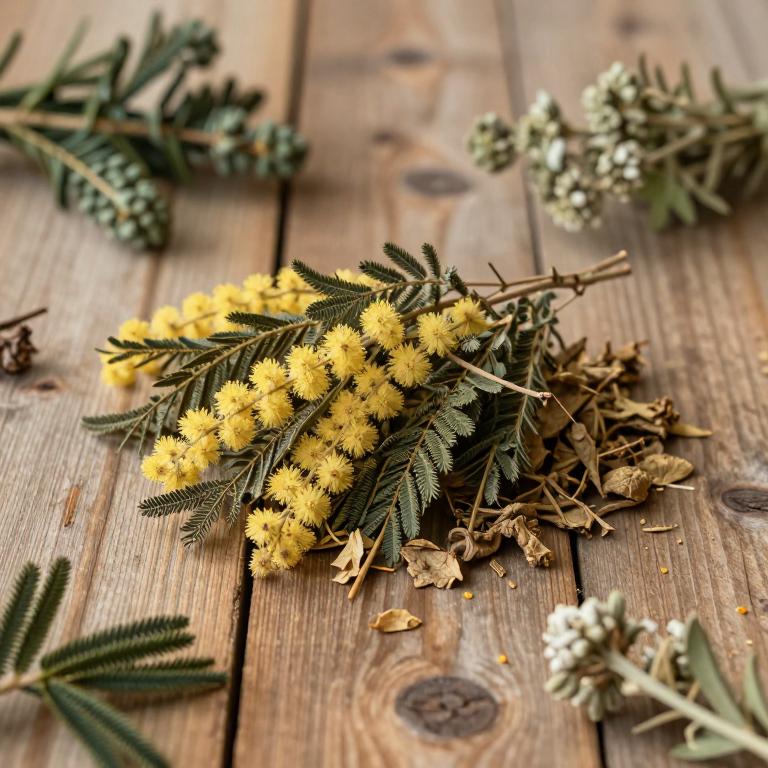
, scientifically known as Mimosa acuatisipula, is a resilient medicinal shrub valued in traditional healing practices. Renowned for its bioactive properties, this plant is frequently utilized to treat various ailments, including skin inflammations and digestive issues. Its unique botanical characteristics make it a significant subject in ethnopharmacological studies.
- Family
- Fabaceae
- Native range
- Southern America
- Parts used
- Not available
- Common names
- Not available
- Scientific synonyms
- Acacia Acutistipula
Names and Synonyms
Scientific Names
Accepted name
Mimosa acutistipulaSynonyms
- Acacia acutistipula
Sources: Wikidata, Catalogue of Life
Taxonomical Classification
This plant belongs to the kingdom Plantae and is classified under the phylum Streptophyta within the class Equisetopsida. It is further categorized under the subclass Magnoliidae and the order Fabales, falling into the family Fabaceae. Finally, its taxonomic identity is defined by the genus Mimosa.
| Rank | Classification |
|---|---|
| Kingdom | Plantae |
| Phylum | Streptophyta |
| Class | Equisetopsida |
| Subclass | Magnoliidae |
| Order | Fabales |
| Family | Fabaceae |
| Genus | Mimosa |
Sources: The World Checklist of Vascular Plants (WCVP)
Distribution
This plant exhibits a broad presence across the diverse landscapes of Western South America. Specifically, it can be found growing within the borders of Bolivia. Its distribution extends significantly into Brazil, where it inhabits various ecological zones. Within the Brazilian territory, it is documented in the West-Central, Northeast, and Southeast regions. Furthermore, the species is also located in the North of Brazil, highlighting its wide geographical range.
| Region | Area |
|---|---|
| Western South America | Bolivia |
| Brazil | Brazil West-Central |
| Brazil | Brazil Northeast |
| Brazil | Brazil Southeast |
| Brazil | Brazil North |
Sources: The World Checklist of Vascular Plants (WCVP)
Botanical Identification
Morphology
The morphology of Mimosa acuistipula is characterized by a woody growth form, primarily manifesting as a shrub or small tree that can reach a maximum plant height of 5 meters. Although its ecological classification includes aquatic and semiaquatic contexts, its fundamental habit is terrestrial. The plant is categorized as a self-supporting structure, functioning as a self-supporting climber rather than an obligatory or facultative vine or liana. It does not exhibit epiphytic behavior, remaining strictly terrestrial, and operates as an independent organism without parasitic tendencies. Its physical structure is defined by its woody texture and robust, upright development.
- Aquatic :
- terrestrial
- Climber :
- self-supporting
- Epiphyte :
- terrestrial
- Growth form :
- tree
- Growth form :
- shrub
- Parasite :
- independent
- Plant height max:
- 5 m
- Woodiness :
- woody
Physiology
The physiology of Mimosa acutisipula is characterized by a metabolic framework centered around a C3 photosynthetic pathway, where carbon fixation occurs via the enzyme RuBisCO within the mesophyll cells during the Calvin cycle. This C3 mechanism dictates the plant's gas exchange patterns and water-use efficiency, requiring careful regulation of stomatal conductance to balance CO2 uptake against transpirational water loss. In addition to its carbon assimilation processes, the plant exhibits specialized physiological responses typical of the Fabaceae family, including sensitive thigmonastic movements where rapid changes in turgor pressure within pulvini cells facilitate leaf folding in response to mechanical stimuli. This physiological adaptability, combined with its C3 metabolic strategy, allows the species to optimize resource acquisition and survival within its specific ecological niche.
- Photosynthetic pathway :
- C3
Reproduction
The reproduction of Mimosa acuistipula is characterized by the production of seeds that exhibit a highly uniform physical profile. Based on reproductive data, the seed mass is remarkably consistent across all measured specimens, with a mean seed mass of 0.01328 g. This uniformity is absolute, as both the maximum and minimum recorded seed mass values are also 0.01328 g, indicating a lack of variance in the mass of the individual seeds produced during the reproductive cycle.
- Seed mass mean:
- 0.01328 g
Sources: Global Inventory of Floras and Traits (GIFT)
Activities
Mimosa acutistipula has 3 reported activities identified across 0 scientific publications and several other databases. The most consistently reported activities include Analgesic, Antioxidant, Antipyretic.
| Activity | Supporting sources | Consensus |
|---|---|---|
| Analgesic | 1 supporting sources | ★☆☆☆☆ |
| Antioxidant | 1 supporting sources | ★☆☆☆☆ |
| Antipyretic | 1 supporting sources | ★☆☆☆☆ |
Analgesic
- Journal of ethnopharmacology
Antioxidant
- Journal of ethnopharmacology
Antipyretic
- Journal of ethnopharmacology